




Removal of a cyst on the face
A cyst on your face skin can be uncomfortable, distracting and worrying, especially when it is visible around the cheek, jaw, forehead or nose. Most skin cysts are harmless, but a new, painful, changing or infected lump should be assessed properly so you know what it is and which facial cyst treatment is safest. We are plastic surgeons and are happy to remove cysts on your face and we focus on treating the cyst while protecting the surrounding skin and keeping scarring as discreet as possible.
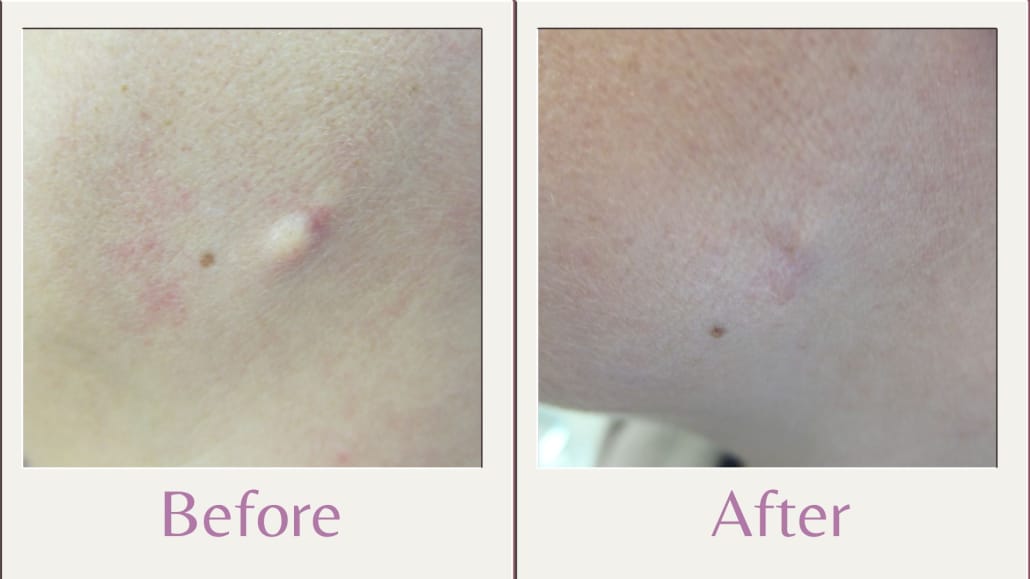
When should you see a doctor about a cyst on your face?
You should seek medical advice if the lump is painful, red, warm, leaking fluid, growing, changing shape, affecting your confidence, or sitting in an awkward area such as near the eye, nose or lips. We can usually assess an epidermoid cyst by examining the skin, but we may recommend further checks or scans if the diagnosis is uncertain. For instance cysts in certain areas of the face such as the midline between your eyes or the outer edge of your eyebrow, can sometimes be caused caused from a deficiency in the bones of the skull when they fuse together, leaving room for an outpouch to form. These types of cysts are known as dermoid cysts and are usually present from birth.
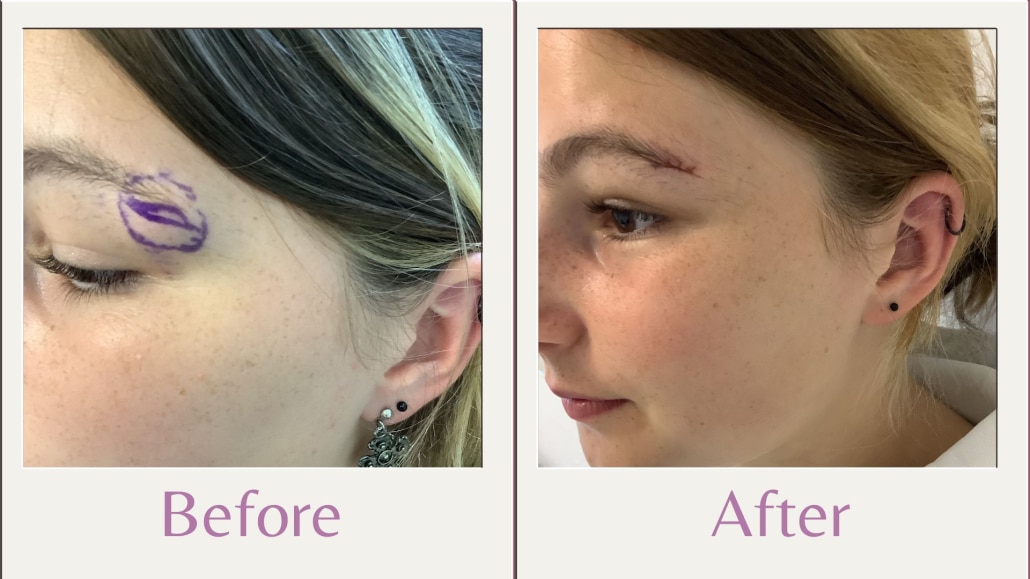
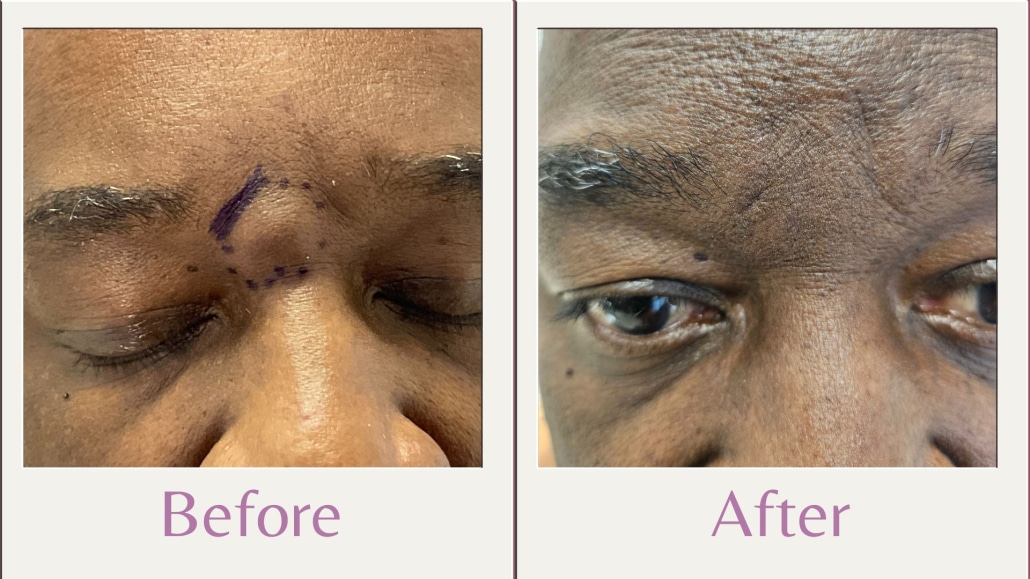
Skin cysts are often harmless and may not need treatment, but a large, painful or troublesome cyst may be removed, and squeezing it can increase the risk of infection.
It is also worth getting help if you have had the same cyst drained before and it keeps coming back. Recurrence often happens when the cyst contents are released but the cyst lining remains under the skin. On the face, where every millimetre of skin matters cosmetically, it is better to get a calm, planned assessment than to wait until the cyst becomes inflamed.
What a facial cyst usually is
A facial cyst is a closed pocket beneath the skin. Many are epidermoid cysts, sometimes known as “sebaceous cysts”. These cysts can contain keratin, a skin protein, and may feel like a round, firm or moveable lump under the surface. Epidermoid cysts can develop when skin cells or a hair follicle are disrupted, and they are commonly found on areas such as the face, neck, chest and back.
Other small lumps on the face can look similar. Milia are tiny, white keratin-filled bumps often seen around the eyes and cheeks. Pilar cysts are more common on the scalp but can occasionally be part of the discussion when lumps appear around the hairline. Acne cysts are different again: they are inflamed acne lesions rather than the same type of enclosed cyst wall.
Why you should not pop or squeeze it
Trying to pop a cyst at home is tempting, particularly if it feels close to the surface, but it is one of the easiest ways to make the problem worse. Squeezing can push cyst contents deeper, irritate the surrounding tissue, introduce bacteria and increase the chance of scarring or pigmentation changes. We advise against trying to pop your cyst or remove it at home as this can increase infection, discolouration and scarring risk.
Home attempts also rarely remove the cyst wall cleanly. That means the lump may settle for a short time, then slowly refill. If the cyst becomes inflamed, the skin can become fragile, making later removal more difficult and potentially increasing the size of the scar left behind.
Facial cyst treatment options
The right option depends on the cyst’s size, location, symptoms, inflammation and your cosmetic priorities.
- Monitoring: If the cyst is small, stable and not bothering you, you can leave it alone and review it if it changes.
- Incision and drainage: Drainage can relieve pressure in an infected or very painful cyst, but it is a temporary measure because the lining will remain. If the cyst wall is not removed, the cyst will come back.
- Surgical excision: The cyst is removed with the cyst wall, usually under local anaesthetic in adults. This is the most definitive approach when recurrence prevention is important.
What happens during facial cyst removal?
Facial cyst removal is usually a minor procedure, but it should still be treated as proper surgery. The area is cleaned, marked and numbed with local anaesthetic. Once the skin is numb, we will make a small incision and carefully separates the cyst from nearby tissue, aiming to remove the cyst and its wall completely.
The appointment may feel less intimidating once you understand the aim: not simply to empty the cyst, but to remove the cyst wall that allows it to refill. If the cyst is actively infected, immediate complete removal may not always be recommended; we will advise that you first treat infection or inflammation, then arrange removal once the skin has settled.
Why can’t I have my facial cyst removed when it is infected?
Patients will often come to us when their cyst is infected as they will be anxious to have it removed. However, removal of your facial cyst is not possible when infected for several reasons.
- local anaesthetic will not work well in infected tissues and it is not possible to numb the area adequately.
- the walls of the cyst will be inflamed and the boundary between the cyst and the normal tissues will not be clear, making it difficult to remove the cyst wall completely.
- doing surgery in an infected area runs the risk of the resulting wound becoming infected which can give worse scarring and a prolonged recovery.
If your cyst is infected, you should seek help from your doctor, which will usually be in the form of antibiotics and in some cases, incision and drainage to release the pressure, before seeking help from a plastic surgeon to remove the cyst completely once the infection has settled.
Scarring, recovery and recurrence
Any cut in the skin can leave a scar, but careful planning can make a significant difference on the face. The final appearance depends on the cyst’s size, depth, whether it has ruptured or become infected, your skin type, wound care and how your skin naturally heals. A smaller incision is not always better if it prevents complete removal; the best cosmetic result is usually a balance between a neat wound and a thorough procedure.
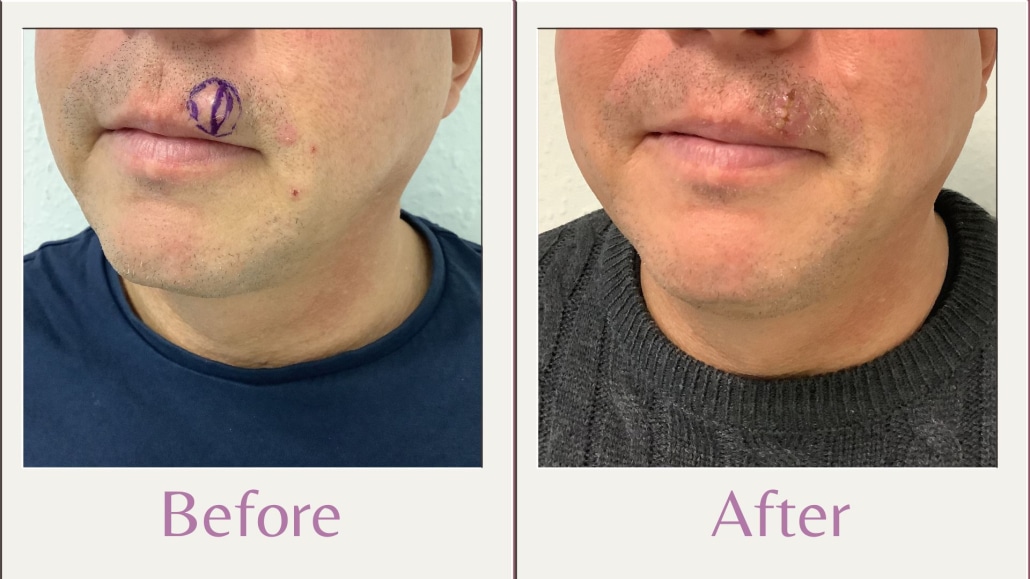
Aftercare commonly includes keeping the area clean and dry as advised, leaving dressings in place, avoiding picking at scabs, and protecting the healing skin from sun exposure. You should ask what signs of infection to watch for, including increasing pain, spreading redness or purple discolouration, warmth, swelling, pus, bad smell or fever.
Protecting healing scars from the sun is important because if you get a tan on your scar while it is red and active, the scar can pick up the tan and retain it when you lose the tan. This can lead to developing a pigmented scar. This is the case while the scar is healing and looks red, which is usually the first 3-6 months.
Recurrence is most likely when the cyst wall is not fully removed. This is why repeated squeezing or drainage can become frustrating: the visible lump may reduce, but the source of the problem remains. Complete excision is generally the more reliable route when a cyst keeps returning.
How to prepare for a consultation
Before your appointment, note when the lump first appeared, whether it has changed, and whether it has ever leaked, become infected or been treated before. Take clear photos in good light if the cyst changes from day to day. Avoid applying harsh products, acids or home remedies over the area, as irritated skin can complicate assessment.
Useful questions to ask include:
- Is removal necessary, or is monitoring reasonable?
- Which facial cyst treatment offers the best balance of complete removal and cosmetic outcome?
- Will the cyst be sent for testing?
- What scar should I realistically expect?
- How long should I avoid make-up, exercise, shaving or skincare actives after treatment?
Send a photo before booking
If you are would like an assessment, send a clear photo of your cyst via WhatsApp and we will advise on the next sensible step.
A photo cannot replace an in-person diagnosis, but it can help guide whether you may need a consultation, urgent review for infection, or a planned discussion about facial cyst removal.
The key takeaway
A facial cyst is usually manageable, but the face deserves careful treatment. Do not squeeze it, do not rely on repeated draining if it keeps returning, and do seek professional advice if it is painful, infected, growing or affecting your confidence. The safest plan is one that identifies the lump correctly, treats symptoms when needed, removes the cyst wall where appropriate, and supports neat healing afterwards.

#askjj
Read Jonathan's book now!
Jonathan is on a one man crusade to revolutionise the image of cosmetic surgery and is passionate about spreading his message about cosmetic surgery training.