



Find Out More About Sebaceous Cysts
Sebaceous cysts can be a source of discomfort and concern. These small, non-cancerous bumps beneath the skin can appear anywhere on the body, but are most commonly found on the face, neck, or torso.
Understanding what a sebaceous cyst is, and how it forms, can help alleviate some of the anxiety around it.
In this article, I will break down the complex medical jargon into simple, easy-to-understand language. I will explore the causes, symptoms, and treatment options for sebaceous cysts.
My aim is to provide clear, empathetic guidance. This will empower you to make informed decisions about your health care.
Whether you suspect you have a sebaceous cyst, have been diagnosed with one, or are simply interested in learning more, this article is for you.
Let’s demystify sebaceous cysts together.
What Is A Sebaceous Cyst?
A sebaceous cyst is a benign lump situated under the skin. It forms when the sebaceous glands become blocked. These glands are responsible for producing oil to lubricate your skin and hair.
The most common areas where these cysts form are the face, neck, and torso. However, they can appear anywhere on the body. Most people will notice these cysts as they grow slowly over time.
Sebaceous cysts vary in size, ranging from as small as a pea to as large as a few centimetres. They are filled with a thick, oily substance called sebum.
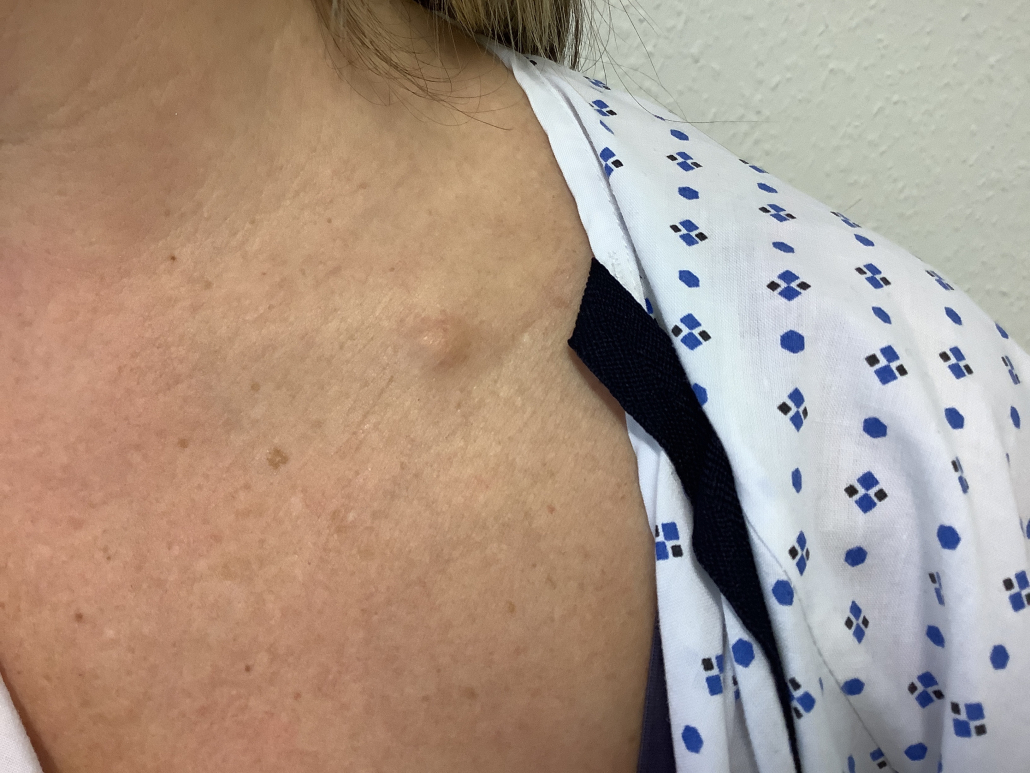
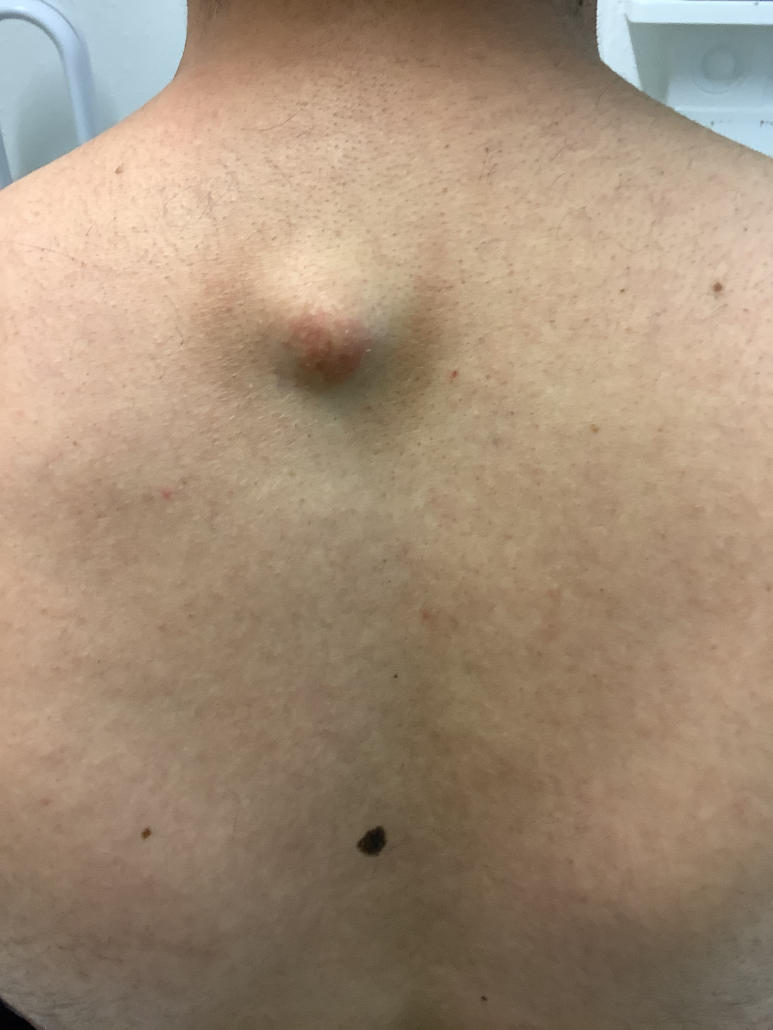
The cysts are generally not harmful and are rarely painful. However, if a cyst becomes infected, it can cause discomfort.
When infected, symptoms such as redness, swelling, and tenderness can occur. The cyst may become warm to the touch, signalling inflammation.
The precise cause of sebaceous cysts isn’t always clear. However, several factors contribute to their formation. These include blocked glands, skin trauma, and sometimes genetic conditions.
Here are some key points about sebaceous cysts:
- Non-cancerous skin lumps
- Slow-growing
- Typically painless
Understanding these basic facts can help ease concerns. It is important to consult your doctor if changes occur. Knowing what a sebaceous cyst is can guide better health decisions.
Common Symptoms of Sebaceous Cysts
Sebaceous cysts are typically easy to identify. The most noticeable symptom is a small, round bump under the skin.
These cysts are usually not painful. However, they can become uncomfortable if infected or inflamed.
Some people may experience mild discomfort from a cyst even when it’s not infected. This can happen if it grows larger or is in a sensitive area.
When a cyst becomes infected, several symptoms can appear. Redness, swelling, and tenderness are common signs of infection.
The cyst may also feel warmer than the surrounding skin. This warmth indicates inflammation.
Other symptoms might include a foul odour if the cyst drains. This occurs because of the cheesy-like substance inside.
Here are common signs of sebaceous cysts:
- Firm, round lump
- Possible tenderness
- Redness or swelling (if infected)
It’s crucial to monitor any changes in these symptoms. If you experience these signs, consult your doctor for proper evaluation. It is important to note that we will not remove your sebaceous cyst if there are signs of inflammation or infection and this must be treated before having definitive removal.
What Causes Sebaceous Cysts?
Sebaceous cysts develop for various reasons. The exact cause is not always known, making prevention tricky.
One common cause is a blocked sebaceous gland. These glands produce oil for the skin and can become clogged.
Blockages might result from trauma to the skin. Injuries or damage in certain areas can trigger cyst formation.
Genetic conditions also play a role. Some inherited disorders increase the likelihood of developing cysts.
Hormonal changes are another factor. These changes can influence sebaceous gland activity, leading to cysts.
Age and lifestyle may contribute as well. As you age, your risk of cysts might increase.
Key causes and risks include:
- Blocked sebaceous glands
- Skin trauma
- Genetic conditions
- Hormonal changes
- Aging factors
Sebaceous Cyst Diagnosis
Diagnosing a sebaceous cyst usually begins with a physical examination. We will assess the cyst’s size and location visually and you can even send us a photo of your cyst if you would like an opinion before coming to the clinic.
In some cases, further tests may be needed. Imaging tests like ultrasounds help rule out other conditions and are useful for particularly large cysts or cysts in certain locations such as the outer edge of the eyebrow, which could represent an external angular dermoid cyst. These are cysts that are created during development as the bones of the skull fuse and have a small possibility of connection with the brain.
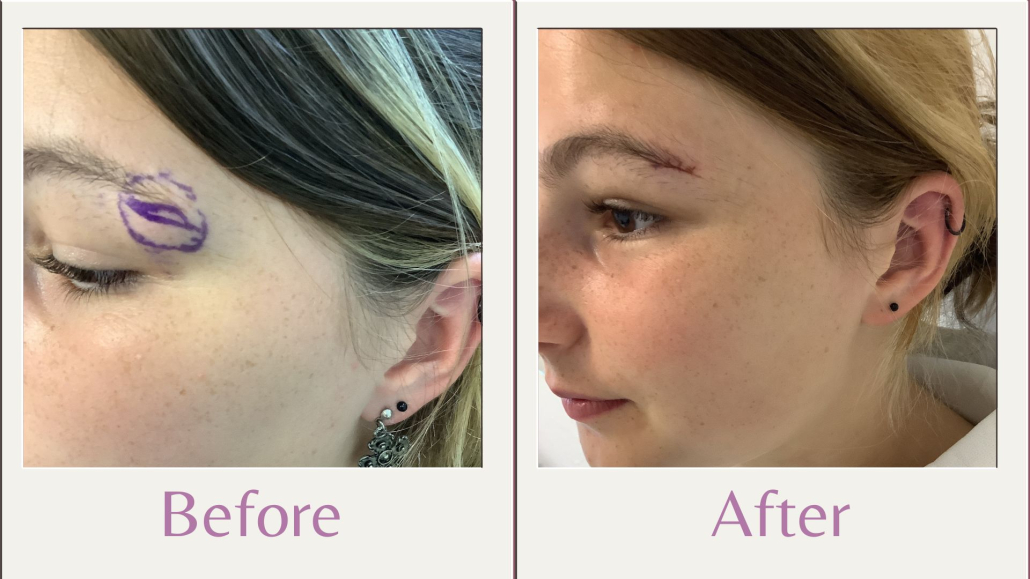
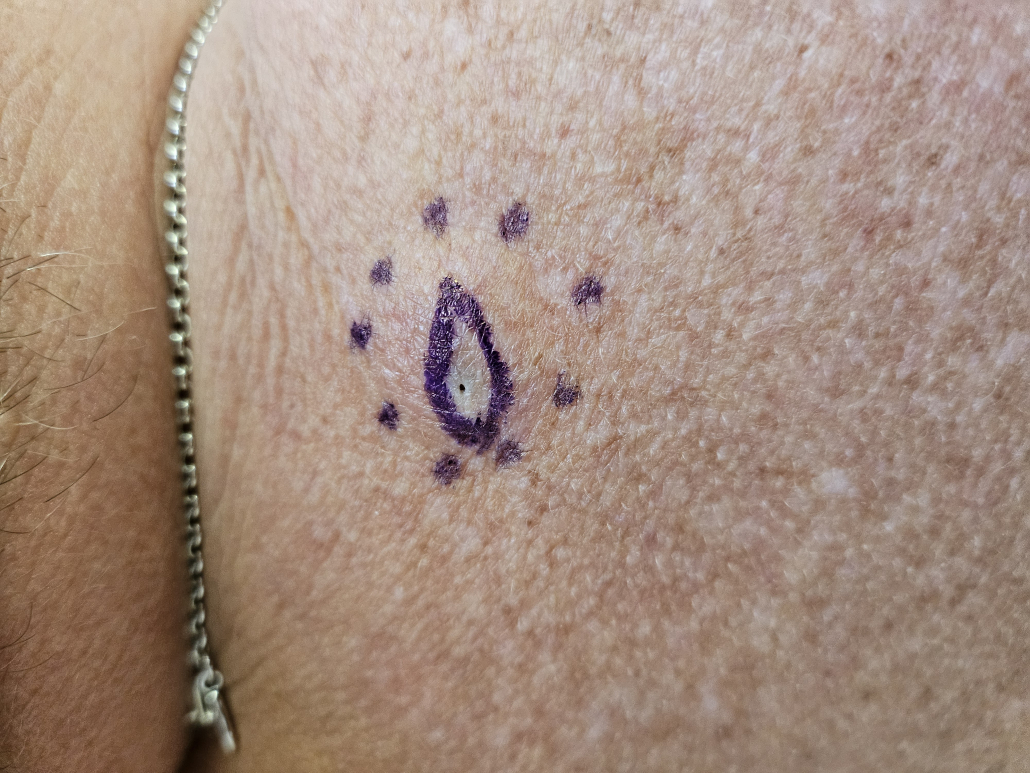
We look for specific signs to confirm it is a cyst. These include smooth texture and mobility under the skin. The overlying skin is usually normal, although there is often a small hole in the skin with a connection to the cyst. This is known as a punctum and is a trademark feature of a sebaceous cyst. If you do have a punctum in the skin, we will remove this at the same time as removing your cyst.
Sebaceous Cyst Removal
Treatment for sebaceous cysts depends on their size and symptoms. Many cysts do not require any intervention.
However, some individuals may choose treatment for comfort or cosmetic reasons. If a cyst becomes bothersome, several options exist.
Antibiotics may be prescribed if the cyst is infected. This helps clear any bacterial infection accompanying the swelling.
For larger or painful cysts, particularly if they are infected, draining the fluid can provide relief.
Home remedies, like warm compresses, can provide temporary relief. However, these should be approached cautiously and are not a substitute for professional care.
None of the above strategies will remove the cyst because the cyst wall remains even if the contents are drained.
Definitive treatment of a sebaceous cyst requires surgical removal.
Here is a list of treatment options to consider:
- Antibiotic prescription for surrounding redness
- Drainage if grows large and painful suggesting infection
- Surgical removal to permanently remove the cyst
Sebaceous Cyst Removal Procedure
If a sebaceous cyst requires surgical removal, it is important to make sure that you seek an opinion from a qualified surgeon as there are many practitioners offering treatments who have no surgical qualifications. This is especially important if your cyst is in a cosmetically sensitive area such as your face or if it is particularly large. You can read more in our blog post here.
We are all plastic surgeons at The STAIANO Clinic and cyst removal is often a straightforward procedure that can be done on the same day as your consultation in one of our ‘See & Treat’ Clinics.
We ask you to send us a photo of your cyst prior to your appointment, so that we can give you an accurate quote for removal and make sure that it is suitable for excision.
We aim to offer appointments within 7 days, so you can be rid of your cyst within a week of contacting us.
You will be seen by one of our plastic surgeons who will examine you and take a medical history. We will go over what is involved in your cyst removal and answer any of your questions.
If you are happy with everything, we can go up to our minor operating suite straight away and remove your cyst, with no waiting time and no delay. It is typically done under local anaesthesia and you will be able to go home shortly after the procedure.
We will make a small incision over the cyst. This provides access to remove the entire sac.
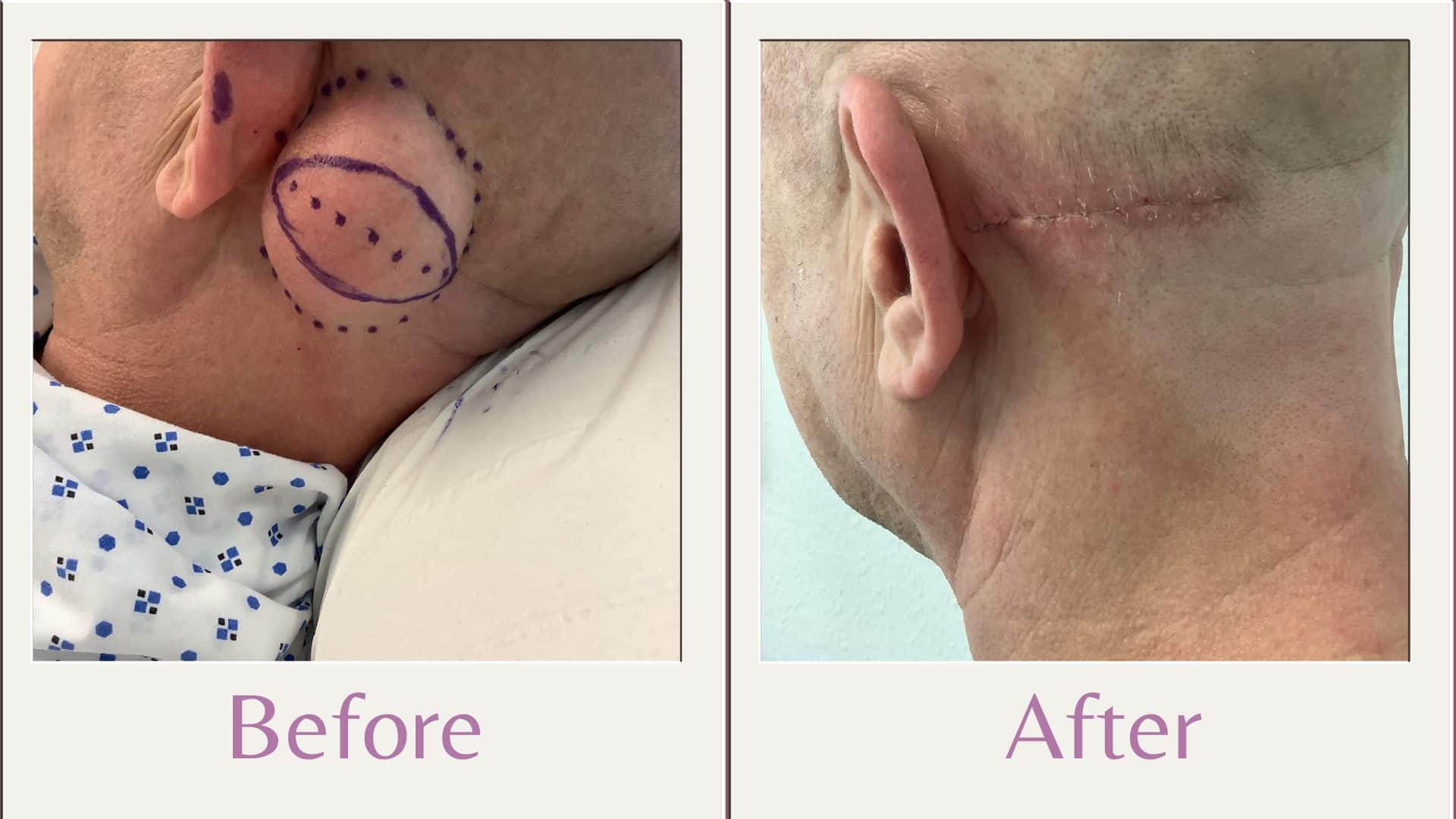
Removing the entire cyst is crucial. This helps prevent the cyst from coming back in the future. For this reason, the scar is usually about as long as the diameter of the cyst, but we are all plastic surgeons and we will plan the placement of your scar to make it as unnoticeable as possible.
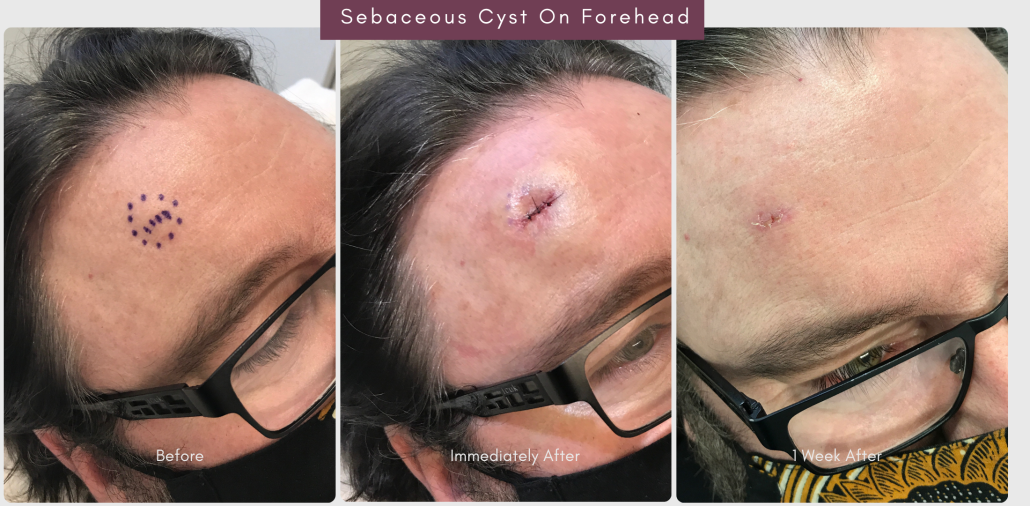
The procedure generally takes about 45-90 minutes. Recovery is usually quick, with minimal discomfort.
We have the facilities to send your cyst off for histological analysis for complete peace of mind and all of these services are included in the fixed price package that we offer.
REQUEST A PRICE FOR CYST REMOVAL
Following the procedure, we will give you aftercare instructions and make sure you have our contact details and a follow-up appointment booked.
Aftercare and Recovery
Taking care of the area after sebaceous cyst removal is crucial to ensure quick healing and the best result possible.
Keep the wound clean and dry. We will provide specific postoperative instructions.
Avoid heavy lifting or strenuous activities. This helps prevent strain on the healing area and reduces the risk of swelling.
Watch for signs of infection. Redness, warmth, or discharge may indicate a problem.
You will always have a follow-up appointment and contact details so that you can let us know if you have any concerns.
We will be on hand for you to come back to the clinic or we can arrange for a phone or video call if you have any questions.
All of your aftercare will be with your plastic surgeon and the clinic nurse and we will make sure that you are fully looked after during your recovery period.
Our Cast Iron Guarantee
At The STAIANO Clinic, we offer our cast iron guarantee.
Many clinics will not see you again once they have removed your cyst and you might feel that you have been left out in the cold.
Our clinic has been built on making sure that we look after our patients as you can see from our 5 star reviews.
When you become a patient of The STAIANO Clinic, you are always welcome to come back to see us if you have any questions or concerns. We do not charge for follow-up appointments.
Not only that, we also want you to know that we will do everything that we can to give you the best result possible and so if your surgeon feels that you need any further surgery within the first 6 months after your procedure, there will be no charge.
This gives you complete peace of mind that the price that you pay includes all of your aftercare and all of your follow up for as long as you need.
Preventing Sebaceous Cysts
Prevention focuses on good skin care practices. Regular cleansing can help reduce the risk.
Avoid trauma to the skin. Protect areas prone to cysts by being gentle and cautious.
Manage conditions like acne. Controlling breakouts can lower the chances of cyst formation. Regular dermatologist visits can help maintain skin health.
When to See a Doctor
If you notice a new lump or bump under your skin, it is wise to consult your doctor. This helps ensure the growth is not something more serious.
Seek medical advice if the cyst becomes painful, red, or swollen. These signs may indicate an infection that requires treatment.
Persistent or bothersome cysts also warrant evaluation. Early intervention can prevent complications and ease concerns.
Myths and Misconceptions
There are several myths surrounding sebaceous cysts. One common misconception is that they are contagious. In reality, sebaceous cysts cannot spread from person to person.
Another myth is that popping a cyst will cure it. This actually increases the risk of infection and complications, making the problem worse.
Finally, some believe sebaceous cysts are always a sign of cancer. In fact, they are usually benign and non-cancerous, although evaluation is still important.
Conclusion and Key Takeaways
Sebaceous cysts are common and generally harmless. However, they can be bothersome due to their appearance or potential for infection.
Understanding the nature and treatment of sebaceous cysts can alleviate anxiety. It can also empower you to manage them more effectively.
Key takeaways include:
- Sebaceous cysts are non-cancerous.
- They often don’t need treatment unless symptomatic.
- Removal is the most effective treatment.
- Good hygiene helps prevent new cysts.
- Consult your doctor if you have any concerns.
If you are thinking of having your cyst removed, you can send us a photo on WhatsApp and we can send you details about removal.


#askjj
Read Jonathan's book now!
Jonathan is on a one man crusade to revolutionise the image of cosmetic surgery and is passionate about spreading his message about cosmetic surgery training.