What is an inverted nipple?

Reviewed by JJ Staiano, Consultant Plastic Surgeon GMC No. 4117214

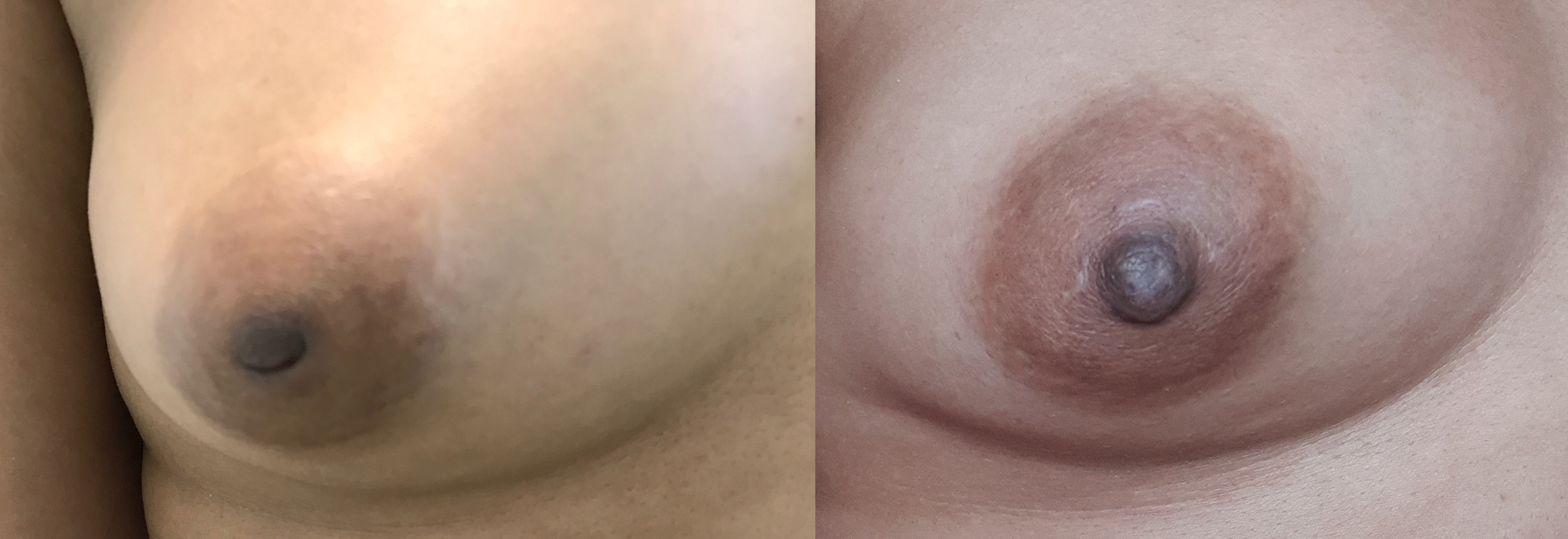
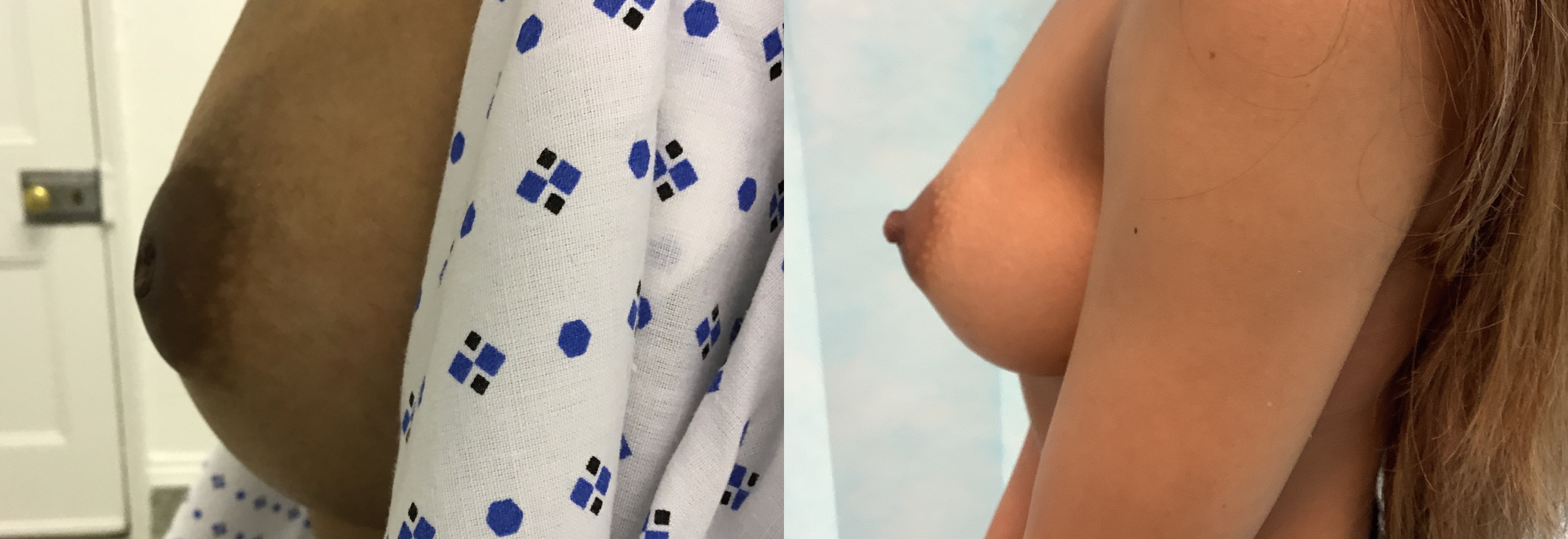
An inverted nipple turns inwards instead of pointing outwards. It’s common, usually harmless, and can affect one or both sides. Some nipples are only inverted some of the time and come out with cold, arousal or stimulation, while others stay drawn in permanently.

What causes inverted nipples?

Most inverted nipples are present from puberty. The milk ducts are shorter than usual, and bands of fibrous tissue tether the nipple to the tissue beneath it, pulling it inwards. There is often less supporting tissue under the nipple as well. This is simply how the breast developed, and it can sometimes run in families. It has nothing to do with breast size, bras or anything you’ve done.

Some nipples become inverted later in life. Possible causes include:

  • Natural changes in breast tissue with age
  • Widening or inflammation of the milk ducts (duct ectasia)
  • Previous infection or inflammation, such as mastitis or an abscess
  • Scarring from earlier surgery or injury
  • Nipple piercings
  • Less commonly, breast cancer

Important: If your nipple has recently turned inwards, or inversion comes with a lump, discharge, skin dimpling, a rash, pain or a change on one side only, see your GP before considering cosmetic treatment. A new event of a nipple turning inwards is a possible breast cancer symptom. Most cases turn out to be something else, but they should be checked first.

The three grades of inverted nipple

We commonly grade inversion from 1 to 3, and the grade helps predict what will work.

Grade 1 (mild). The nipple is usually out, or comes out easily with gentle pressure and stays out. The ducts are of normal length and there is little tethering. Breastfeeding is usually unaffected. Many people in this group can try a non-surgical option such as a suction device.

Grade 2 (moderate). The nipple can be drawn out, though less easily, but it retracts again once released. There is moderate tethering and the ducts are somewhat shortened. Breastfeeding may be possible but can be more difficult. Suction devices tend to give short-lived results, and surgery is more reliable.

Grade 3 (severe). The nipple is deeply retracted, hard or impossible to pull out, and goes straight back in. There is significant fibrous tissue and the ducts are short. Breastfeeding is usually not possible. Surgery is generally the only effective option, and the most dependable correction involves dividing the ducts.

Grading is a guide, and not every nipple fits neatly into one category. We assess this in person at your consultation, so you don’t need to work out your grade beforehand.

Not sure which grade you have? Book a See & Treat appointment and we can assess you, explain your options and, if you’re suitable, treat you on the same day.

Is Inverted Nipple Surgery Right For You?

Not everyone with an inverted nipple needs surgery, and the right choice depends on how deeply the nipple is drawn in, what bothers you about it, and your plans for breastfeeding. Our aim at your consultation is to help you decide, not to push you towards an operation.

Start with a medical check if anything has changed

If your nipple has turned inwards recently, or you have a lump, discharge, skin changes or a difference on one side only, please see your GP first. Surgery is only appropriate for nipples that have been inverted for a long time and have been properly assessed.

Mild inversion (grade 1): you may not need surgery

If your nipple is only occasionally inverted and comes out easily, a non-surgical approach is worth trying first. A suction device such as the Niplette is painless, inexpensive and has few side effects. In our experience it can work for mild cases, but it needs regular, consistent use, and results can be slow and are not always lasting.

Moderate to severe inversion (grades 2 and 3): surgery is more predictable

Most patients who come to us have a nipple that is tethered by short milk ducts and fibrous tissue. Suction devices tend to bring the nipple out only while the device is on, and it then draws back in once it’s removed. That is because the tissue pulling the nipple inwards is still there.

Surgery releases that tissue and supports the nipple in its new position, which is why it gives a more dependable, longer-lasting correction. It is a minor procedure done under local anaesthetic in the clinic, takes less than an hour, and you go home the same day.

Surgery may be a good option if you:

  • Have had an inverted nipple for as long as you can remember, and it’s been checked
  • Have found suction devices or other non-surgical methods haven’t lasted
  • Are bothered by the appearance, by asymmetry, or by it affecting your confidence in intimate settings, swimwear or fitted clothing
  • Have problems with hygiene or irritation in the fold where the nipple is drawn in
  • Understand that correction involves a trade-off with breastfeeding (see below)

Think carefully about breastfeeding first

This is the most important decision to make before surgery. The most reliable correction involves dividing the milk ducts, which means you will not be able to breastfeed from that nipple afterwards. A duct-sparing technique can preserve the ducts, but it is more complex, leaves more obvious scarring and the correction may be less effective.

If you may want to breastfeed in future, tell us at the start of your consultation. We’ll talk through your options, including waiting until after you’ve finished having children.

Be realistic about the result

Surgery gives a lasting improvement for most patients, but no technique is guaranteed. The nipple can occasionally draw back in, particularly in more severe cases, and you may notice a change in sensation. We’ll explain the risks and the likelihood of recurrence for your own anatomy before you decide. We offer a cast-iron guarantee for all our patients, which states that we will always see you if you have any concerns and we offer free revision surgery within 6 months of your procedure.

What happens if you’re unsure?

That’s completely normal. At your consultation we’ll examine you, explain which approach suits you and why, and answer your questions. Even if you’ve booked a same-day appointment, there is never any pressure to go ahead. Many patients choose to go away and think it over first.

Book a See & Treat appointment or request a price.

Your surgical options: do you want to breastfeed?

There are two main ways to correct an inverted nipple, and the choice between them comes down to one question: do you want to keep the ability to breastfeed?

Both are done in the clinic under local anaesthetic, take less than an hour, use dissolvable stitches and finish with a waterproof dressing, so you can shower straight away. The difference is what happens to the milk ducts.

Option 1: Duct-sparing correction (keeps the ability to breastfeed)

If you may want to breastfeed in the future, we leave the milk ducts intact. Small flaps of tissue are taken from either side of the nipple and used to hold it in a projecting position.  This is not as effective and I talk about it in this video.

This leaves two small scars on each side of the nipple, kept within the areola (the pink skin around the nipple) where they tend to fade well over time.

Because the ducts, which are the main cause of the tethering, are preserved, this is a more delicate procedure and it is harder to achieve an adequate correction. There’s a higher chance the nipple will draw back in, particularly in more severe cases. Preserving the ducts gives the best chance of breastfeeding, but no technique can guarantee it.

Option 2: Division of the milk ducts (most effective correction)

If you’re sure you don’t want to breastfeed in future, the most dependable way to correct an inverted nipple is to divide the shortened ducts that are pulling it inwards. We make a small incision at the base of the nipple, release the ducts, and place stitches at the base to stop the nipple retracting.

The scar sits at the base of the nipple and fades very well, usually becoming difficult to see. The trade-off is permanent: you will not be able to breastfeed from that nipple afterwards.

Comparing the two options

Duct-sparing correction Division of the milk ducts
Best for Those who may want to breastfeed Those who are sure they won’t breastfeed
Breastfeeding afterwards Possible, but not guaranteed Not possible from the treated nipple
How the nipple is held out Small tissue flaps either side of the nipple Ducts released, with stitches at the base
Scars Two small scars on either side of the nipple, within the areola One small scar at the base of the nipple
Longevity of correction Less predictable, especially in more severe cases Most dependable
Risk of the nipple drawing back in Higher Lower
Procedure Local anaesthetic, less than an hour, same-day option Local anaesthetic, less than an hour, same-day option
Recovery Similar for both: wound healed in about a week, swimming after 2 weeks Similar for both

Which should you choose?

Here’s how most patients think it through:

  1. You definitely want to breastfeed in future. Duct-sparing correction is the option to discuss. You could also consider waiting until after you’ve had children and finished breastfeeding, when the more dependable technique becomes available.
  2. You’re unsure about having children or breastfeeding. This is a common position. We’ll talk through how to balance a lasting correction against keeping your options open, accepting that neither route is risk-free.
  3. You’re certain you won’t breastfeed. Dividing the ducts is usually the right choice, as it gives the most reliable result.
  4. Only one nipple is inverted. The same principles apply. Only the treated side is affected, but that side’s breastfeeding ability is changed in the same way.

What applies to both techniques

  • Sensation. The ducts, nerves and blood supply all run through the same small area, so temporary numbness, tingling or altered sensitivity can occur. Most changes settle as you heal, but a lasting change is a recognised risk.
  • Recurrence. Occasionally scarring can cause the nipple to pull back in again, and the procedure may need to be repeated.  You will be covered by our cast-iron guarantee, but it gets more challenging after every operation.
  • Your decision. We’ll explain which technique we recommend for your anatomy and why, and there is never any pressure to go ahead on the day.

Not sure which option suits you? Book a See & Treat appointment and we’ll talk it through.

What happens at your appointment?

Inverted nipple correction is a short procedure, so most patients are in and out of the clinic on the same day. You don’t need a GP referral.

1. Book your appointment

Choose a See & Treat appointment online. If you’d like to talk it through first, you can request a price or message us on WhatsApp.

2. Consultation and examination

You’ll meet your surgeon, who will ask about your medical history, when you first noticed the inversion and whether you may want to breastfeed. They’ll examine the nipple to assess how tightly it’s tethered, which tells us your grade and which technique is likely to work best.

If anything in your history or examination needs further checking first, such as a recent change or a lump, we’ll recommend that before any treatment.

3. Deciding whether to go ahead

We’ll explain the options, the risks and what to expect, and answer your questions. You can take as long as you need, and you’re welcome to go home and think it over. If you’re happy to continue, we’ll take your consent and clinical photographs for your records.

4. The procedure

  • Anaesthetic: a local anaesthetic numbs the area, so you stay awake and comfortable.
  • Duration: around 30 minutes per side.
  • Technique: either duct-sparing correction or division of the milk ducts, as agreed with you.
  • Stitches and dressing: dissolvable stitches and a waterproof dressing, so you can shower straight away.

5. Going home

You’ll go home the same day with written aftercare advice and contact details if you have any concerns. It is advisable to have someone to drive you home and you should be able to go back to work on the following day.

6. Follow-up

We will be in touch at a week postop and you are welcome to come to the clinic to have your dressing removed, although you can do this at home if you prefer. We’ll review your healing at around six weeks. If you’re worried before then, you can contact us at any time.


Risks and limitations

Inverted nipple correction is a minor procedure with a good safety record, but every operation carries risks, and we’d rather you understand them before you decide.

Risks that apply to both techniques

  • The nipple drawing back in (recurrence). Scar tissue or the original tethering can occasionally pull the nipple inwards again, particularly in more severe cases. If this happens, the procedure can be repeated. You will be covered by our cast-iron guarantee in the case of any revision surgery.
  • Changes in nipple sensation. You may notice numbness, tingling or increased sensitivity, which usually settle as you heal. A lasting change in sensation is possible.
  • Scarring. Scars are small and fade well for most people, but they can occasionally be raised, thickened or more noticeable than expected.
  • Infection. This is uncommon. It’s treated with antibiotics and is more likely if the wound isn’t kept clean and dry as advised.
  • Bleeding or bruising. A small collection of blood under the skin (haematoma) is uncommon but can need further treatment.
  • Delayed wound healing. Smoking, vaping and nicotine products slow healing and increase the risk of complications.
  • Reduced blood supply to the nipple. This is rare, but it can affect healing and the appearance of the nipple.
  • Asymmetry or a result you’re not happy with. The two sides may not match perfectly, and the nipple may not look exactly as you imagined.  Whilst we can’t guarantee they will be perfect, we can guarantee that we will always do everything that we can to give you the best result possible.
  • Reaction to the local anaesthetic. This is rare and can be serious, which is why we ask about previous reactions.

Breastfeeding

  • Division of the milk ducts means you will not be able to breastfeed from the treated nipple. This is permanent.
  • Duct-sparing correction keeps breastfeeding possible, but we can’t guarantee it, and the correction may be less effective.

The limits of the procedure

Surgery corrects the projection of the nipple. It doesn’t change the size or shape of the breast or areola, and it can’t promise a particular appearance. If you’re also considering areola reduction, I discuss whether you can combine the two here.

When to contact us

Get in touch promptly if you notice any of the following after your procedure:

  • Increasing pain rather than easing
  • Spreading redness, warmth or swelling
  • A temperature or feeling unwell
  • Discharge or an unpleasant smell from the wound
  • Bleeding that soaks through the dressing
  • The nipple turning dark, blue or very pale

You can always contact us on The STAIANO Clinic WhatsApp Number: +44 7794 739 606

Have a question about the risks? Book a See & Treat appointment and ask your surgeon directly.


Recovery timeline

Recovery from inverted nipple correction is usually straightforward. Most patients are back to normal daily activities quickly, but the nipple needs protecting while it heals so the correction holds. The timings below are a guide, and we will give you personal advice on the day.

Straight after the procedure

  • You’ll go home the same day with a waterproof dressing and aftercare advice.
  • You can shower straight away. Pat the dressing dry afterwards rather than rubbing it.
  • The area will be numb for a few hours as the local anaesthetic wears off. Take simple pain relief before the numbness fades.  Paracetamol is usually sufficient.
  • Expect some mild tenderness, bruising and swelling around the nipple. This is normal.
  • Avoid pressing on or knocking the nipple. A soft, loose top or a supportive bra without pressure on the dressing is more comfortable.  You should avoid compression or particularly tight sports bras.

The first week

  • Mild discomfort, tenderness and bruising are common and usually ease over the first few days.
  • Leave your dressing on for the first week, although let us know on the WhatsApp number if you have any problems or questions and feel that you need to change or remove it early.
  • The wound is usually healed in a week, so this is when the dressing is removed, which you can do at home, or you can come to our dressing clinic.
  • Stitches are dissolvable, so there’s nothing to remove. Don’t be alarmed if you notice small fragments working their way out as they dissolve.
  • Most patients return to work and light daily activities within a day or two.

Weeks 1 to 2

  • Continue to avoid pressure on the nipple.
  • Gentle everyday movement is fine, but avoid strenuous upper body exercise and heavy lifting for now.
  • Swimming is usually fine from about two weeks, once the wound is fully healed.

Weeks 2 to 4

  • Bruising and swelling should be settling, and the nipple may still feel sensitive or tender.
  • Avoid direct pressure on the nipple for around four weeks. This is important, because pressure early on, such as from tight clothing, sports bras or sleeping on your front, can pull the nipple back in while the tissues are still healing.
  • You can usually begin to build up exercise again. Start gently and listen to your body.
  • Changes in sensation, such as tingling, itching or heightened sensitivity, are common and usually settle as the nerves recover.

Around six weeks: your review

We’ll check how you’ve healed, how the nipple is holding its position and how the scars are settling. This is also your chance to ask any questions.

Months 3 to 12: the final result

  • Scars continue to mature and fade over several months, from pink or red to paler and flatter.
  • Sensation should settle, although some patients notice lasting changes.
  • The final shape and projection of the nipple become clear as swelling fully resolves.

How to help your recovery

  • Don’t smoke or vape. Nicotine slows healing and raises the risk of complications.
  • Follow your aftercare advice, and don’t pull or stretch the nipple.
  • Keep the area clean and dry.
  • Wear loose, soft clothing and avoid anything that presses on the nipple.
  • Attend your follow-up appointment.

When to contact us

Get in touch promptly if you notice increasing pain, spreading redness or warmth, discharge, a temperature, bleeding through the dressing, or the nipple turning dark or very pale. Call the clinic on 0121-454 3680 or use our WhatsApp number to get in touch with us after hours.

Planning around work, a holiday or a special event? Book a See & Treat appointment and we’ll help you choose a sensible date.

FAQs

Treatment starts from £1,838 for one side, and £2,198 if both nipples are treated.

The price covers the procedure, local anaesthetic, dressings and your follow-up review.

We’ll confirm the exact cost at your consultation, before you decide to go ahead.

The area is fully numbed with a local anaesthetic, so you shouldn’t feel pain during the procedure, only some pressure.

Afterwards, expect mild tenderness and bruising for a few days, which simple pain relief usually controls.

Most patients describe it as more uncomfortable than painful.

Around 30 minutes per side.

You stay awake, go home the same day and don’t need a general anaesthetic or a hospital stay.

No.

You can book a See & Treat appointment directly with us.

The exception is a nipple that has recently turned inwards or changed, or inversion with a lump, discharge or skin changes. In that case please see your GP first, so it can be properly checked before any cosmetic treatment.

It depends on the technique.

If the milk ducts are divided, you will not be able to breastfeed from that nipple.

A duct-sparing technique keeps breastfeeding possible, but it can’t be guaranteed, and the correction may be less effective.

If you may want to breastfeed in future, tell us at the start of your consultation so we can discuss the best approach, including waiting until after you’ve had children.

For most patients the correction lasts, but it can’t be guaranteed.

Occasionally scarring or the original tethering pulls the nipple back in, particularly in more severe cases or after duct-sparing correction.

If this happens, the procedure can sometimes be repeated and we will always make sure that we look after you with our cast iron guarantee.

Yes, but it’s small.

When the ducts are divided, the scar sits at the base of the nipple and usually fades until it’s difficult to see.

With duct-sparing correction, the scars are placed within the areola, where they tend to fade well.

Scars mature over several months, and in a small number of people they can stay raised or more noticeable.

Temporary numbness, tingling or increased sensitivity is common and usually settles as you heal over the following weeks or months.

A lasting change in sensation is possible although not common.

Most patients are back to normal daily activities within a day or two.

The wound is usually healed in about a week, and swimming is generally fine from around two weeks.

We ask you to avoid direct pressure on the nipple for around four weeks so the correction can settle.

Your surgeon will advise you on exercise and heavy lifting, and we’ll see you for a review at around six weeks.

Often, yes.

If you’re also unhappy with the size or shape of your areolas, we can discuss treating both in the same appointment.

We’ll advise at your consultation whether this suits you.

Find out more about areola reduction here.

A nipple that has recently turned inwards, or inversion that comes with a lump, discharge, skin dimpling, a rash or a change on one side only, should be checked by your GP before any cosmetic treatment.

It’s often harmless, but it can occasionally be a sign of something that needs investigation.

Inversion you’ve had since puberty is very different, and that’s the type we treat.

Looking for a price for inverted nipple correction?

Prices for inverted nipple correction are £1,838 for one side and £2,198 for both sides.  This is a fully inclusive price that includes your consultation, procedure and all of your aftercare.

Fill in your details and we will send you more information and prices of Inverted Nipple Correction at The Staiano Clinic.

Book online

We offer a variety of calls and in person consultations with the surgeons.

Nipple Correction

View our work

Don't take our word for it

View testimonials

Our Inverted Nipple Correction Work

Some words from our patients

“The results are amazing, I had totally forgotten how my breasts looked before surgery, well I can honestly say that i am sooooooo happy :-), you have done wonders and I would recommend you to everyone.”

Words by JG
Procedure: Breast Enlargement

“The Staiano team work closely together to give you an honest and individual treatment. They genuinely care and commit to helping you make the right decisions. As soon as my implants were fitted it felt so right. I feel so feminine.”

Words by TP
Procedure: Breast Enlargement

“ Very impressed with this place – amazing, friendly and professional staff that relax you and are flexible to your needs. Very happy with result of my surgery and level of aftercare.”

Words by Louise S
Procedure: Inverted Nipple Correction

“I cannot recommend the Stainio clinic highly enough. All the staff were lovely, as were the surroundings. I was treated with respect and professionalism throughout the whole procedure and did not feel at all pressurised. I feel so much better about my body now and have regained my confidence.
Huge thanks to you JJ!
”

Words by Janice B
Procedure: Inverted Nipple Correction