



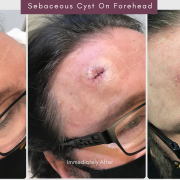
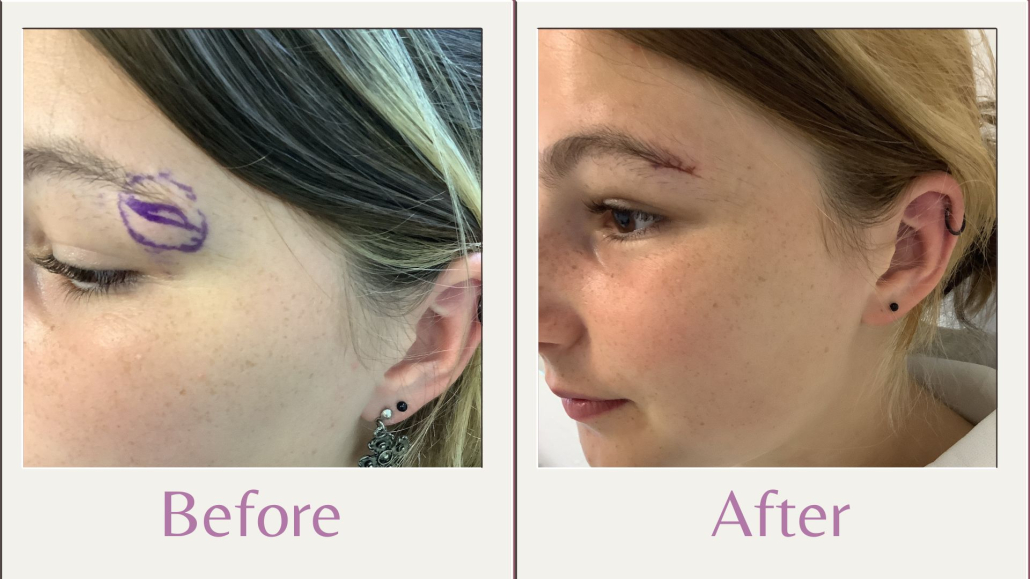
Sebaceous cyst on forehead at 1 week after

Understanding Sebaceous Cysts: Causes and Treatments

Find Out More About Sebaceous Cysts

Sebaceous cysts can be a source of discomfort and concern. These small, non-cancerous bumps beneath the skin can appear anywhere on the body, but are most commonly found on the face, neck, or torso.

Understanding what a sebaceous cyst is, and how it forms, can help alleviate some of the anxiety around it.

In this article, I will break down the complex medical jargon into simple, easy-to-understand language. I will explore the causes, symptoms, and treatment options for sebaceous cysts.

My aim is to provide clear, empathetic guidance. This will empower you to make informed decisions about your health care.

Whether you suspect you have a sebaceous cyst, have been diagnosed with one, or are simply interested in learning more, this article is for you.

Let’s demystify sebaceous cysts together.

What Is A Sebaceous Cyst?

A sebaceous cyst is a benign lump situated under the skin. It forms when the sebaceous glands become blocked. These glands are responsible for producing oil to lubricate your skin and hair.

The most common areas where these cysts form are the face, neck, and torso. However, they can appear anywhere on the body. Most people will notice these cysts as they grow slowly over time.

Sebaceous cysts vary in size, ranging from as small as a pea to as large as a few centimetres. They are filled with a thick, oily substance called sebum.
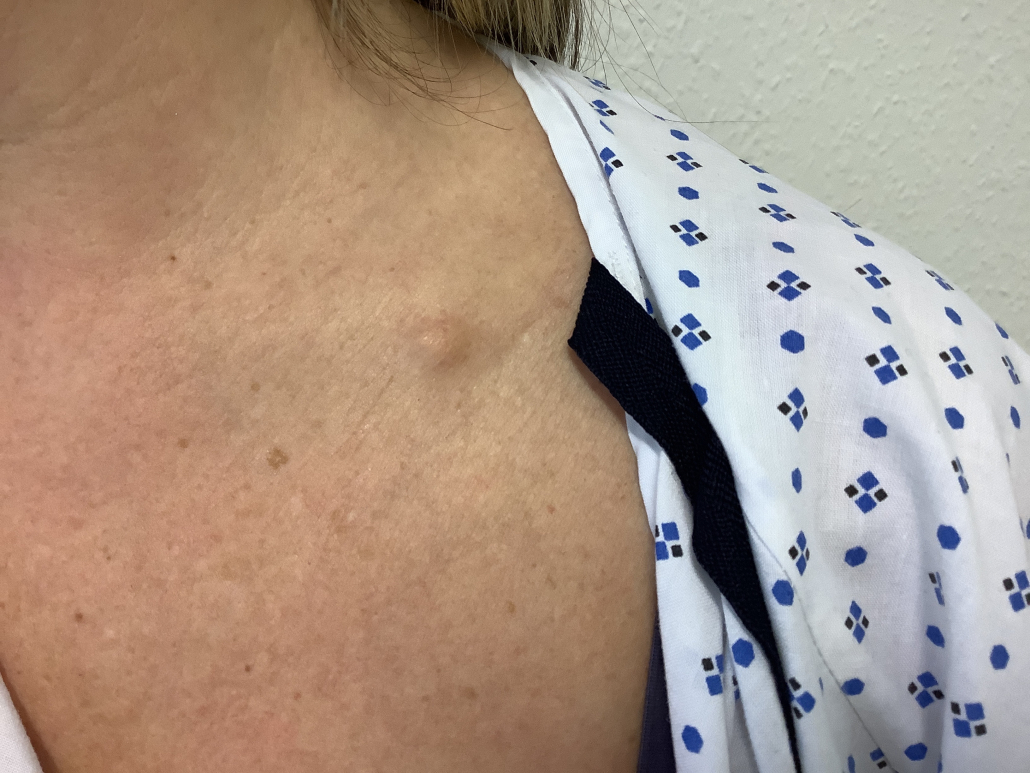
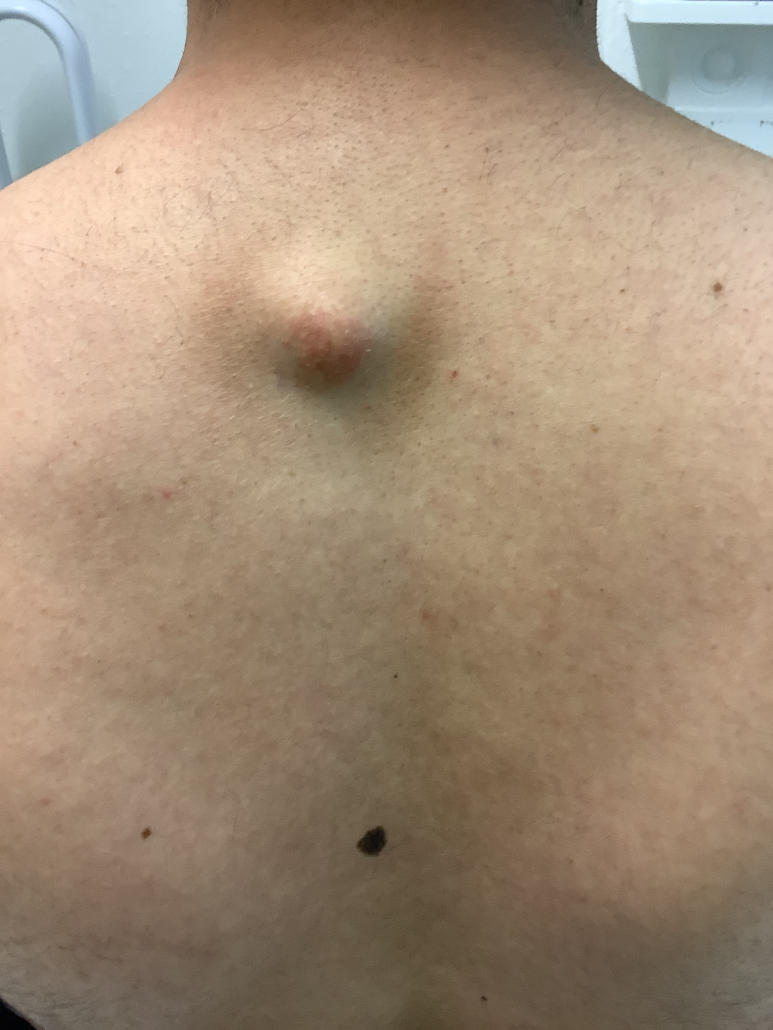
The cysts are generally not harmful and are rarely painful. However, if a cyst becomes infected, it can cause discomfort.

When infected, symptoms such as redness, swelling, and tenderness can occur. The cyst may become warm to the touch, signalling inflammation.

The precise cause of sebaceous cysts isn’t always clear. However, several factors contribute to their formation. These include blocked glands, skin trauma, and sometimes genetic conditions.

Here are some key points about sebaceous cysts:

  • Non-cancerous skin lumps
  • Slow-growing
  • Typically painless

Understanding these basic facts can help ease concerns. It is important to consult your doctor if changes occur. Knowing what a sebaceous cyst is can guide better health decisions.

Common Symptoms of Sebaceous Cysts

Sebaceous cysts are typically easy to identify. The most noticeable symptom is a small, round bump under the skin.

These cysts are usually not painful. However, they can become uncomfortable if infected or inflamed.

Some people may experience mild discomfort from a cyst even when it’s not infected. This can happen if it grows larger or is in a sensitive area.

When a cyst becomes infected, several symptoms can appear. Redness, swelling, and tenderness are common signs of infection.

The cyst may also feel warmer than the surrounding skin. This warmth indicates inflammation.

Other symptoms might include a foul odour if the cyst drains. This occurs because of the cheesy-like substance inside.

Here are common signs of sebaceous cysts:

  • Firm, round lump
  • Possible tenderness
  • Redness or swelling (if infected)

It’s crucial to monitor any changes in these symptoms. If you experience these signs, consult your doctor for proper evaluation.  It is important to note that we will not remove your sebaceous cyst if there are signs of inflammation or infection and this must be treated before having definitive removal.

Causes and Risk Factors

Sebaceous cysts develop for various reasons. The exact cause is not always known, making prevention tricky.

One common cause is a blocked sebaceous gland. These glands produce oil for the skin and can become clogged.

Blockages might result from trauma to the skin. Injuries or damage in certain areas can trigger cyst formation.

Genetic conditions also play a role. Some inherited disorders increase the likelihood of developing cysts.

Hormonal changes are another factor. These changes can influence sebaceous gland activity, leading to cysts.

Age and lifestyle may contribute as well. As you age, your risk of cysts might increase.

Key causes and risks include:

  • Blocked sebaceous glands
  • Skin trauma
  • Genetic conditions
  • Hormonal changes
  • Aging factors

Diagnosing Sebaceous Cysts

Diagnosing a sebaceous cyst usually begins with a physical examination. We will assess the cyst’s size and location visually and you can even send us a photo of your cyst if you would like an opinion before coming to the clinic.

Send us a photo on WhatsApp here.

In some cases, further tests may be needed. Imaging tests like ultrasounds help rule out other conditions and are useful for particularly large cysts or cysts in certain locations such as the outer edge of the eyebrow, which could represent an external angular dermoid cyst.  These are cysts that are  created during development as the bones of the skull fuse and have a small possibility of connection with the brain.
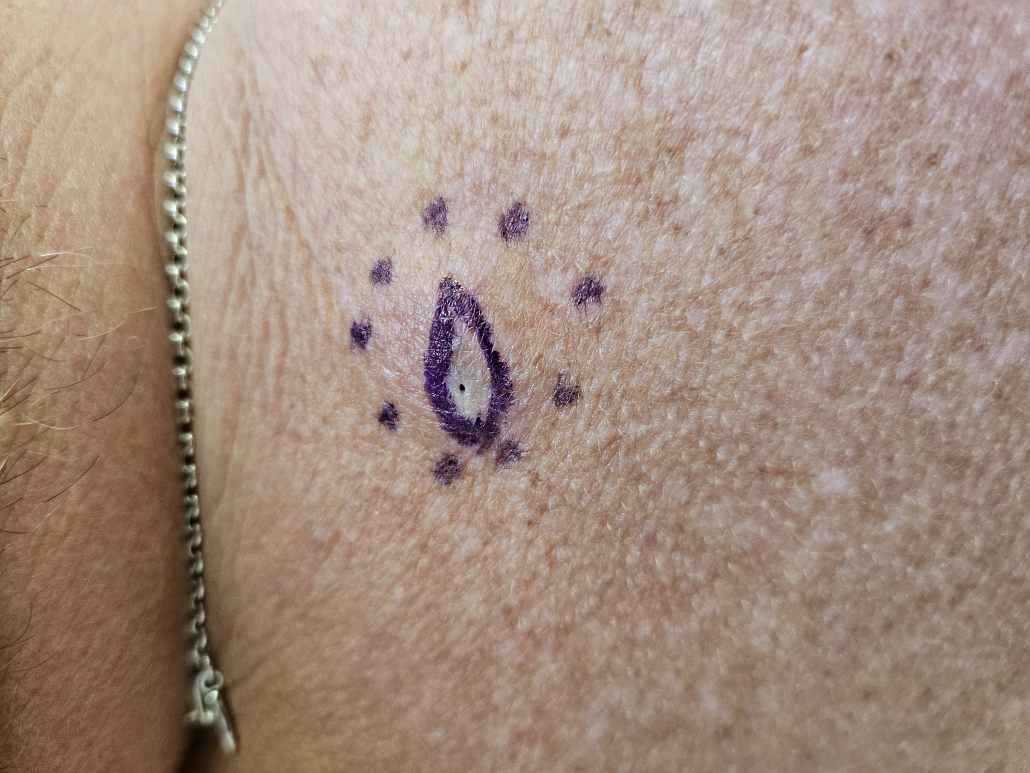
We look for specific signs to confirm it is a cyst. These include smooth texture and mobility under the skin.  The overlying skin is usually normal, although there is often a small hole in the skin with a connection to the cyst.  This is known as a punctum and is a trademark feature of a sebaceous cyst.  If you do have a punctum in the skin, we will remove this at the same time as removing your cyst.
Treatment Options for Sebaceous Cysts

Treatment for sebaceous cysts depends on their size and symptoms. Many cysts do not require any intervention.

However, some individuals may choose treatment for comfort or cosmetic reasons. If a cyst becomes bothersome, several options exist.

Antibiotics may be prescribed if the cyst is infected. This helps clear any bacterial infection accompanying the swelling.

For larger or painful cysts, particularly if they are infected, draining the fluid can provide relief.

Home remedies, like warm compresses, can provide temporary relief. However, these should be approached cautiously and are not a substitute for professional care.

None of the above strategies will remove the cyst because the cyst wall remains even if the contents are drained.

Definitive treatment of a sebaceous cyst requires surgical removal.

Here is a list of treatment options to consider:

  • Antibiotic prescription for surrounding redness
  • Drainage if grows large and painful suggesting infection
  • Surgical removal to permanently remove the cyst

Sebaceous Cyst Removal Procedure

If a sebaceous cyst requires surgical removal, it is often a straightforward procedure that can be done on the same day as your consultation in one of our ‘See & Treat’ Clinics.

It is typically done under local anaesthesia and you will be able to go home shortly after the procedure.

We will make a small incision over the cyst. This provides access to remove the entire sac.

Removing the entire cyst is crucial. This helps prevent the cyst from coming back in the future.  For this reason, the scar is usually about as long as the diameter of the cyst, but as we are all plastic surgeons, we will plan the placement of your scar to make it as unnoticeable as possible.
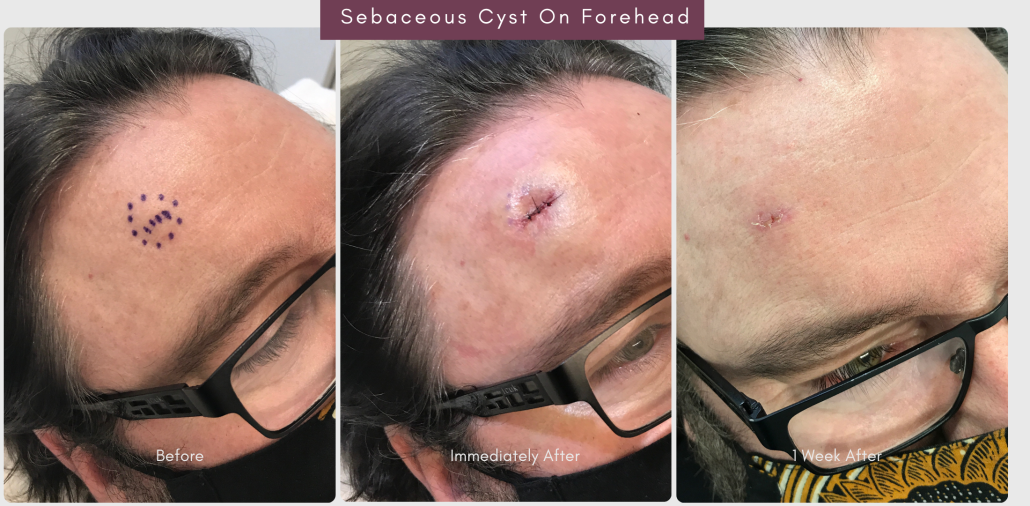
The procedure generally takes about 45-90 minutes. Recovery is usually quick, with minimal discomfort.

We have the facilities to send your cyst off for histological analysis for complete peace of mind and all of these services are included in the fixed price package that we offer.

REQUEST A PRICE FOR CYST REMOVAL

Following the procedure, we will give you aftercare instructions and make sure you have our contact details and a follow-up appointment booked.

Aftercare and Recovery

Taking care of the area after sebaceous cyst removal is crucial to ensure quick healing and the best result possible.

Keep the wound clean and dry. We will provide specific postoperative instructions.

Avoid heavy lifting or strenuous activities. This helps prevent strain on the healing area and reduces the risk of swelling.

Watch for signs of infection. Redness, warmth, or discharge may indicate a problem.

You will always have a follow-up appointment and contact details so that you can let us know if you have any concerns.

We will be on hand for you to come back to the clinic or we can arrange for a phone or video call if you have any questions.

All of your aftercare will be with your plastic surgeon and the clinic nurse and we will make sure that you are fully looked after during your recovery period.

Our Cast Iron Guarantee

At The STAIANO Clinic, we offer our cast iron guarantee.

Many clinics will not see you again once they have removed your cyst and you might feel that you have been left out in the cold.

Our clinic has been built on making sure that we look after our patients as you can see from our 5 star reviews.

When you become a patient of The STAIANO Clinic, you are always welcome to come back to see us if you have any questions or concerns.  We do not charge for follow-up appointments.

Not only that, we also want you to know that we will do everything that we can to give you the best result possible and so if your surgeon feels that you need any further surgery within the first 6 months after your procedure, there will be no charge.

This gives you complete peace of mind that the price that you pay includes all of your aftercare and all of your follow up for as long as you need.

Preventing Sebaceous Cysts

Prevention focuses on good skin care practices. Regular cleansing can help reduce the risk.

Avoid trauma to the skin. Protect areas prone to cysts by being gentle and cautious.

Manage conditions like acne. Controlling breakouts can lower the chances of cyst formation. Regular dermatologist visits can help maintain skin health.

When to See a Doctor

If you notice a new lump or bump under your skin, it is wise to consult your doctor. This helps ensure the growth is not something more serious.

Seek medical advice if the cyst becomes painful, red, or swollen. These signs may indicate an infection that requires treatment.

Persistent or bothersome cysts also warrant evaluation. Early intervention can prevent complications and ease concerns.

Myths and Misconceptions

There are several myths surrounding sebaceous cysts. One common misconception is that they are contagious. In reality, sebaceous cysts cannot spread from person to person.

Another myth is that popping a cyst will cure it. This actually increases the risk of infection and complications, making the problem worse.

Finally, some believe sebaceous cysts are always a sign of cancer. In fact, they are usually benign and non-cancerous, although evaluation is still important.

Conclusion and Key Takeaways

Sebaceous cysts are common and generally harmless. However, they can be bothersome due to their appearance or potential for infection.

Understanding the nature and treatment of sebaceous cysts can alleviate anxiety. It can also empower you to manage them more effectively.

Key takeaways include:

  • Sebaceous cysts are non-cancerous.
  • They often don’t need treatment unless symptomatic.
  • Removal is the most effective treatment.
  • Good hygiene helps prevent new cysts.
  • Consult your doctor if you have any concerns.

If you are thinking of having your cyst removed, you can send us a photo on WhatsApp and we can send you details about removal.
Mole Removal The STAIANO Way – One Visit Instead Of Three

Mole Removal In Birmingham – One Stop Clinic

Traditionally for mole removal or cyst removal,  you would need to go through a process to have it removed which would require at least three visits to the doctor.

THE TRADITIONAL WAY

  • 1st VISIT – you would make an appointment with your GP who would then refer you to a specialist
  • 2nd VISIT – you would see the specialist who would look at your mole or cyst and put you on a list to come back and have it removed
  • 3rd VISIT – you would come back to the hospital for your cyst or mole removal procedure

This can be frustrating if you work or have a busy life because it involves three separate appointments at different times.

You will often know what procedure that you want – to have your mole removed and so why should you need to see two doctors and have three separate visits?

At The STAIANO Clinic, you can have it all taken care of in ONE APPOINTMENT.

To streamline the process, you do not need to see your GP for a referral before coming to see us.  You can contact us directly and then we will communicate with your GP afterwards.

THE STAIANO WAY

  • STEP ONE – let us know what procedure you are interested in and we will send you some information and guide prices
  • STEP TWO – if it is a mole or cyst or something that you would like to have removed, then send us a photograph.   This allows one of our clinic nurses to take a look and assess the suitability for surgery and to also give you a more accurate idea of what it would cost to have it removed.
  • 1st VISIT – come to the clinic for a consultation and mole removal on the same day in our ‘see & treat’ clinic.

If you have any questions, you can join me on a Tuesday evening at 7pm for my live Q&A on Facebook, Instagram and YouTube.

You would be welcome to come to the clinic for an assessment with one of our plastic surgeons before committing to having your mole removed, but if you are comfortable with everything and you do not want to come back for a second consultation, we offer our ‘see & treat’ clinic.

This means that you only need to take one time off work and you can come to the clinic, meet with one of our plastic surgeons and have your consultation, just like you would normally, but if you feel comfortable to go ahead with the procedure on the day, then we will take you to the operating suite and remove your mole or cyst there and then.

There is never any obligation to proceed if you do not feel comfortable and although we take a deposit, we will refund it in full if you do not go ahead with your procedure for any reason.

I have set this system up because I am always looking for ways to stand out from the competition and to look at how I can deliver more value and give a better service to my patients.

From your point of view, you cannot really lose because you will be having a consultation and you will have the choice whether to go ahead or not.

From the clinic point of view, it is not very efficient and this is why not many clinics will offer this service.  If you choose not to go ahead with your procedure on the day, then we will have lost out, because we will have a big gap in the clinic.

…but I don’t mind this, because there is always a price to pay for being different and standing out.

You can visit our Mole Removal page for more information and to book your appointment.

Removing a mole without leaving a scar

I am often asked about removing a mole without leaving a scar.

There is a lot written on the Internet about this and YouTube seems to be full of videos of people demonstrating home remedies that can ‘quickly and easily remove your mole leaving no visible scarring‘.

The reality is that it is not possible to remove a mole without leaving a scar of some sort.

We are all specialists at mole removal at The STAIANO Clinic and often the scars fade so well that they are difficult to see and so people think that they are not there.

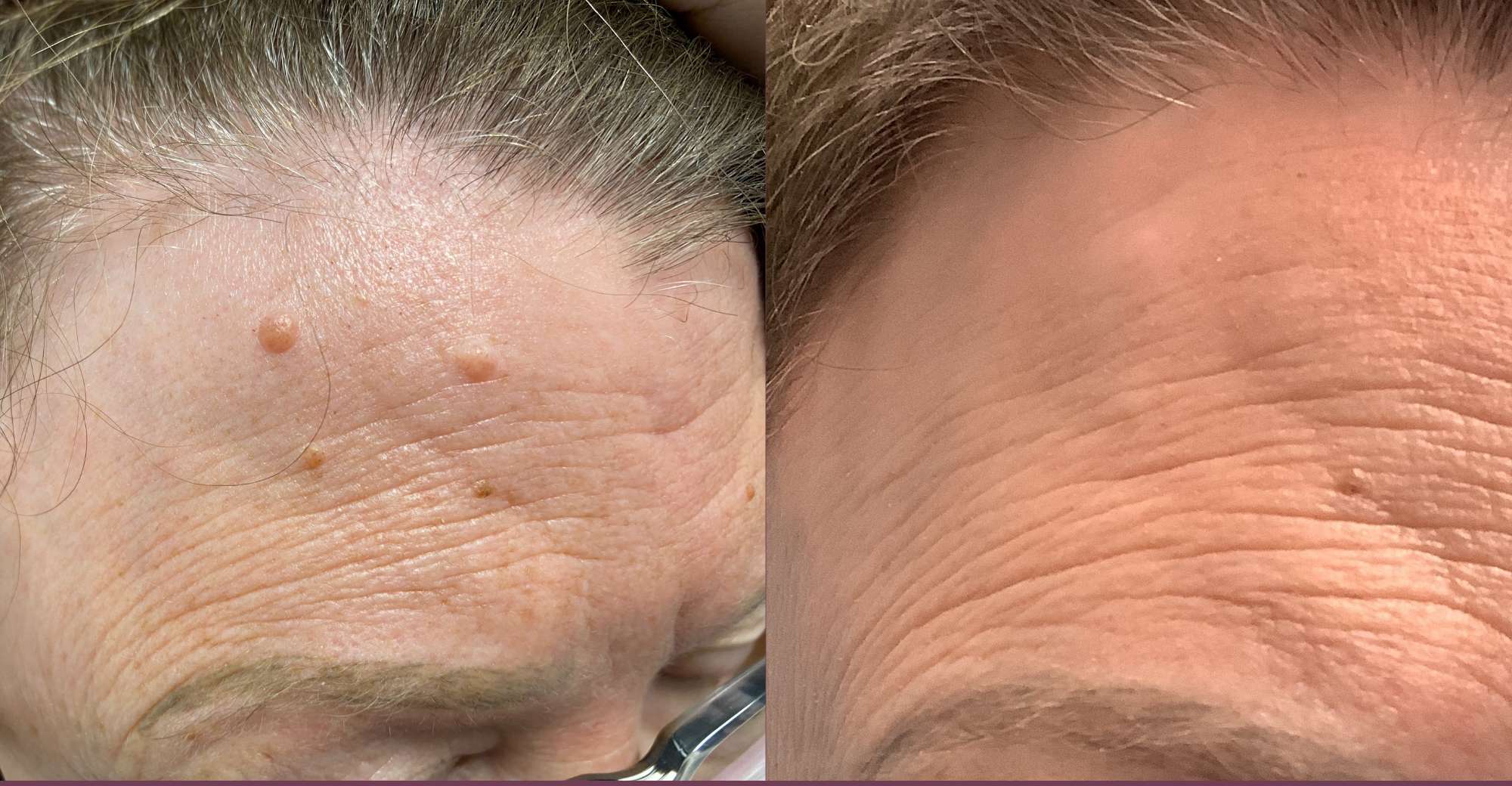
Removal of 3 moles on the forehead by shave excision

The question should not be ‘how do I remove my mole without leaving a scar?‘,

it should be ‘how do I remove my mole leaving the best scar possible?‘

There are many ways to remove a mole but the common theme is that the piece of skin that contains the pigment cells of the mole needs to be destroyed in some way.

  • You can burn it with heat or energy like a laser.
  • You can destroy it with acid.
  • You can scrape it off.
  • Or you can cut it out with a knife.

They will all remove your mole and they will all leave a mark or scar of some kind.

There are pros and cons of each method and so you need to weigh up what would be the best for you.

Perhaps the most important question is to find out whether there is anything suspicious about your mole. The best way to test this is to send it away for histological analysis.

This is only possible to do if your mole is removed by cutting it out with a knife because all the other ways will destroy the tissue and so it cannot be analysed.

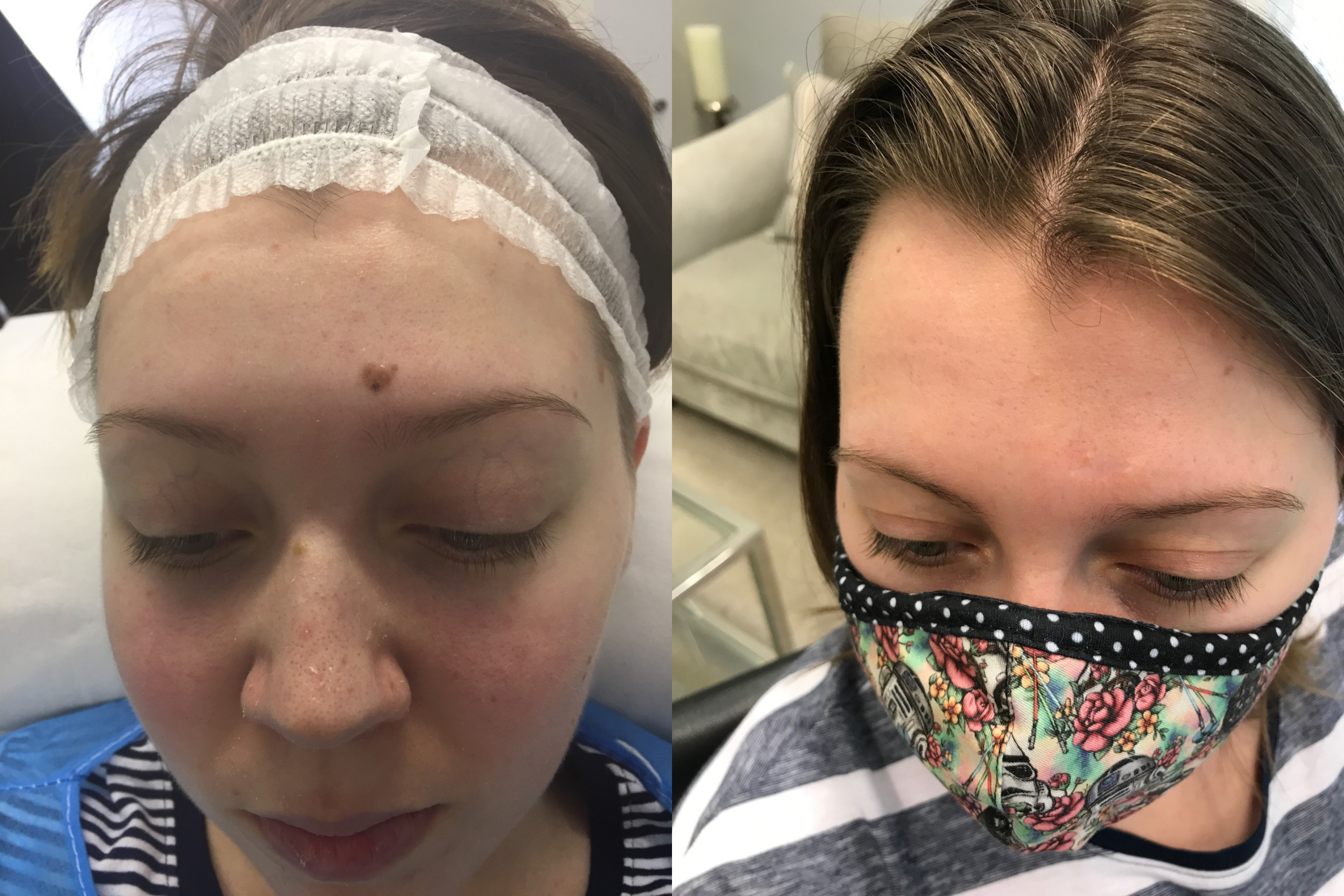
removing a mole without leaving a scar

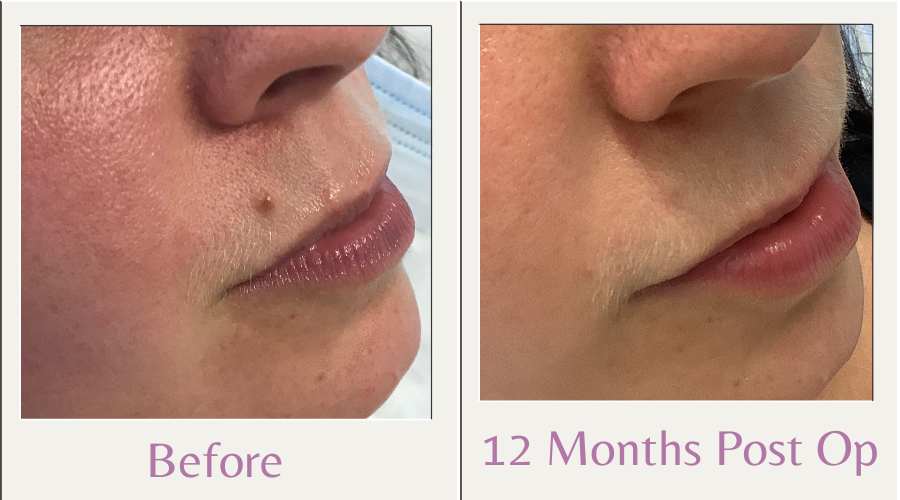
Before and after removing a mole without leaving a scar

This is particularly important for brown moles because even if there is no concern that they are cancerous, there may be reasons to get a histological report anyway.

If you were to develop signs of skin cancer later on in life such as enlarged lymph notes, your doctors would look closely at your skin for a potential source of the cancer.

If you tell them that you had a mole removed some years ago, then they would want to see a histological report to confirm that that was not the cause of your current problems.

If the mole was not sent away for histology, then there is no way to be sure that it wasn’t actually cancerous.

In terms of the scarring created, then it can be variable for all the modalities of treatment.

When destroying the skin with heat, laser energy or acid, it can be difficult to judge the amount of energy needed to completely destroy the mole.

If you do not use enough energy then there may be evidence of a residual mole left behind
…and if you use too much then this can increase the scarring.

It is more predictable when you use a knife, if it is being used in skilled hands.

My advice for patients who want to know the best way to remove their mole without leaving a scar is this:

  1. First of all, there is no way to remove a mole without leaving a scar
  2. Secondly that excising it with a knife is probably the most predictable and effective way, with the added benefit of allowing us to perform histological analysis if required.

If you have a mole that you are concerned about the first thing to do is to get it checked out by a doctor.

We offer virtual consultations if you would like an assessment and opinion by one of our fully trained plastic surgeons and we also offer a ‘see & treat’ service that will allow you to have your mole removed on the same day as your consultation if this is something that you would like to consider.

Please feel free to comment on my blog and if you want to get in touch you can email me at [email protected] or call us on 0121 454 3680

You can send us a photo of your mole on WhatsApp if you would like one of the team to have a look at it:


Visit our Mole Removal page for more information and to book your appointment.

Removing a Beauty Spot

If you have a beauty spot and you would like to have it removed then we offer a ‘see & treat’ service where you can have a consultation with one of our plastic surgeons and go straight ahead and have the beauty spot removed there and then on the same day as the consultation.

A beauty spot is usually a benign mole and there is not anything to particularly worry about but they are in prominent positions on the face and so it is not uncommon for people to want to have them removed.

Of course there are icons of fashion such as Cindy Crawford and Marilyn Monroe who are famous for their beauty spots which are distinguishing features and something that they have obviously embraced.

However not everyone feels this way about their beauty spot and whilst some may think that they look attractive, some may feel differently.

If you are unhappy with your beauty spot and want to have it removed then it is usually something that can be done relatively quickly and painlessly in our minor operating suite.

We are all fully qualified plastic surgeons at the Clinic and we are careful to plan removal of your beauty spot to leave the least scarring so that once things have faded it is difficult to see where your beauty spot was.

If you have got a beauty spot that you would like to have removed, we offer consultations with a plastic surgeon and will give you honest advice with never any pressure to proceed.

If you have any questions you can contact us on 0121-454 3680 or email us at [email protected]

I do a live Q&A every Tuesday at 7 pm on Instagram, TikTok, YouTube and Facebook so feel free to comment or ask a question.


Visit our Mole Removal page for more information and to book your appointment.

Lipoma Excision

5 Ways To Treat Keloid Scars

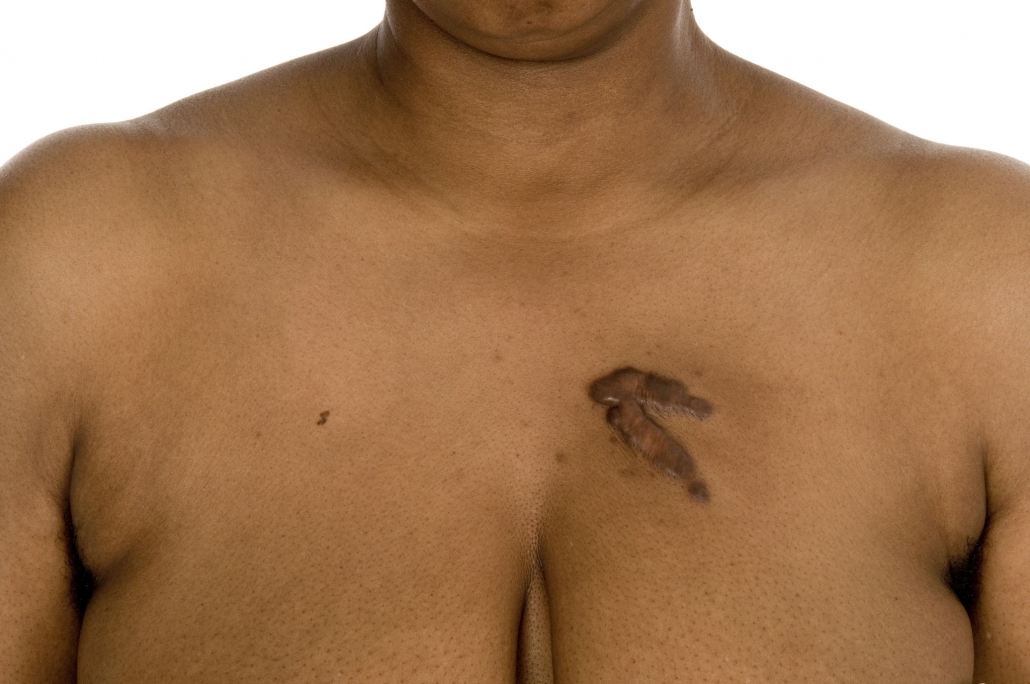
Keloid scars are an abnormal form of scarring that occur in some individuals.

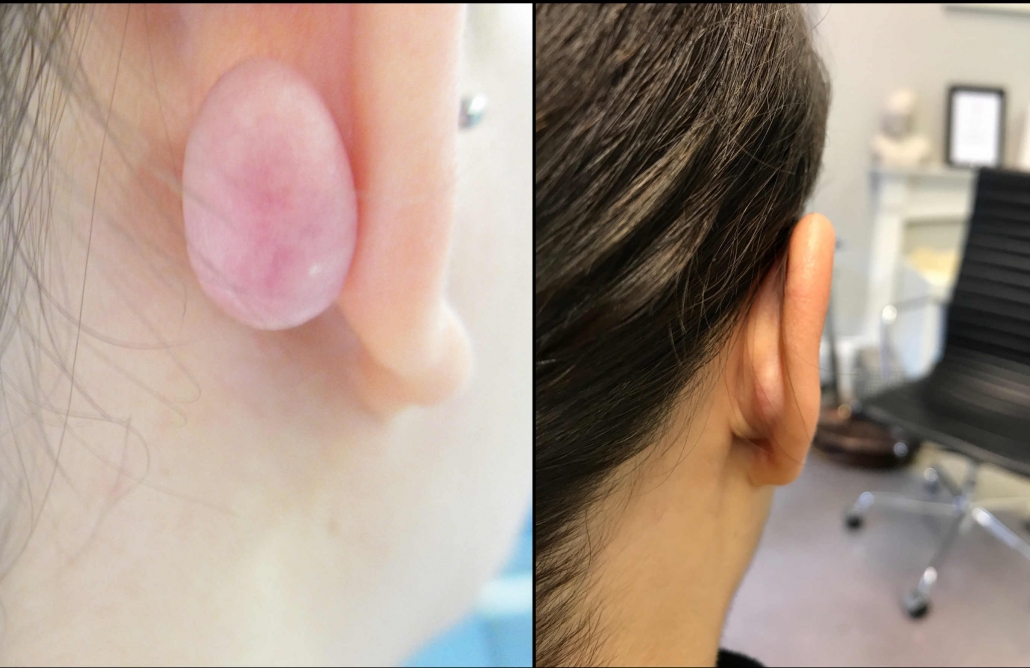
They are more common in certain skin types such as Afro-Caribbean skin and they are also more common in certain areas such as the earlobes, the shoulders or over the breast bone.

They are raised lumpy scars which are often itchy and are darker in colour to the normal skin colour so they can be red or purple in Caucasian skin or darker brown in pigmented skin.

They are difficult to treat because it is an abnormal response by the body and we don’t really know why they occur.

There are five main forms of treatment for keloid scars:

1. Moisturising and Massage

If your scar is only slightly raised and particularly if it is within the first year then you may have a hypertrophic scar rather than a keloid scar and these tend to be less severe and more likely to improve over time.

Moisturising and massaging the scar will help it to soften and may help with the itch.  This is the first line of management for any scar and should be considered for the first 3-6 months before considering scar revision.

2. Silicone

The next step would be to use silicone on the scar.

Silicone comes in 2 forms, a gel or a sheet.

Silicone sheets are useful on flat areas particularly underneath clothes because while the silicone sheets are sticky, they do not stay on well on exposed areas.

For keloid scars in exposed places like the face or the ears, silicone gel is more effective.

The silicone needs to stay on for 23 hours of the day and is only taken off to wash.

It can help with the red and raised nature of the scar and also the itch.

3. Pressure

Pressure is known to improve the quality of keloid scars although it is dependent on the area as to whether it can be used as a modality for treatment.

Keloid scars on the earlobes may be amenable to having pressure applied by using a custom-made clip which will press on the scar and can help it to flatten.

Other areas of the body can be more difficult to apply pressure to although it may be possible to have a custom-made garment depending on the size and location of the scar.

For severe scarring of the face, a custom mask can be made to apply pressure, although this is only for extreme cases.

4. Steroid Injections For Keloid Scars

The next step for troublesome keloid scarring is to use steroid injections.

Steroids are used to dampen down inflammation and it is presumed that the cause of the keloid scarring is an inflammatory reaction within the scar.

The steroid needs to be injected into the scar itself and this can be uncomfortable.

Steroid injection is a procedure that can be performed in the outpatient clinic and may need to be repeated.

5. Excision Of Keloid Scars

One of the last options we consider, but perhaps one of the first options that many people think about, is excision of the scar.

It may seem an obvious choice to excise and give a fresh neat scar. However because keloid scarring is due to your body’s reaction to forming scars, there is a high probability that if a fresh scar was made, it could be keloid again and it could come back worse because the new scar would be longer than the original one.

Excision of a keloid scar is sometimes performed if it is a very large and bulky scar that is unlikely to be significantly reduced with steroid, pressure or silicone.

When excision of a keloid scar is considered, we would usually perform what is known as an intralesional excision of the scar which involves leaving a rim of keloid scar behind so that fresh skin is not cut into.

This leaves a residual lump which can then be treated with one of the other methods above such a steroid injection, pressure clips and silicone dressings or a combination.


The treatment of keloid scars is challenging and as you go up the ladder of increasingly invasive methods then the potential risks also increase.

This is an outline of what is available for keloid scars but each patient needs to be treated on a bespoke and personal level with a package or combination of treatments which will give the best possible outcome.

If you would like a assessment of your keloid scar from one of our Plastic Surgeons you can send us a photograph for a free, no obligation opinion.

Taken From A Tuesday Night Q&A – ‘Best Way To Treat Keloid Scars’:

Cost of Mole Removal

It is a very common question for us to get from prospective patients ‘what is the cost of mole removal?‘.

I think if I was having a mole removed this is a question that I would ask and this is often the only question paying patients ask.

I think this is because it is hard to know what questions to ask and certainly asking about the cost is an obvious, easy and important one.

The problem we have is that if you are comparing our service with others purely on the cost, you may find that we charge more than other clinics.

It is not unusual for patients to come back to us and say that they have found it a lot cheaper elsewhere and we realise that this is the case.

In this video, I explain why you should consider the other factors, apart from just the cost:

  1. Cost Of A Plastic Surgeon

All our surgeons are fully trained plastic surgeons which is unusual when it comes to mole removal.

All sorts of doctors perform mole removal and most are not fully trained surgeons, let alone plastic surgeons.

There is nothing inherently wrong with this and it may be that a dermatologist or a GP with no formal surgical training can safely and effectively remove your mole.

However, as plastic surgeons, we have spent years and often decades honing and refining our techniques, tissue handling, and placement of scars, so that we ensure that we get the best result possible, and minimising trauma to the tissues and taking care with scar placement we often get a reputation for leaving no scars at all.

Everyone will leave a scar no matter what they say, but the quality of scar can vary dramatically according to the practitioner that you chose.
Furthermore, as plastic surgeons, we are also trained in treatment of skin cancers and reconstruction so we can treat any mole or skin lesion regardless of its size or location.

The story goes that Picasso was sitting in a Paris cafe when an admirer approached and asked if he would do a quick sketch on a paper napkin.

Picasso politely agreed, swiftly executed the work, and handed back the napkin ” but not before asking for a rather significant amount of money.

The admirer was shocked: How can you ask for so much? It took you a minute to draw this!
No, Picasso replied, It took me 40 years

You are not just paying for the time that the surgeon takes to perform your procedure, you are paying for the years of experience it has taken them to refine their art.

If you compare our costs with having surgery done by a Plastic Surgeon elsewhere, you will find that we are usually a lot cheaper because we have our own surgical facility and do not need to use the facilities of a hospital.

  1. The Cost Of Histology

It is good practice to send pigmented moles away for histology.

This is included in the cost of mole removal at The STAIANO Clinic.

Histology is expensive because it needs to be sent away to London, analysed under a microscope, and then reported on, to ensure there is nothing to worry about.

Often we can tell clinically that moles are benign, but it is sometimes nice to have a histological report for peace of mind and also for the future if any other new lesion or lumps or bumps crop up, it is good to know exactly what your mole was.

We do not charge extra for this service, because we believe in providing one fixed price that covers every eventuality.

  1. The Cost Of Aftercare

The underlying theme at The STAIANO Clinic is that we ensure that we do everything we can to look after our patients.

Once you are a patient of ours we never discharge you, and you can always come back if you have any questions or concerns at any time, whether it is before or after your procedure.

We do not change for consultations for mole removal so you can come and talk to the plastic surgeon about what might be possible and the sort of results you could achieve with no obligation to proceed.

Once you have had your procedure, we will see you to remove your dressing and sutures if required and will continue to see you to check on your scar and give you advice about scar management to ensure that you get the best scar possible and are completely happy with everything.

This attention to detail and commitment to ensure every patient has the best result is one of the reasons why there are so many happy patients and good reviews.

We may not be able to compete on price but we can certainly compete on service and aftercare and deliver this to a world class standard.

If you ever were to have any problem, need any further surgery, or continued input and advice, we would always be there for you.

It is hard to put a price on these things and often you don’t realise their value until you need them.

Cost is always a factor but so is value.

There is nothing worse than paying for something and feel that you are not getting value for money, but at the same time, sometimes it is worth paying more for something if you can see the value.

Our clinic is based on delivering value over and above the norm in everything that we do, constantly striving to improve the experience for our patients, and this shows in the positive feedback that we receive.

We are one of the few clinics in the country who offer a see and treat service for moles and cysts, which means that we are happy to block out enough time to see you in the clinic and remove your mole on the same day to save you having to come back, although we are fully prepared to postpone or delay the surgery if you are not happy for any reason, so this in itself is not an efficient use of our operating theatre, but we do it because it is providing a better service to our patients, which has always been our primary focus.

I believe that by investing in our service, in our expertise, and in the results that we can deliver, we can give more value to our patients and get better outcomes.

When you take it all together, you will see that the cost of mole removal at The STAIANO Clinic is actually quite competitive if you compare the service that we are offering, to that of others.

The cost of mole removal is from £750 and that includes all of your Consultations with one of our Plastic Surgeons, histological analysis of your mole and all of your aftercare.  If you have multiple moles, it is £350 for each additional mole.

If you are unsure if it is worth it, why don’t you come along for a free consultation and come and meet us and you can get a feel of what we offer before making a decision.

If you have any questions feel free to get in touch or leave a comment and I would be happy to get back to you.

Visit our Mole Removal page for more information and to book your appointment.

If you have any questions, you can always join me on Facebook where I do a live Q and A every Tuesday at 7 p.m. and I will be available live to interact and discuss any issues.

Click Here To Subscribe To My Blog

Different Types Of Skin Cancer

What is Life-Changing Surgery?

I was invited to a talk on the radio this morning about scar management following a story of a football supporter who had been attacked and had sustained a long laceration to his cheek.
The conversation revolved around the scarring and the emotional impact of scars and what can be done about it.

I am always cautious when talking about scar revision because sometimes people think that plastic surgeons can remove a scar but that is not true.
I think we get that reputation because when we make a scar, we choose where to put them and know how to hide them in natural skin creases or in areas of the body where there are concavities or shadows, so that they can blend in and once settled, can be difficult to see.

Of course, it is a different story with traumatic scars and they are usually a lot more obvious than surgically created scars.
There are things we can do to change the direction of the scar and to improve them if they are raised up or dented in, which is interesting, because the discussion moved onto the psychological impact of having scar revision. 
It is true that the surgery itself is often quite minimal and usually done under local anaesthetic on a walk-in, walk-out basis and the results really can be truly life-changing – except when the definition of a minor operation is one that is not happening to you.
We as surgeons can sometimes think that we are performing minor surgery, but for the patient it can bring tremendous relief from the emotional impact of having an obvious scar, particularly if it is on the face and people’s eyes are drawn to it and they keep asking you about it.
If we can do something to help it blend in and make it less obvious, it can allow you to be you and not to be defined by your physical features.

And this is true of all cosmetic surgery.

It is often deemed to be unnecessary or for vanity reasons, but I think people’s perception is far off the average person seeking cosmetic surgery.
It is usually done for them and not for anyone else and they just want to feel more confident and happier about their appearance.

It was interesting talking to Danny Kelly this morning on BBC WM because it really made me think about the impact that we have on people’s lives and sometimes we can lose sight of this and get caught up in ‘the what we are doing’ rather than ‘the why we are doing it’.

I truly believe that cosmetic surgery can significantly improve people’s quality of life and I am often upset by the adverse media attention, which happens to be part of the positive image of plastic surgery this morning, as this is always what we are trying to achieve because everyone deserves body confidence.

Click Here To Subscribe To My Blog