



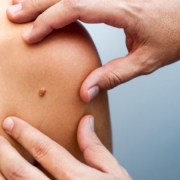
Do I Need To Send My Mole For Histology?
A question I get asked a lot is: What is histology?
Histology is when we analyse parts of the body by putting them under the microscope.
It is performed by a specialist type of doctor called a histopathologist and is often done in a laboratory which may not be located in the hospital. Samples are often sent away for analysis and usually take days or weeks to be processed.
Histology allows an accurate diagnosis to be made of the type of tissue and perhaps most importantly, whether it is cancerous or not and if it is cancerous, whether the cancer has been completely removed.
You see, when we are doing surgery and we remove parts of the body, there is always the question as to whether we send it away for histology or not.
For instance, if I am doing a tummy tuck there is no need to send the skin and fat away for histology because there is very little chance of there being anything abnormal about it.
However, when doing a breast reduction we routinely send the tissue away for histology because the risk of breast cancer in the general population is very high.
For minor procedures such as removal of moles, cysts or skin tags, we need to decide whether we send the lesion away for histology or not.
Obviously if there are any concerns about the mole such as a change in size, shape or, colour or any bleeding or itching, then there is no question that it should be sent away for histology.
Often patients have moles, cysts or skin tags which are simply a nuisance and have always been present and they are not concerned they might be cancerous but they just want them removed for cosmetic or functional reasons.
In these situations, they may not always need to be sent away for histology.
Certainly, if it is a brown mole it is usually good practice to send these for histology, even if they look totally fine because it is always good to have a record of this.
However, if it is a simple skin tag or an cyst then histology is not necessarily essential.
There are some types of moles which you can tell by looking at are nothing to worry about.
These are things like seborrheic keratoses which are brown flat warty lesions which have a stuck-on appearance and appear later in life.
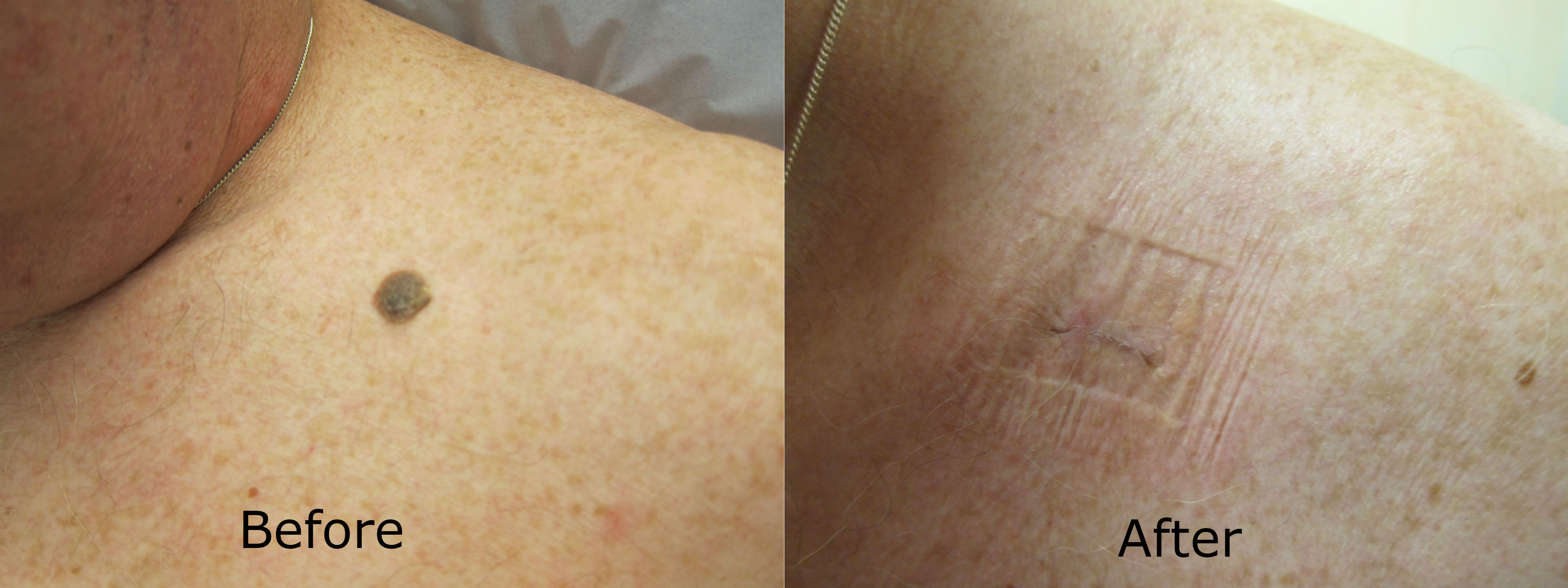
Seborrhoeic Keratosis on shoulder shown at 1 week post removal at The Staiano Clinic
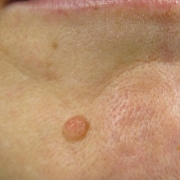
Or intradermal naevi which are raised, sometimes brown, sometimes fleshy moles which can have dark hairs growing from them. They appear in areas of friction such as at the back of the neck and they can also appear on the face and they can be troublesome in men as they catch when they shave.
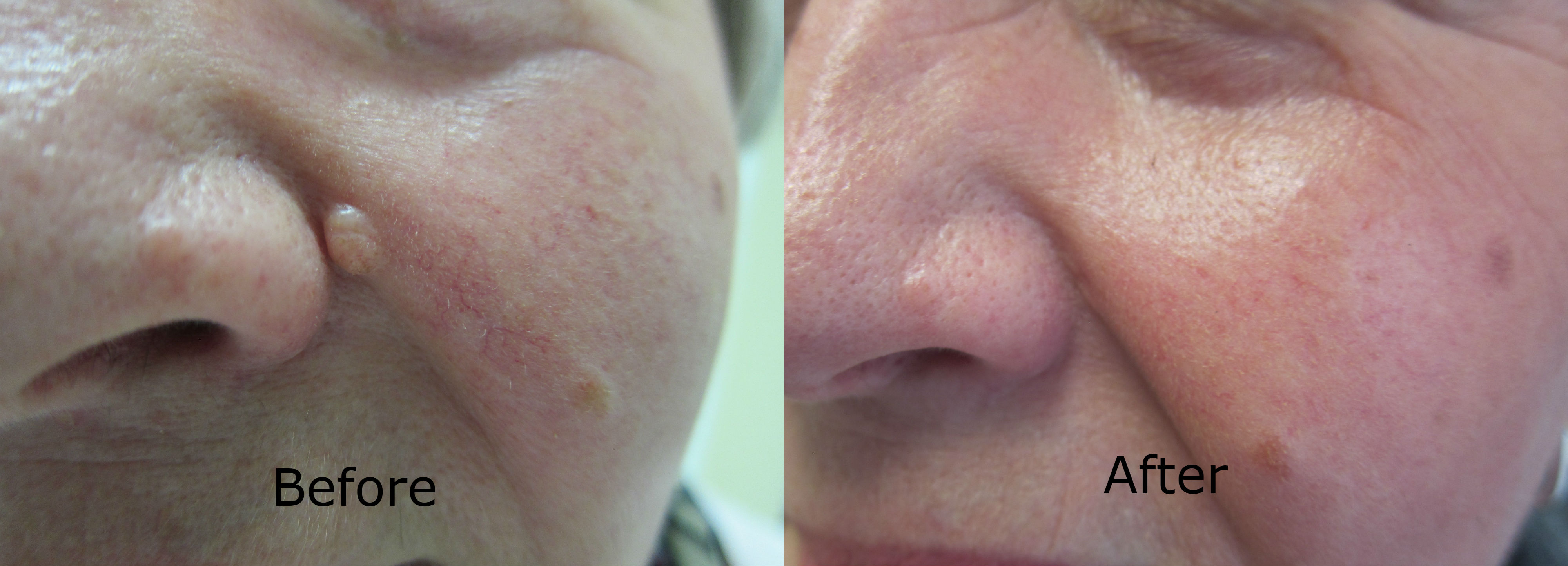
This is an Intradermal Naevus beside the nose shown at 6 weeks after removal at The Staiano Clinic
If it is possible to say with certainty that a mole is nothing to worry about, then it does not need to be sent for histology but this is only something we can do after discussion, which is why we offer free consultations for mole assessments.
Sometimes patients send us photographs of their lesions (you can email them to us here) and we can give them an idea prior to attending the clinic what will be involved in removing it.
If you come in for a see and treat procedure then it is always worthwhile to send us a photo or have a discussion with us beforehand to avoid any surprises when you arrive.
If you have any moles or lesions that are troublesome, I would always encourage you to get them checked out.
We offer a free consultation with one of our surgeons if you are simply looking for assurance and if you want the lesion removed on the day of consultation then we can accommodate this too in our state of the art minor operating theatre.
Contact us on: 0121 454 3680, email us or like our Facebook page as our director, Jonathan Staiano has a Q&A every Tuesday night at 7pm where he can answer your questions live.
Visit our Mole Removal page for more information and to book your appointment.
If you are worried about your mole, then you can download our guide with what to look out for below:
#askjj
Read Jonathan's book now!
Jonathan is on a one man crusade to revolutionise the image of cosmetic surgery and is passionate about spreading his message about cosmetic surgery training.