



These are the skin moles to worry about
Last reviewed: October 2026 by JJ Staiano, Consultant Plastic Surgeon GMC number 4117214
Generally, if a mole changes size, shape or colour, becomes itchy or starts swelling or bleeding, you should get it checked out. A useful guide is following your ABCDE.
- A stands for ASYMMETRY. Moles should remain circular and symmetrical. It should not be smaller or bigger on one side.
- B stands for BORDER irregularity. Moles with a ragged, or uneven border show irregularity and could be cause for concern.
- C stands for COLOUR change. Melanomas have lots of different shades. A healthy mole should only have one or two shades.
- D stands for DIAMETER. Most moles are not larger than the width of a pencil. If a mole gets any larger, it is probably not only irritating, but it is also a cause for concern.
- E stands for ELEVATED. If your mole is raised more than it was before, you need to keep a close eye on it.
Large mole on forehead with irregular border and different shades of colour
– shown before and after mole removal at The STAIANO Clinic
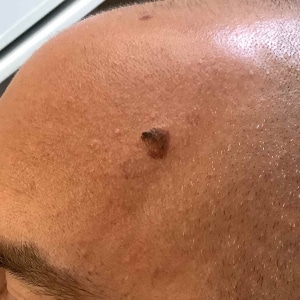
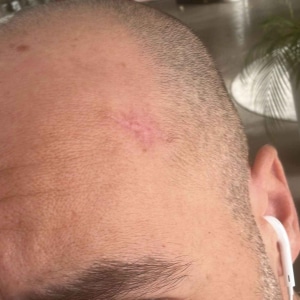
It’s important to remember that skin cancer is relatively rare. However, it is important to check your moles regularly and if you have any cause for concern, don’t hesitate to get it checked out.
Moles are usually circular, brown harmless patches of skin which generally tend to form on the back, legs, arms and face, at birth or before the age of 30.
Sometimes moles are not innocuous or harmless and some patients opt to get them removed.
Many people who visit our clinic wish to have a mole removed for cosmetic purposes.
Moles can spring up in inconvenient, sometimes obvious places (such as your face and neck) whereas other people have had moles since birth or childhood and have decided to finally get rid of them.
Equally, many patients visit the clinic because they are worried about a change in a mole and would rather be safe than sorry.
This is a good policy!
In rare cases, moles can also develop into malignant melanomas and can cause an aggressive form of skin cancer.
If caught early, the malignant moles can be removed with surgery and often the cancer does not return.
If you would like a copy of our guide on ‘when you should worry about a mole’ click here.

We offer a streamlined ‘see & treat’ service, where you can have your mole removed on the same day as your consultation.
Call now on 0121-454 3680 or you can book an appointment online.
You can see our Director, JJ Staiano, talk about ‘should I have my mole removed?’ in this video from one of our LIVE Q&A’s that we have on our social media channels every Tuesday at 7pm
Frequently Asked Questions
When should you worry about a mole?
Generally, if a mole changes size, shape or colour, becomes itchy, or starts swelling or bleeding, you should get it checked. A useful guide is the ABCDE checklist.
What does ABCDE mean when checking a mole?
A is Asymmetry: a mole should be symmetrical, not smaller or bigger on one side.
B is Border irregularity: a ragged or uneven border could be a cause for concern.
C is Colour change: a healthy mole should only have one or two shades.
D is Diameter: most moles are no wider than a pencil, and a mole that grows larger is a cause for concern.
E is Elevated: if a mole is more raised than it was before, keep a close eye on it.
Can a mole turn into skin cancer?
In rare cases, moles can develop into malignant melanomas, an aggressive form of skin cancer. Skin cancer is relatively rare, but it is important to check your moles regularly. If caught early, malignant moles can be removed with surgery and often the cancer does not return.
Why do people have moles removed?
Many patients have a mole removed for cosmetic reasons, for example if it is in an obvious place such as the face or neck, or if they have had it since birth or childhood. Others come to the clinic because they are worried about a change in a mole and would rather be safe than sorry.
Can I have a mole removed on the same day as my consultation?
Yes. The STAIANO Clinic offers a ‘See & Treat’ service, where you can have your mole removed on the same day as your consultation.
How do I book a mole removal appointment?
Call The STAIANO Clinic on 0121 454 3680 or you can book an appointment online.

#askjj
Read Jonathan's book now!
Jonathan is on a one man crusade to revolutionise the image of cosmetic surgery and is passionate about spreading his message about cosmetic surgery training.