Why Choose a Plastic Surgeon for your Mole Excision?

One of the areas we have had a lot of growth in here at The Staiano Clinic is in mole excision. I think one of the reasons is that we are able to offer a ‘See and Treat’ service which not many clinics are able to. We have our own state of the art operating suite here on site and so should you decide to have your mole excised on the same day as your consultation, then we can go straight to the operating suite and remove it for you.
The other reason that I think we are so popular when it comes to mole excision is that all of the Surgeons here at The Staiano Clinic are fully trained Plastic Surgeons. When it comes to mole excision there is a very wide range of Doctors who offer this procedure right from General Surgeons or ENT Surgeons through to GPs or Dermatologists who may not have any surgical training at all. So why choose a Plastic Surgeon for your mole excision?
When it comes to getting a good scar, there are several factors to consider. Plastic Surgeons are trained to respect the tissues and are known for their delicate instruments and meticulous techniques. If ever there is a complex wound to close in sensitive areas such as the face, around the eyes or lips, in situations where tissues are fragile or friable such as in the elderly or young children, and in cases where there has been extensive tissue loss or damage such as in explosive injuries or major trauma, the Plastic Surgeon is called in to put things together again.
We spend time thinking about what sort of sutures we are going to use to close the wound and what techniques would give the best cosmetic result with the maximum strength. Priorities are different for other surgeons and you may have seen a classical laparotomy scar which is classically a straight line on the abdomen with dots on either side. This is because General Surgeons, when they are performing a laparotomy, have a priority to treat some intra-abdominal pathology in the quickest, most efficient and safest way. They are not focusing on the cosmetic outcome of the skin scar, and if I was having a laparotomy I would not want them to be too concerned about the cosmetic outcome because it is usually performed for a serious condition. Most Surgeons when they are performing operations open and close the skin as a means to an end which is to perform their core surgical procedure, but in plastic surgery often the core surgical procedure is the opening and closing of the skin. We only operate on soft tissues and are trained to contour the body or remove tumours and therefore the training revolves around excision and closure. Because we are all trained as reconstructive surgeons we are very aware of the need to completely remove the tumour in the most effective way to allow us to close and reconstruct the defect with a minimum amount of morbidity. We will often be called in to reconstruct a defect after another surgeon has removed a cancer; and in these circumstances, the surgeon who is performing the excision is solely focused on getting a clear margin for tumour clearance and they do not have to think about the reconstruction because they know the Plastic Surgeon will come in and be able to handle any defect that they find.
We are in a unique position as Plastic Surgeons of being able to remove tumours and reconstruct them afterwards and so we can find that balance between making sure we get the lesion out completely, but at the same time minimising the damage to neighbouring structures and giving the best cosmetic outcome.
Plastic Surgeons are able to deal with skin lesions of any size and any type. We treat benign skin lesions, warts, skin tags, xanthelasma’s (cholesterol deposits around the eyes), we treat skin cancers (BCC, SCC and melanoma) of all shapes and sizes and in all locations. For this reason, when it comes to simple moles and cysts there is nothing that can phase us and if something was to crop up it is very unlikely that we will not have seen it before and know how to handle it. It is perfectly reasonable for GPs and Dermatologists and other Doctors to be removing moles and cysts and they can get good outcomes too, especially if they have spent some time with Plastic Surgeons learning some of our techniques. So, if you do have a lesion that you would like to have removed, whether it is because you are worried about it, or whether because it is unsightly, or it might be that it catches on your clothes, or bleeds, or is a nuisance; you can come for a free consultation with one of our Plastic Surgeons and if you did want to have it removed on the day then we could take you straight to the minor operating suite so that you could be rid of it forever within the hour.
For more information of what to look out for in a mole, you can download our guide here, and if you want to arrange a free, no obligation consultation then please call or email us.
If you are not sure whether your mole or lesion is suitable for excision then you can always send us a photograph and you will get an opinion from one of our Surgeons as well as a detailed quote of what it would cost to have it removed. All surgery is performed under a fixed price package which means there is an all-inclusive fee which covers the after-care and all dressings as well as any follow-up appointments.
Furthermore, our Director Jonathan Staiano does a live Q&A every Tuesday evening at 7pm so feel free to join in by going to our Facebook page and asking questions live, or email Laura your questions beforehand.
We would love to hear from you.

Same Day Mole Removal

In this video Jonathan discusses mole removal here at the Staiano Clinic and the option to have a see and treat service for this procedure. This means your consultation is the same day as your procedure.

If you would like any more information on our see and treat service you can call us on 0121 454 3680 or email on [email protected]. You can also download our mole guide here to get more information on mole removal itself.

Do I Need To Send My Mole For Histology?

A question I get asked a lot is: What is histology?

Histology is when we analyse parts of the body by putting them under the microscope.
It is performed by a specialist type of doctor called a histopathologist and is often done in a laboratory which may not be located in the hospital. Samples are often sent away for analysis and usually take days or weeks to be processed.
Histology allows an accurate diagnosis to be made of the type of tissue and perhaps most importantly, whether it is cancerous or not and if it is cancerous, whether the cancer has been completely removed.
You see, when we are doing surgery and we remove parts of the body, there is always the question as to whether we send it away for histology or not.
For instance, if I am doing a tummy tuck there is no need to send the skin and fat away for histology because there is very little chance of there being anything abnormal about it.
However, when doing a breast reduction we routinely send the tissue away for histology because the risk of breast cancer in the general population is very high.
For minor procedures such as removal of moles, cysts or skin tags, we need to decide whether we send the lesion away for histology or not.
Obviously if there are any concerns about the mole such as a change in size, shape or, colour or any bleeding or itching, then there is no question that it should be sent away for histology.
Often patients have moles, cysts or skin tags which are simply a nuisance and have always been present and they are not concerned they might be cancerous but they just want them removed for cosmetic or functional reasons.
In these situations, they may not always need to be sent away for histology.
Certainly, if it is a brown mole it is usually good practice to send these for histology, even if they look totally fine because it is always good to have a record of this.
However, if it is a simple skin tag or an cyst then histology is not necessarily essential.
There are some types of moles which you can tell by looking at are nothing to worry about.
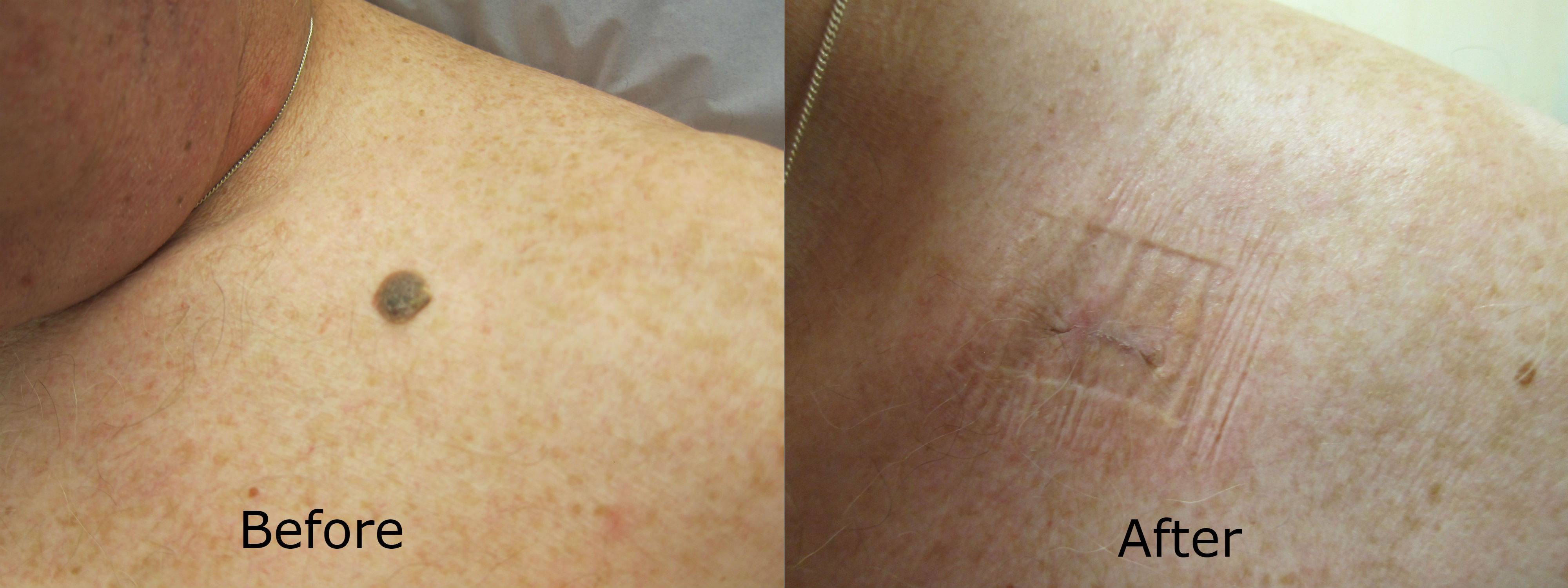
These are things like seborrheic keratoses which are brown flat warty lesions which have a stuck-on appearance and appear later in life.

Seborrhoeic keratosis on shoulder

Seborrhoeic Keratosis on shoulder shown at 1 week post removal at The Staiano Clinic

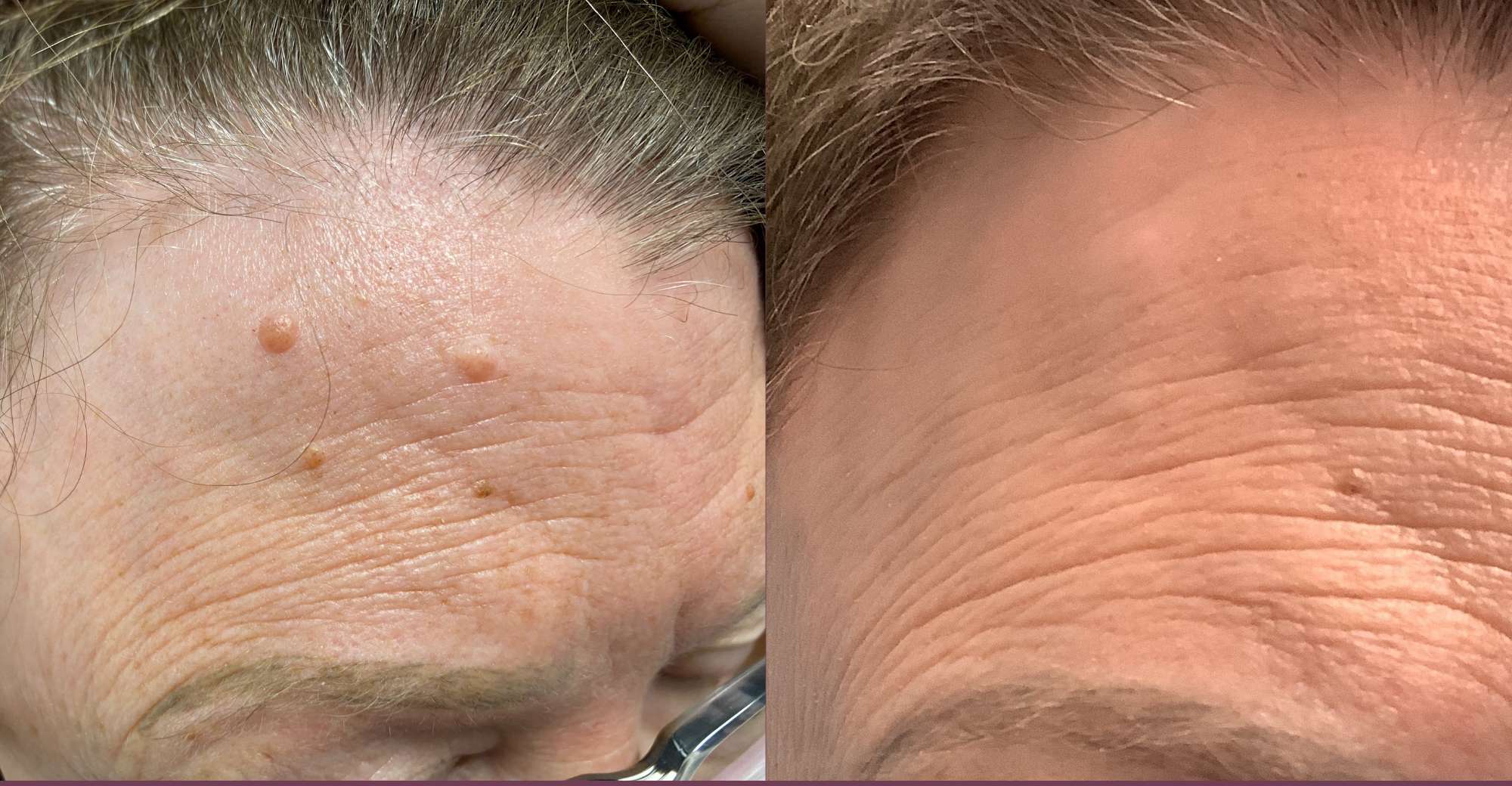
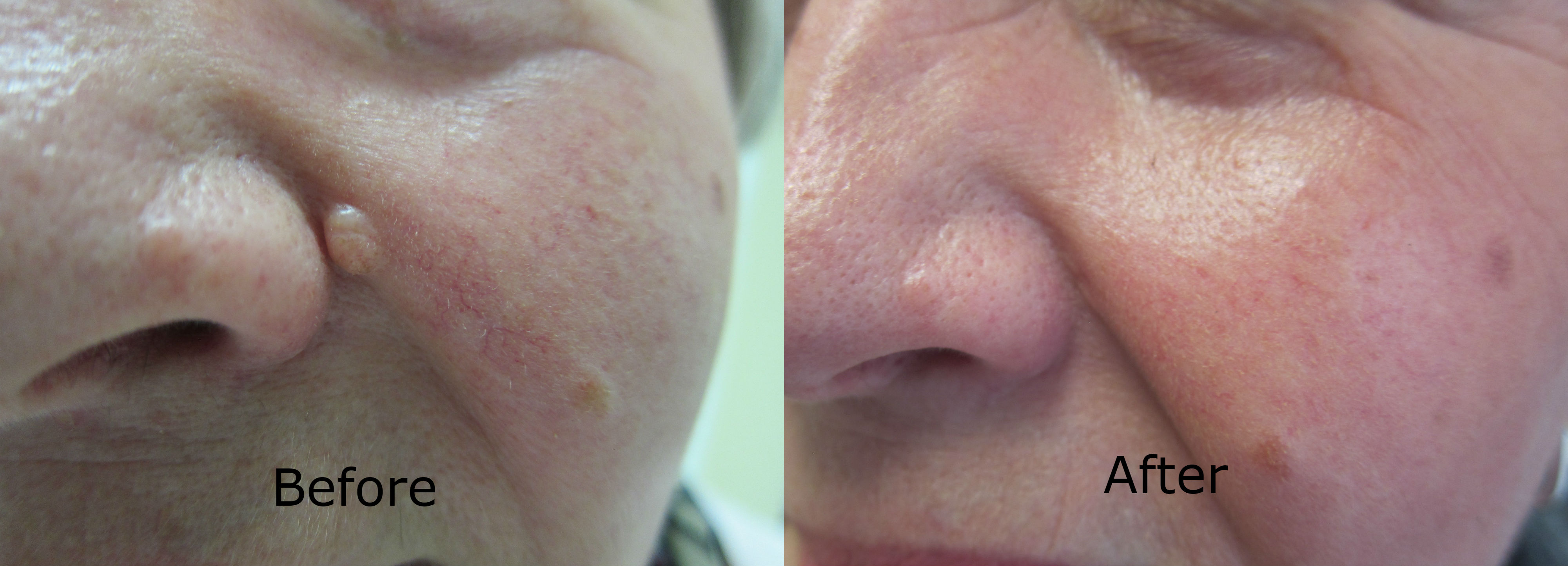
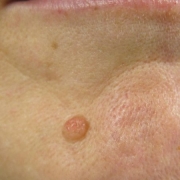
Or intradermal naevi which are raised, sometimes brown, sometimes fleshy moles which can have dark hairs growing from them. They appear in areas of friction such as at the back of the neck and they can also appear on the face and they can be troublesome in men as they catch when they shave.

Intradermal Naevus On Cheek

This is an Intradermal Naevus beside the nose shown at 6 weeks after removal at The Staiano Clinic

If it is possible to say with certainty that a mole is nothing to worry about, then it does not need to be sent for histology but this is only something we can do after discussion, which is why we offer free consultations for mole assessments.
Sometimes patients send us photographs of their lesions (you can email them to us here) and we can give them an idea prior to attending the clinic what will be involved in removing it.

If you come in for a see and treat procedure then it is always worthwhile to send us a photo or have a discussion with us beforehand to avoid any surprises when you arrive.

If you have any moles or lesions that are troublesome, I would always encourage you to get them checked out.

We offer a free consultation with one of our surgeons if you are simply looking for assurance and if you want the lesion removed on the day of consultation then we can accommodate this too in our state of the art minor operating theatre.
Contact us on: 0121 454 3680, email us or like our Facebook page as our director, Jonathan Staiano has a Q&A every Tuesday night at 7pm where he can answer your questions live.
If you are worried about your mole, then you can download our guide with what to look out for below:

The Secret of A Good Scar

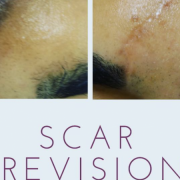
All surgery will leave a mark or scar of some sorts whether it be having a mole cut out or shaved or having a lesion scraped or having something removed by laser.  All of these things will damage the skin and cause some form of scarring.  The scarring is usually quite red and obvious to start off with and it is how the scarring is managed that can often make the difference between a good scar and a bad scar.

Qualities of a good scar

The first step in obtaining a good scar is to plan where the scar is going to lie and this is something we as plastic surgeons spend a lot of time studying in order to hide scars as much as possible.  There are natural lines, skin creases and shadows all over the body and plastic surgeons will exploit these in order to leave as little a trace as possibly that anything has been done.  The next step is to use meticulous surgical technique and we are trained to minimise the handling of the tissues and to use fine instruments so that this normal skin is damaged as little as possible to improve the healing.  The technique of suturing a wound is an art in itself and it takes many years to learn the techniques to bring the edges together to maximise the contact and the quality of the resulting scar.  It is important that the wound is not closed under any tension and so we use techniques to support the wound using deep sutures or occasionally by moving tissue around to move the tension from one area to another in order to maximise the chances of good wound healing and resulting scars.

Postoperative management of scars

It is important that scars are supported in the initial phases which is why we often use deeper layers of sutures to reinforce the wound.  Tapes and dressings can help although these can often be kept light and the wound is to be kept clean.  Scars on the face are often left exposed and we will often dress these simply with antibiotic ointment.  We try to use waterproof dressings when possible, which means that you can wash and shower immediately.

Timing of suture removal

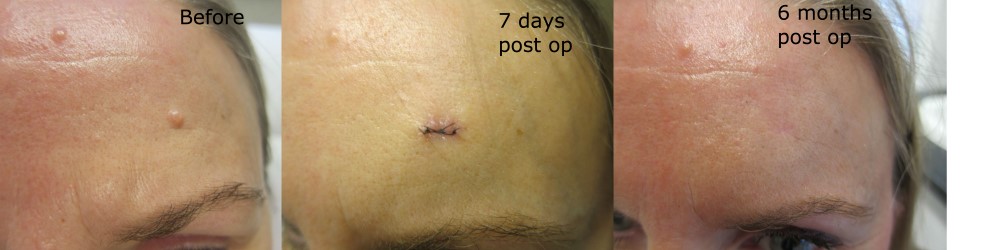
The classic hatched appearance of a scar with a straight line and dots on the other side as seen in Popeye is something we try and avoid and the dots are caused by sutures being left in long enough to cause a scar of their own.  For this reason we will avoid leaving sutures in too long and so on the trunk will often use dissolvable sutures which are buried and you cannot see and on the face we will remove sutures early, around five to seven days.  In some cases the wound healing is more important than the quality of the resulting scar and so there may be incidences where it will be reasonable to leave the stitches in for longer to make sure the wound stays together.  It is important to avoid too much activity around the scar to allow the wound to heal and to avoid stretching of the scar.

Long term management of scars

All scars will be red and quite obvious to start off with and can take some months before they start to fade.  Moisturise and massage of the scar will help them to fade and there are lots of products available such as Bio Oil, Vitamin E and Aloe Vera which can be used to massage the scars once they have had a chance to heal.  The scar will be red and obvious for the first three to six months and while it is red and obvious it is important to avoid the sun because if you get a suntan on a red scar while it is still active then when you lose the suntan the scar will stay pigmented and you will end up with a brown scar.  This does not mean that you cannot go into sunny climates but it does mean that you should keep your scar covered while you are out in the sun and this can mean high protection sun block, tape or simply wearing a wide-brimmed hat or clothes over the scar to avoid getting a tan on that area.  Most scars will settle by a year although it can take longer.
For more advice feel free to get in touch.  You can call us on 0121-454 3680 or contact us through the website.  I do a live Q&A on Facebook every Tuesday at 7pm.  It would be great to see you there and I would be happy to answer any queries.

Find me on Facebook

Follow me on Twitter

Connect with me on Google+

Skin Moles To Worry About

If you want to know which are the skin moles to worry about, then look no further.

Moles are usually circular, brown harmless patches of skin which generally tend to form on the back, legs, arms and face, at birth or before the age of 30.

Sometimes moles are not innocuous or harmless and some patients opt to get them removed.

Many people who visit our clinic wish to have a mole removed for cosmetic purposes.

Moles can spring up in inconvenient, sometimes embarrassing places (such as your face and neck) whereas other people have had moles since birth or childhood and have decided to finally get rid of them.

Equally, many patients visit the clinic because they are worried about a change in a mole and would rather be safe than sorry.

This is a good policy!

In rare cases, moles can also develop into melanomas and can cause an aggressive form of skin cancer.

If caught early, the malignant moles can be removed with surgery and often the cancer does not return.

These are the skin moles to worry about

Generally, if a mole changes size, shape or colour, becomes itchy or starts swelling or bleeding, you should get it checked out. A useful guide is following your ABCDE.

A stands for asymmetry. Moles should remain circular and symmetrical. It should not be smaller or bigger on one side.

B stands for border irregularity. Moles with a ragged, or uneven border show irregularity and could be cause for concern.

C stands for colour change. Melanomas have lots of different shades. A healthy mole should only have one or two shades.

D stands for diameter. Most moles are not larger than the width of a pencil. If a mole gets any larger, it is probably not only irritating, but it is also a cause for concern.

E stands for elevated. If your mole is raised more than it was before, you need to keep a close eye on it.

It’s important to remember that skin cancer is relatively rare. However, it is important to check your moles regularly and if you have any cause for concern, don’t hesitate to get it checked out.

If you would like a copy of our guide on ‘when you should worry about a mole’ click here.


You can find details about our mole clinic here:
We run a Free Mole Clinic so you can book in for a free 15 minute consultation if you would like to have a discussion about your options.

We also offer a ‘see & treat’ service, where you can have your mole removed on the same day as your consultation.  Ask about this when booking.

Call now on 0121-454 3680 or fill in a contact form and we will get back to you.

REQUEST A PRICE FOR MOLE REMOVAL

You can see our Director, JJ Staiano, talk about ‘should I have my mole removed?’ in this video from one of our LIVE Q&A’s that we have on Facebook every Tuesday at 7pm