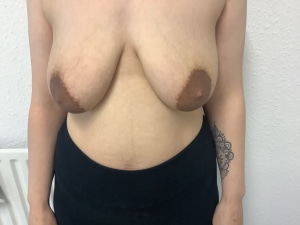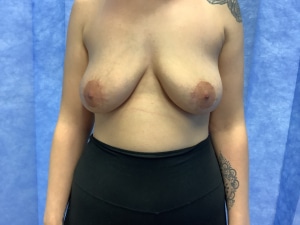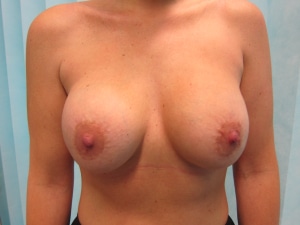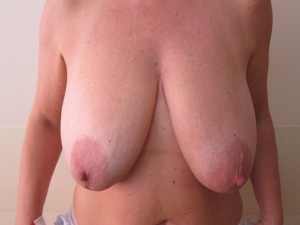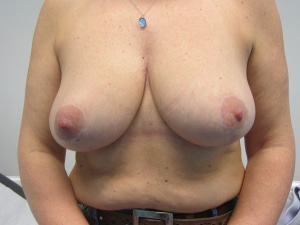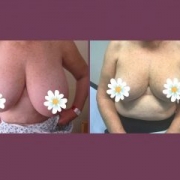




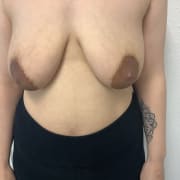
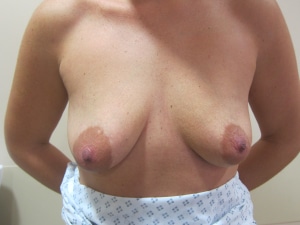
before areola reduction

Understanding Areola Reduction: Benefits and Procedure

Areola reduction is a cosmetic procedure that can enhance breast aesthetics. It focuses on decreasing the size of the areola. Many people seek this surgery for personal or aesthetic reasons.

The procedure can be performed alone or with other breast surgeries. It is often chosen by those who feel their areolae are too large. This can be due to personal preference or a desire for proportionate breasts.

Areola reduction involves removing a section of the outer areola. The remaining tissue is then sutured to achieve a smaller diameter. This results in a more balanced appearance.

Recovery is usually quick, taking about one to two weeks. Most patients return to normal activities shortly after. Scarring is left around the outskirt of the areola and fades over time.

The procedure is generally safe with low risk of complications. It can improve self-esteem and body image. Many find it empowering and confidence-boosting.

Areola reduction is suitable for both men and women. It can be part of gender-affirming surgery. The decision should be made after thorough research and consultation.

Before and after photos can help potential patients understand the outcomes. Discussing goals with a qualified plastic surgeon is crucial. This ensures realistic expectations and satisfaction with the results.

What Is Areola Reduction?

Areola reduction is a surgical procedure aimed at altering the size and appearance of the areola. The areola is the pigmented area around the nipple. Sometimes, individuals feel their areolae are too large or out of proportion with their breast size.

This procedure can be done on its own or paired with other surgeries like breast augmentation or reduction. It offers a way to achieve a more balanced and aesthetically pleasing breast appearance. The surgery helps in enhancing one’s body image.

During the procedure, a section of the outer areola is removed to reduce its size. This involves making an incision around the areola and then suturing the edges. A purse-string suture is used to close down the diameter of the areola and this can either be a permanent or dissolvable suture and there are pros and cons of each.  We tend to use a permanent suture at The STAIANO Clinic, but you can ask your surgeon to discuss the benefits of each.  The result is a smaller areola with minimal scarring.

Areola reduction is often performed under local anaesthesia, making it less invasive and we can offer it in our ‘See & Treat’ Clinic on a walk in, walk out basis. The recovery period is usually short and uncomplicated. Patients are advised to follow post-operative care instructions to ensure optimal healing.

Key aspects of areola reduction include:

  • Reducing areola size for better proportion
  • Minimal scarring that fades over time
  • Quick recovery with minimal downtime
BeforeAfter

The procedure offers lasting results, with many patients feeling more confident and satisfied with their body image. Whether for aesthetic reasons or personal comfort, areola reduction is a viable option for many.

Who Is a Good Candidate for Areola Reduction?

Areola reduction surgery is suitable for individuals who are self-conscious about the size of their areolae. Both men and women can benefit from this procedure, especially those who feel their areolae are disproportionate to their breast size.

The ideal candidate should be in good overall health and a non-smoker. It is important that they have realistic expectations about the outcomes of the surgery. Discussing goals with a qualified plastic surgeon can help set appropriate expectations.

Patients seeking this surgery often desire a more balanced or symmetrical breast appearance. Some may experience discomfort due to rubbing against clothes, prompting their decision. Others might be motivated by aesthetic desires or psychological benefits.

Consider areola reduction if you:

  • Want proportionate areolas
  • Experience physical discomfort
  • Seek improved self-confidence
  • Desire changes due to aging or hormonal shifts

Understanding personal motivations and discussing them with a plastic surgeon is essential. This ensures satisfaction with the results and clarity about the achievable outcomes.

Areola Reduction vs. Nipple Reduction: Key Differences

Areola reduction and nipple reduction are distinct but often confused procedures. Both are aimed at altering the appearance of the breast, but they target different areas.

Areola reduction focuses on decreasing the size of the pigmented skin surrounding the nipple. In contrast, nipple reduction addresses the projection or size of the nipple itself. Understanding these differences is crucial for anyone considering breast surgery.

Each procedure can be done independently or together, depending on the desired outcome. Discuss your specific goals with a plastic surgeon. Here are the key differences:

  • Area Treated: Areola (areola reduction) vs. Nipple (nipple reduction)
  • Primary Goal: Decrease areola size vs. Adjust nipple size/projection
  • Common Candidates: Dissatisfaction with areola vs. Nipple aesthetics

By consulting with a qualified plastic surgeon, individuals can determine which procedure best suits their needs.

Reasons to Consider Areola Reduction

Many individuals choose areola reduction for various personal reasons. These reasons often stem from aesthetic preferences and self-esteem concerns.

One common reason is the feeling that the areolas are disproportionately large. This perception can affect how individuals view their overall breast appearance.  Sometimes the areolae are stretched when breasts become larger during weight gain or pregnancy but do not return to their original size when the weight is lost.

Areola asymmetry may also drive some to seek this procedure. Reducing and balancing the areola size can create a more symmetrical look.

Consider the following reasons for areola reduction:

  • Desire for smaller, more proportional areolas
  • Correction of areola asymmetry or shape
  • Personal discomfort with the current appearance
  • Part of a post-pregnancy body restoration

Ultimately, the decision is highly personal. Those who feel self-conscious due to their areola size might find areola reduction beneficial. Consulting with a plastic surgeon can help clarify whether this procedure aligns with one’s body goals.

The Areola Reduction Procedure: Step-by-Step

Understanding what happens during areola reduction can ease concerns. The procedure is usually straightforward and quick, often taking around 2 hours.

Before surgery begins, the surgeon will mark the area to guide incisions. This ensures symmetrical and precise results.

Next, anaesthesia is administered to keep the procedure pain-free. Local anaesthesia is common, though some cases may require general anaesthesia.

The core of the procedure involves removing a circular piece of the outer areola. This effectively reduces the overall diameter.

After removal, the remaining tissue is sutured neatly using a deep purse string suture to take the tension off. The surgeon may then use dissolvable stitches in the skin for easier recovery.

Here’s a step-by-step overview:

  • Consultation to discuss goals and expectations
  • Anaesthesia to ensure patient comfort
  • Marking and measuring the areolas
  • Removal of excess areolar tissue
  • Closing with stitches for a natural look

The entire process aims for a smaller, more balanced areola. Post-surgery, patients can expect improvements in appearance and possibly confidence. Here at The STAIANO Clinic, we are in the position to offer the whole process in a single visit to align with your busy lifestyle and avoid the need for repeated trips to the clinic.  We are pioneering our ‘See & Treat’ service that allows you to come and have a consultation with one of our plastic surgeons and have your areola reduction on the same day.  You can book your appointment online or call us for more details at 0121-454 3680.

Areola Reduction Before and After: What to Expect

Areola reduction can be a transformative procedure for those who feel self-conscious about their areola size. Before undertaking the surgery, individuals can consult before and after photos. These images offer a glimpse into the potential changes and help set realistic expectations.

During the initial consultation, patients will discuss their desired outcomes with their surgeon. Understanding the achievable results is crucial to satisfaction after the surgery.

Post-surgery, patients often experience some swelling and bruising. The areola also appears puckered to start with which is normal and typically fades within a few weeks, revealing the surgery’s final results.

As the healing process unfolds, changes in the areola size become more apparent. Patients can expect their new areola size to harmonize with the natural breast contours.

Here’s an outline of what to expect before and after:

  • Initial consultation and goal setting
  • Review of before and after photo examples
  • Swelling and bruising post-surgery
  • Gradual revealing of final results
  • Assessment at follow-up appointments

Overall, many patients find enhanced self-esteem and satisfaction with their appearance after surgery, achieving a balanced and natural look.

Recovery and Aftercare

Recovery from areola reduction surgery is typically straightforward and manageable. Most patients can resume daily activities in one to two weeks. However, following post-operative instructions is crucial for optimal healing.

During the initial recovery period, avoiding strenuous activities is essential. Patients should refrain from heavy lifting and intense exercise to promote healing and minimise swelling.

Regular follow-up appointments will be scheduled to monitor healing progress. These visits offer an opportunity to address any concerns and ensure everything is healing as expected.  You will be looked after by our clinic nurse and your consultant plastic surgeon, so you will have complete peace of mind and access to the surgical team.

Key aftercare steps include:

  • Avoiding strenuous activities
  • Keeping the incision area clean
  • Attending follow-up appointments
  • Observing any changes and reporting them

Adhering to these recovery and aftercare steps can significantly impact the overall success of the surgery. Following your surgeon’s recommendations diligently is key for achieving the best results and ensuring a smooth recovery process.

Risks and Potential Complications

While areola reduction surgery is generally safe, potential risks exist. As with any surgical procedure, there’s a chance of bleeding and infection. Choosing a qualified plastic surgeon can help minimise these risks.

Patients may experience changes in nipple sensation after the procedure. This can include numbness or sensitivity. These changes are usually temporary, but some may persist long-term.

Other potential complications include:

  • Scarring – this is initially puckered and then settles
  • Uneven areola size or shape
  • Slow wound healing
  • Allergic reactions to anaesthesia or material

Discussing these risks with your surgeon is critical. Understanding possible complications helps in making an informed decision. By following pre- and post-operative instructions, you can reduce the likelihood of complications and ensure a smoother recovery process.

Areola Reduction with Other Breast Surgeries

Areola reduction can be conveniently paired with other breast surgeries. It is often combined with procedures like breast augmentation or breast reduction. This can enhance the overall aesthetic outcome.

Combining surgeries allows for comprehensive changes in one operation. This reduces the need for multiple recovery periods. It can also potentially save on costs and time.

Some common combinations include:

  • Breast augmentation with areola reduction
  • Areola reduction during breast lift
  • Areola reduction with breast reduction

Discussing all of your aesthetic goals with your surgeon is vital. They’ll provide guidance on whether combining procedures is suitable for you. By aligning your surgery plans, you can achieve a more balanced and desired breast appearance.

Breast augmentation with areola reduction
BBA and areola reduction beforeBBA and areola reduction after
BeforeAfter

Breast lift with areola reduction

Areola reduction with breast lift beforeAreola reduction with breast lift after
BeforeAfter

Cost of Areola Reduction and Insurance Considerations

The cost of areola reduction varies widely. Factors include the surgeon’s expertise, location, and whether it’s combined with other procedures. On average, prices range from £2,000 to £5,000.

Insurance generally does not cover areola reduction. This is because it is considered a cosmetic procedure. However, some exceptions exist if it’s part of a reconstructive surgery plan.

Patients should explore all financial options.  You can request a price for areola reduction at The STAIANO Clinic here.

When comparing prices, it is important to be aware of what is included in the cost of areola reduction, in particular the training and experience of the surgeon and your aftercare.  At The STAIANO Clinic, we are all fully trained plastic surgeons and all our prices are fixed cost packages and include our comprehensive aftercare package which means you can come back to the clinic as often as you need for as long as you need.  We never discharge our patients and you are always welcome back if you ever have any questions or concerns.

Choosing a Qualified Plastic Surgeon

Selecting the right surgeon is vital for a successful areola reduction. Research their credentials and look for board certification or holding the specialist fellowship in plastic surgery.  You can tell this by the letters FRCS(Plast) after the surgeon’s name. Experience is key in achieving optimal results.

During consultations, ask questions about their specific experience with areola reduction. Request before and after photos of previous patients. Consider the following when choosing a surgeon:

  • Board certification or holding a specialist fellowship – FRCS(Plast)
  • Years of experience in cosmetic breast surgeries
  • Patient reviews and testimonials

A thorough evaluation can help ensure that your surgeon is skilled and meets your expectations. Trust and communication between you and your surgeon are essential.

For more detailed advice on choosing a surgeon for your cosmetic surgery, I have written a book ‘Never Accept A Lift From Strangers’.

Frequently Asked Questions About Areola Reduction

Many people have questions before deciding on areola reduction. Understanding the procedure can ease concerns and help with decision-making. Here are answers to some common enquiries.

How long does the surgery take? The procedure is typically completed in around 2 hours. However, this can vary based on individual needs.

Will there be significant scarring? Scarring is usually minimal and fades over time. It generally blends with the natural areola colour.

What is the recovery period like? Most patients return to normal activities within one to two weeks. Following post-operative guidelines is crucial for healing.

Consider this list when gathering more information:

  • Expected outcomes and limitations
  • Post-procedure care instructions
  • Long-term effects and maintenance

Is areola reduction suitable for men? Yes, men can benefit from the surgery to achieve a more proportionate appearance. It’s available for anyone with concerns about areola size.

Does insurance cover the cost? As a cosmetic procedure, it’s often not covered by insurance. You should enquire about financing options with your surgeon.

Conclusion: Is Areola Reduction Right for You?

Deciding on areola reduction is a personal choice. It can significantly boost confidence for those unhappy with their areola size.

Consult a qualified plastic surgeon to discuss your goals and expectations. This helps ensure that the procedure aligns with your aesthetic desires. Remember, the decision should reflect your individual needs and not be influenced by external pressures. Careful consideration and professional advice are essential for a satisfying outcome.

Does the Niplette suction corrector work for inverted nipples?

If you have any inverted nipple then you may have heard of the Niplette suction corrector.

It was developed by a plastic surgeon and you can buy them over the counter and use it at home to apply pressure to the nipple to coax it out.

What Is It?

The Niplette suction corrector is non-surgical solution for inverted nipples.  It is a small device that consists of a silicone cup that fits over the nipple with a tube connected to a portable suction unit.  It works by applying gentle negative pressure to the nipple to encourage it to protrude outwards.

It is important to use it regularly and it should be used consistently for best results.

You need to take care to keep the device clean as well as looking after the skin of your areola because the constant pressure could cause irritation of your skin.  It is also important to achieve an airtight seal.

Who Is It For?

If your nipples are not constantly inverted and when they are, it is possible to coax them out and they stay out (grade 1 inverted nipples), then it would be worth trying the Niplette suction corrector.

  • it is painless and a cost-effective option when compared with surgery
  • it might be useful to encourage your nipples to be more accessible in preparation for breastfeeding
  • there are few side-effects apart from the potential irritation of the skin around your areola

I have found that it can work for mild cases of nipple inversion when the nipple is only occasionally in, but I do not think that the pressure is sufficient to pull a more deeply inverted nipple out.

What If It Doesn’t Work?

It can take a long time to achieve long-lasting results and sometimes it may not be completely effective.

The patients that I see, usually have the more severe grades of inverted nipple (grade 2 or 3) and will often report that the Niplette will bring the nipple out when it is on but it then retracts once the suction cup is removed.

I do not find this surprising because when it comes to surgery, which usually involves cutting the shortened milk ducts, it can be difficult to cut through the ducts with a scalpel.

If the Niplette does not work, then you could consider surgery to correct your inverted nipples.

The most effective way to do this is to cut the shortened milk ducts that are causing the nipple inversion and this means that you will not be able to breast feed in the future.

Surgery can be done under local anaesthetic in our clinic in Birmingham and the procedure takes less than an hour with minimal scarring.

If you have inverted nipples, you can have a consultation with one of our plastic surgeons and arrange treatment on the same day.

Click the button below to request prices and more information.

En Bloc Capsulectomy And Breast Implant Removal

What is En Bloc Capsulectomy?

En bloc capsulectomy is a surgical technique performed to remove breast implants and the surrounding scar tissue, known as the capsule, as a single intact unit. En bloc capsulectomy is a term that patients will often use if they are worried about their implants and would like to have them removed or exchanged.

The term is used where the implant has ruptured, capsular contracture has occurred, or there is suspicion of breast implant illness (BII). The idea is that by removing the entire capsule, including any potentially contaminated or damaged implants en bloc, it aims to minimise the risk of implant leakage, recurrence of contracture, and potential health issues associated with textured breast implants.

Do I Need An En Bloc Capsulectomy?

From a medical point of view, a true en bloc capsulectomy is only rarely needed and might actually be harmful in a situation if it is not indicated.

We tend to use the term ‘en bloc’ to describe the removal of a cancer and it involves removing all of the tumour with the surrounding tissues.  The idea is that you do not cut in to or see the tumour and you remove the specimen is a whole as a block.

With that in mind, the only situation where I would say that an en bloc capsulectomy and implant removal would really be indicated would be if there was a tumour of the capsule, which is a very rare situation.

Many patient requesting en bloc capsulectomy really just want the implant and the capsule removed completely, which would be a ‘total capsulectomy’ as opposed to an ‘en bloc capsulectomy’ – an important distinction to be made.

If you are not sure what a capsulectomy is, then you can read my blog post where I talk about capsular contracture around breast implants here.

I spoke about en bloc capsulectomy in one of my live Q&A’s that I host every Tuesday evening at 7pm, you can watch it here:

The Process Of Doing A Capsulectomy And Implant Exchange

The incision to put breast implants in, is usually 5cm long and sits in the fold where your bra sits.  When changing implants, I would use the same excision by cutting it out and giving a fresh scar in the same place of about the same size.  The normal process of doing a capsulectomy and implant exchange would involve dissecting out the implant with the surrounding capsule as much as possible through the 5 cm incision.

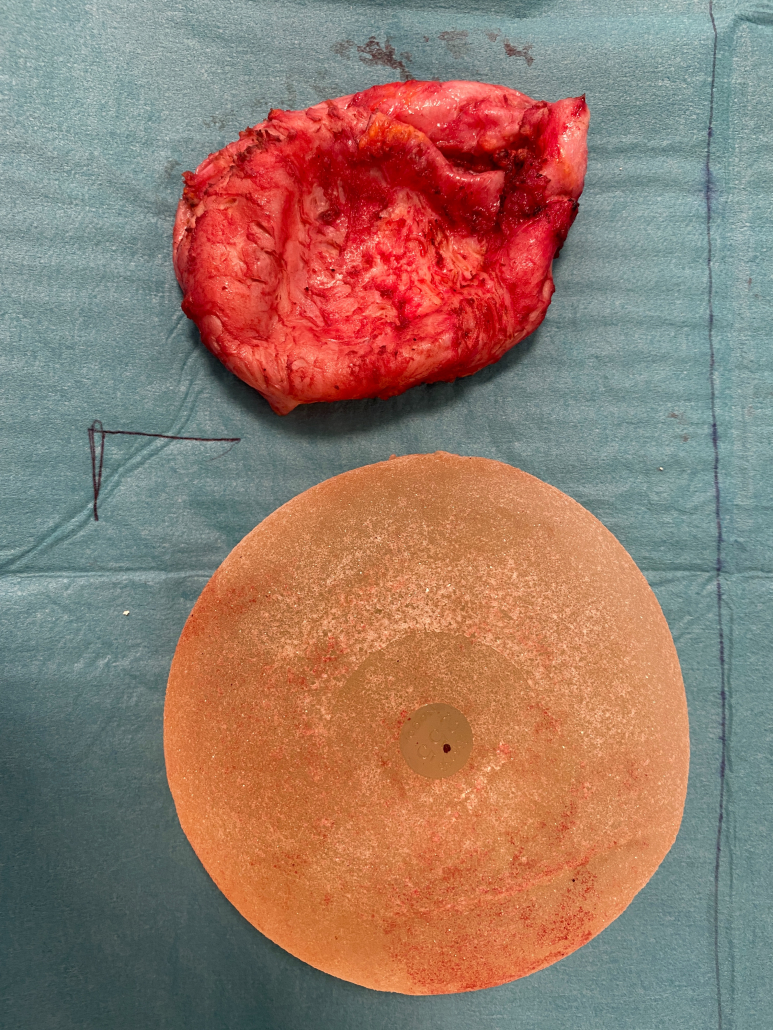
However, there comes a time during the operation where it is not possible to see over the horizon of the encapsulated implant through such a small incision.  When this time comes, I would make a hole in the capsule and remove the implant (the implant itself is soft and it only feels hard because of the scar tissue that has formed around it), which would cause the capsule to deflate and allow it to be removed through the original 5cm incision in the fold.

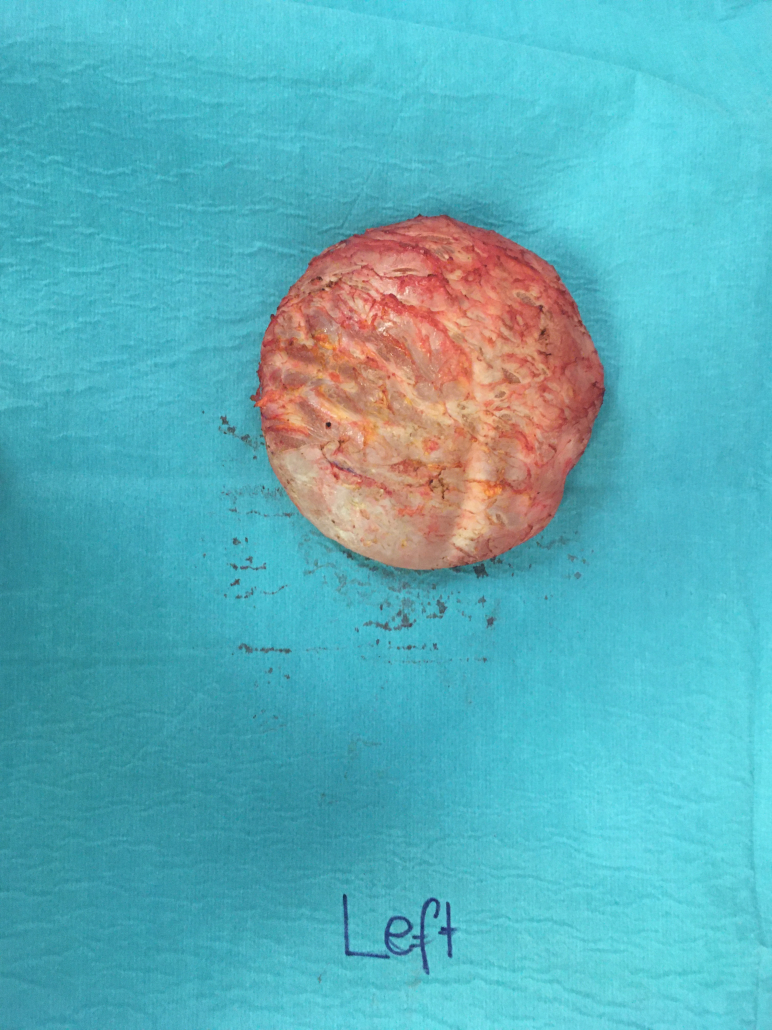
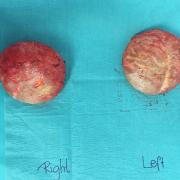
You can see from the photos below the difference between removing an implant with the capsule intact around it ‘en bloc’ compared with taking the implant out first and then removing the remaining capsule.


In order to remove the implant and breast capsule ‘en bloc’, we would need to make a much larger incision in the skin which would in turn, leave a much longer scar.  This is unnecessary in most cases since there is usually no proven pathology within the scar tissue and it just needs to be removed.  There is no danger in cutting in to the capsule in the same way that we would worry about cutting in to a cancer during an operation which could potentially spill cancer cells in to the wound.

The exception is if you require a mastopexy at the time of implant removal, as there is much more exposure and and en bloc capsulectomy is a more realistic expectation.

Want To Know More About En Bloc Capsulectomy?

If you have any questions about en bloc capsulectomy or if you are worried about your breast implants, then you can get in touch with us here.

If you would like a free copy of our Brochure, then you can request one here.

You can also see Mr Staiano, our director, on Instagram, YouTube and Facebook Live every Tuesday evening at 7pm, so you can ask questions there or post your questions to [email protected] beforehand using the hashtag #AskJJ.

FDA Approved Breast Implants

Do I Have FDA Approved Breast Implants?

In the UK, breast implants are regulated by the Medicines and Healthcare products Regulatory Agency (MHRA) rather than the US Food and Drug Administration (FDA).

However, there is still a great deal of confusion around whether or not breast implants in the UK need to be FDA approved.

The FDA is a US government agency that is responsible for protecting public health by regulating medical devices, including breast implants.

The MHRA, on the other hand, is the UK’s regulatory body for medical devices and is responsible for ensuring that all medical devices, including breast implants, meet certain safety and quality standards before they can be marketed and sold in the UK.

While the MHRA does not require breast implants to be FDA approved, it does require them to meet the same safety and quality standards as medical devices that are approved by the FDA. This means that breast implants sold in the UK must be tested for safety and effectiveness, and must meet strict manufacturing and labelling requirements.

However, there are a wider range of implants available in the UK compared with the US and not all of the implants that we use in the UK have been approved by the FDA.

It is important to note that there have been concerns in the past about the safety of certain types of breast implants, including those filled with silicone gel. In 2019, the FDA issued a recall of certain textured breast implants due to their link to a rare form of cancer called breast implant-associated anaplastic large cell lymphoma (BIA-ALCL). While this recall did not affect all breast implants, it highlights the importance of ensuring that all medical devices, including breast implants, are rigorously tested and regulated for safety.

In conclusion, breast implants in the UK do not need to be FDA approved, but they must meet the same safety and quality standards as medical devices that are approved by the FDA.

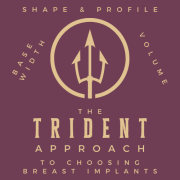
The Trident Approach To Choosing The Right Breast Implant

Choosing the right breast implant can seem daunting.

There is a dazzling array of sizes and shapes of breast implants out there and you will be forgiven for thinking that it is an impossible decision.

…but fear not

It is not as complicated as it may seem.

I have specialised in breast surgery since 2007 and have developed a process that simplifies the decision making and takes away the myths and opinions that you will find freely distributed by anyone and their aunt.

Here at The STAIANO Clinic, we follow a three step process known as The Trident Approach.

Step 1: measure the base width of your breast

This is the most important part of choosing the right breast implant, yet it is the least talked about on online forums and chats.

You cannot have any implant that you want.

When you look at the vast number of breast implants in the breast implant catalogue, a huge proportion of them are already unsuitable for you because they will not ‘fit’ your breast.

It is essential to get this right because if the implant is too wide, you run the risk of synmastia which is a web between your breasts, this is sometimes referred to as uniboob and is a difficult problem to correct. The other issue with using an implant that is too wide is that it can stick out too far to the side and your arm will catch on the side of your breast.

If your implant is too narrow, then, because they usually have a round base, it may not be tall enough to fill the upper part of your breast and will not fill the footprint of your breast, so you may not achieve the fullness that you desire.

Once we have measured the base width of your breast, you will automatically be limited at to the range of implants that will suit you.

Step 2 – look at the different shapes and profiles of implants

Breast implants come in 2 shapes:

  • Round
  • Teardrop

They also  come in different profiles which means that some are more prominent than others.

They are commonly termed, low, moderate, high and extra high profile. Although not all companies use this terminology – Mentor for example have a moderate plus profile (but not a low profile) and Motiva has different names for them, although the principle for all of them is the same – some implants stick out more than others.

It is not as simple as saying that a certain shape or profile will give a certain look, because it depends on the natural breast tissue that you already have.

When choosing the shape and profile, we need to take in to account the size and shape of your breasts – it is not a one size fits all.

This is why it is not possible to give a useful opinion online. You need to have an in person consultation with a plastic surgeon so that we can discuss your aims and then examine you and assess your body and breast shape before considering the shape of implant to have.

Step 3 – choose the implant volume

This is the final thing to look and yet this is often the starting point for many people.

Contrary to popular belief, the size of the implant is not as important as people think.

In fact, if your friend tells you that they have a 300cc implant and they have a good result, that is not really helpful to you. There are a whole variety of 300cc implants.

It mainly depends on the base width.

If your friend has a wide chest, then she may have a low profile 300cc implant, whereas if you have a narrow chest, then it may be an extra high 300cc implant that will be the best fit for you.

These will give two completely different looks, not to mention the need to take in to account yours and your friend’s breast size and shape before you start.

Clearly the size of your implant plays a part and you will need to be comfortable with the volume.

We use sizers at the clinic and this will allow you to ‘try on’ different volumes to get an idea of the sort of volume that you feel comfortable with, however the volume that you can have will be dictated by the base width of your breast and the shape and profile of the implant that you choose.

You can register for my webinar on ‘Choosing The Right Breast Implant’ Here

Whilst it can be a daunting experience to choose the right breast implant, when you approach it with The Trident Approach, it brings a system that takes some of the mystery away.

To find out more details about having breast implants at The STAIANO Clinic, click here.

How to treat Breast Asymmetry

We specialise in breast reshaping here at the STAIANO Clinic and can perform breast lifts, breast reductions, breast implants and breast lift with implants.

There are many cosmetic clinics which offer breast implants but not all will treat patients with more complicated problems.
Patients with breast asymmetry will often present for surgery.

The first question we would ask is:

Are you happy with either of your breasts or do you want them both changed?

If we can just operate on one side then this will lower the risk of complications and be beneficial for all.

It may not always be possible to just operate on one side, particularly if one breast is sitting lower than the other one with uneven heights of the nipples.

It is possible to lift the nipple, but it is not possible to lower a nipple (at least not without leaving a scar where the nipple was). So we can raise the low one, but is extremely difficult to lower the high one.

The next question to ask is:

Is there a problem with the shape, the volume or both?

In general terms, problems with the shape involve a breast lift and problems with the volume involve breast implants or breast reduction, (depending whether you want them bigger or smaller).

Surgery for breast asymmetry usually involves a combination of breast implants, breast lift and sometimes breast reduction.

Different things need to be done to each breast and so there is always a risk that they will settle differently and you may have to accept some degree of asymmetry.

Everybody is born with a degree of asymmetry and this is quite natural.

What we aim to do with surgery for breast asymmetry is to bring your breasts and your frame back into balance and make it easier for you to wear clothes and bras without needing to use a chicken fillet or external prosthesis in one side.

If you have different size breasts with one sitting lower than the other (usually the bigger one), you could have them made the same size by using different size implants.

The implants come in set volumes and so we would be unlikely to make them identical and would usually need to use a sizer in theatre to work out the best match.

The implants would not do anything about the shape of your breasts and so one would still be sitting lower than the other.

This would probably not be an issue when wearing clothes but may be an issue out of clothes.

In order to correct this you would need a lift of the breast that was sitting lower, which is usually the bigger one and so it would also be possible to perform a reduction at the same time as the lift to balance out the volume.

Then we could use the same size implant in each side.

This is something that we could discuss in the clinic and there is no right or wrong answer.

Some patients would prefer not to have breast tissue removed and then replaced with an implant and would prefer different sized implants.

Others would rather have a reduction to match the size and the same size implants so as you age or undergo weight fluctuations, it is more likely to have a symmetrical change in your breasts.

Treatment of breast asymmetry is complicated and requires a bespoke approach and a partnership between the surgeon and the patient so that a plan can be made that can produce a realistic expectation with acceptable risks and an acknowledgement of the limitations of what we can do.

If you have a breast asymmetry and have any specific questions then I do a live Q&A every Tuesday at 7pm on Facebook and I would be happy to give my opinion.
If you want to come to the clinic for a consultation then you can contact us here or phone (0121) 454 3680. We would love to see you.

You can download my breast implant guide here.

You can download my breast reduction and breast lift guides.

SUBSCRIBE TO MY BLOG

Why does breast reduction cost so much?

If you think that breast reduction costs a lot then it is important to put it into perspective.

Some patients put breast reduction into the category of cosmetic breast surgery and think of it in the same way as other operations like breast augmentation.

Any cosmetic surgery is a major undertaking both physically and psychologically because you are changing the way you look.

However when it comes to the extent of surgery, breast reduction can be a significantly bigger procedure than breast augmentation.

When taking in to account breast reduction cost, you have to realise what is involved.

Breast augmentation surgery takes about an hour in theatre whereas breast reduction takes three hours in theatre.

If you have ever seen the inside of an operating theatre (check out my video), you will see that there are 5 to 10 members of staff at all times all of whom have specific areas of training and expertise.
Not to mention what goes on in the background to keep a hospital running with all the administrative costs and overheads.

There is usually at least a one night stay in hospital and this will all be covered in the one-off cost that you pay.

I sometimes notice that my colleagues think that we as plastic surgeons get paid a lot because they see the headline rate that we receive when doing surgery.
However there is a big difference when working in the self-pay market compare to the insured market.

Whilst the cost of breast reduction is significant, it is a one off payment and all aftercare, outpatient visits and follow-up appointments are included in the price.

My colleagues who do insured work get paid for every intervention.

If they see you in the clinic, if they perform an x-ray or other tests, or if they have to perform any other procedures “ they will be paid at every stage.

After performing a breast reduction, we will see you in the clinic on a regular basis to ensure that your wounds heal, your scars soften and the shape of your breasts settles.

We want to make sure that you are happy with everything.

Furthermore, we will continue to see you in the clinic if you ever have any problems or concerns at any time.

There may be some patients who need very little input from us but there are others for whom this will be invaluable.

It comes down to how much value you get from a procedure as to whether it is worth the cost.

Breast reduction can be life changing on several levels:

  • on a physical level by removing the weight from your chest, reducing back and neck strain and not having your bra straps digging in.
  • on a practical level by allowing you to shop on the High Street for bras and be able to wear the clothes that you want to wear.
  • and on a emotional level by feeling in proportion and more comfortable with your body and improving self esteem and self-confidence.


It is hard to put a price on this.

I understand that breast reduction cost is a major determinant when someone is choosing surgery but I don’t think it should be the only one.

Here at The STAIANO Clinic, we are very aware that many other clinics offer the same procedures and we need to be competitive.

I have built the clinic so that we can compete on a worldwide scale when it comes to the qualifications of us as plastic surgeons, the level of care and treatment that we give and the time and space that we give you as an individual patient.

Not to mention the aftercare that we offer.

It is hard to do this and still be able to compete on price and so I realise that if you shop around, you will be able to find surgery cheaper elsewhere.

Whilst we can’t always compete on price, I know that we can compete on quality.

If you want to find out more you can download our guide with some frequently asked questions here or call us on (0121) 454 3680

You can also read more by visiting our Breast Reduction page.

If you want to know what a breast reduction costs at The STAIANO Clinic, then click here and we will send you not only how much it costs but also what we offer for that cost.

As always feel free to comment and if you have any questions you can find me on Facebook with a live Q&A every Tuesday at 7 pm

SUBSCRIBE TO MY BLOG

Smooth Breast Implants

There has been a resurgence recently in the use of smooth breast implants for breast enlargement.

Breast implants were invented in 1961 and the first manifestation of them had a smooth shell.

This was not adherent when placed inside the breast and had a tendency to move and for visible rippling.

In 1968 polyurethane foam implants were introduced which consisted of a silicone implant surrounded by a three-dimensional foam.

The scar tissue would grow into the foam rather than forming a smooth shell around the implant and so when it contracted, it was broken up by the foam and it did not compress the implant and make it feel hard.

In the 1990s there was controversy about polyurethane implants and they were withdrawn from the market for a period of time.

It was recognised that the roughness of the foam was beneficial in the development of capsular contracture and so the shell of smooth implants was roughened in a process known as ‘texturing‘ to roughen the surface and mimic polyurethane foam.

In the UK, textured silicone implants have been the mainstay for breast enlargement with only a minority of cases performed with smooth silicone implants.

Until now…

ALCL is a cancer of the capsule around breast implants and has been associated with the texturing of the implant.

For a long time there were no cases of ALCL in patients with smooth breast implants.

There are some now, but it is a lot less likely to occur in patients with smooth breast implants compared to those with textured or polyurethane foam implants.

For this reason, many surgeons are moving towards smooth breast implants rather than textured breast implants.

Time will tell whether we start to see more problems with rippling or capsular contracture.

Here at the STAIANO Clinic, we are not tied to any make or manufacturer of breast implants.

We will talk to you about the pros and cons of smooth implants, textured implants and polyurethane foam implants so that you can make the best decision for you.

There are risks of using smooth implants which is why they were modified in the early days of implant development.

However there is now the benefit of the low risk of ALCL which needs to be balanced against these risks.

If you have any questions about breast implants you can download my guide with Frequently Asked Questions here or join me on Facebook LIVE at 7pm every Tuesday evening when I hold a Q&A every week.

I am holding a breast implant event from 5-7pm on Wednesday January 29th 2020 if you have any questions about breast implants and want to learn about the pros and cons of the different types of implants as well as alternatives to having breast implants at all.

Feel free to come along and please bring a friend. There is no need to book but if you book in advance, you can have a free sizing session with our clinic nurse Vicki.

BOOK HERE

If you have any questions you can contact us on 0121-454 3680 or email us at [email protected]

SUBSCRIBE TO MY BLOG POST

Cosmetic surgery is never just cosmetic

It’s good to see the news article about Simona Halep who has just won the ladies Wimbledon singles final.

She credits a breast reduction to be part of her success.

This was featured in an article in the Daily Mail in 2014 where one of my patients spoke about here experience – you can read it here.

You see, while she never liked the size of her breasts, it was also interfering with her ability to play tennis.

You see cosmetic surgery is never purely cosmetic, or at least not very often.

¦when it is done well.

We see patients who enjoy horse riding, running and we have a haute couture fashion model

¦but we also have mothers and wives who just feel uncomfortable or unhappy with their body shape.

Contrary to popular opinion most people don’t want to walk into a room and attract unwelcome stares and attention.

They just want to feel comfortable in their body physically and psychologically and that is what cosmetic surgery can do.

It brings psychological benefits as well as physical benefits.

You don’t have to be championship tennis player to understand the benefit of having 2kg of breast tissue removed from your chest or 3kg of an abdominal apron removed from your tummy.

It is good to see cosmetic surgery reported with a positive light because all too often, the media portrays cosmetic surgery as creating some freakish caricature of a body.

Most people who come to our clinic, walk out of the clinic looking the same or similar to how they looked when they walked in.

Perhaps they are not needing to wear ‘chicken fillets’ in their bra, or they don’t have to wear baggy jumpers anymore

¦or maybe they just look a bit less tired and more refreshed.

Their friends might think they have had their hair done or changed their make-up, when in fact they have had a blepharoplasty or botox.

It is about making people feel more comfortable, whether they are playing championship tennis or going out for lunch.

¦and that can only be a good thing, right?

If you have any questions about cosmetic surgery, I am available every Tuesday night at 7 pm for a live Q&A on Facebook.

Click here to Download our guide with Frequently Asked Questions about Breast Reduction

Subscribe To My Blog