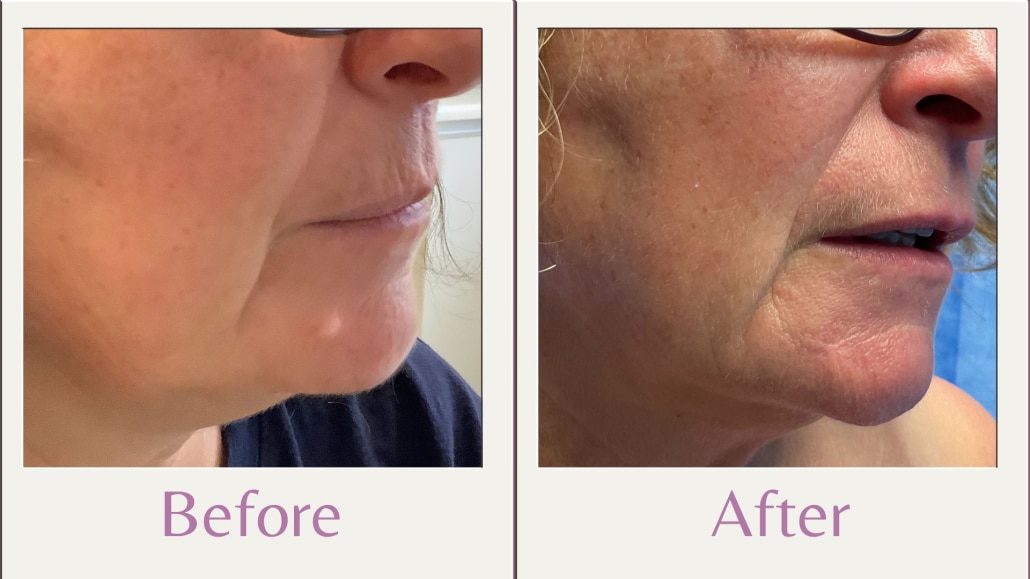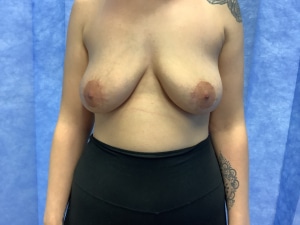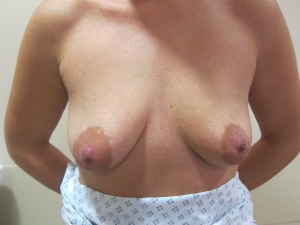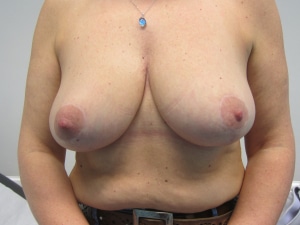

title page for do you offer finance

Why We Don’t Offer Clinic Finance

Why our clinic doesn’t offer patient finance – We can’t compete with high street lenders and want you to get a better rate

Paying for healthcare can be a significant decision, especially when treatment is planned rather than urgent. Our clinic does not offer in-house patient finance or third-party patient finance because we do not believe we can compete with high street lenders on APR, and we are not comfortable encouraging patients into high-rate finance when better options may be available elsewhere. Instead, we prefer to be transparent about costs and encourage patients to compare their own healthcare financing options carefully.

Why doesn’t the clinic offer patient finance?

We do not offer patient finance because we want patients to make borrowing decisions independently, with full visibility of the terms, rates, and responsibilities involved. Clinics that offer finance often work through third-party providers, but those arrangements can come with high APRs that may not be as competitive as products available through high street lenders. Rather than presenting finance as part of the treatment journey, we believe patients are usually better served by shopping around, comparing lenders, and choosing an option that suits their own circumstances.

This is not because we underestimate how helpful flexible payment can be. We understand that treatment costs can affect when, how, and whether someone chooses to go ahead. However, healthcare decisions already carry enough pressure without adding a financial product that may not be the most competitive option. Our view is simple: if borrowing is right for you, it should be chosen because it is the best fit for your budget, not because it was placed in front of you at the clinic.

There is also a trust issue. When a clinic offers finance, it can sometimes feel like part of the recommendation, even if the finance provider is separate. We do not want patients to feel rushed into treatment or borrowing. Keeping finance separate helps keep the conversation focused on your care, your options, and the real cost of treatment before any payment decision is made.

Our approach to treatment costs

Our aim is to make treatment pricing as clear as possible before you commit. Where costs can vary, we will explain how that can affect the final price.  That gives you the information you need to plan, ask questions and decide whether to proceed now, later, or not at all.

Good financial decisions start with knowing the true cost of care. For planned treatment, that may include the initial consultation, diagnostic appointments, treatment stages, reviews, aftercare or follow-up visits where applicable. We will avoid presenting treatment as “affordable” simply because a monthly repayment figure could be arranged elsewhere. A low monthly figure can still be attached to a higher overall cost if interest, fees or longer repayment terms apply.

This is why we separate clinical recommendations from finance decisions. Our role is to explain your treatment options and  the associate fees. Your role is to decide whether the treatment and payment route are right for you, with time to compare and reflect.

High street lenders may offer more competitive rates

High street lenders often have the scale, infrastructure and range of products to offer more competitive borrowing options than a clinic-linked finance provider. We cannot guarantee that any lender will offer you a better rate and we cannot advise you which product to choose. However, we believe it is sensible for patients to compare the wider market before agreeing to any credit arrangement.

APR matters because it affects the total amount you repay. A finance offer that looks convenient at the point of treatment may not be the cheapest or most suitable option once you read the full terms. Some patients may also have access to existing banking arrangements or savings  that are more appropriate for them than clinic-arranged credit.

This is the key reason behind our policy: we cannot compete with high street lenders on APR, and we do not feel comfortable with the high-rate finance sometimes offered in private healthcare settings. We would rather lose the convenience of offering finance than risk nudging patients toward borrowing that may not represent good value for them.

What should patients compare before borrowing?

Patients should compare the full cost of borrowing, not just the monthly repayment. A monthly figure can be useful for budgeting, but it does not tell the whole story. Before using any loan, credit card, or finance product to pay for treatment, take time to understand how much you will repay in total and what happens if your circumstances change.

Use this checklist as a starting point when reviewing healthcare financing options:

  • APR and interest rate: Check whether the rate is fixed or variable and how it affects the total repayment.
  • Total amount repayable: Look beyond the monthly payment and calculate the full cost over the whole term.
  • Fees and charges: Read whether there are arrangement fees, late payment fees, early repayment charges or other costs.
  • Repayment term: A longer term may reduce monthly payments but can increase the overall amount paid.
  • Affordability: Consider whether repayments remain manageable if your income or expenses change.
  • Cooling-off rights and cancellation terms: Understand what happens if you change your mind or treatment plans change.
  • Impact on credit: Any borrowing may affect your credit record or future borrowing ability.

This guide is general information only and is not financial advice. We encourage all patients to compare lenders, read terms carefully and seek independent financial guidance if they are unsure. You should only borrow if you are comfortable with the commitment and understand the risks.

Clinic-based payment methods that may be available

Although we do not offer in-house or third-party patient finance, there may still be practical ways to manage treatment costs through the clinic, depending on the treatment plan. These are not credit products and they do not replace independent financial advice. They are simply payment arrangements that may help patients plan care more comfortably.

Staged treatment, where available

Some treatment plans can be completed in stages, where clinically appropriate. This may allow costs to be spread across different appointments rather than paid all at once. Staged treatment is not always possible, because some care needs to follow a specific clinical sequence or timeframe, but we will explain this clearly if it applies.

Where staged treatment is available, it can give patients more time to budget between appointments. It may also help separate essential treatment from optional or later-stage work. The priority will always be clinical suitability, not just payment convenience.

Deposits, where available

When booking a procedure, a deposit is  required, we will explain when it is due and how it relates to the remaining balance. We will also make clear any relevant cancellation or rearrangement information before you proceed.

You should only pay a deposit when you understand the treatment plan, the total expected cost, and the clinic’s terms.

Savings and planned budgeting

Some patients prefer to delay treatment while they save, particularly when the treatment is elective or can safely wait. This can be a sensible option when there is no clinical urgency and when saving avoids the cost of interest. If you are considering waiting, please discuss this with the clinic so we can explain any clinical implications of delaying care.

Saving is not always possible or appropriate, especially where treatment is time-sensitive. However, when it is realistic, it can give patients more control and reduce financial pressure. We would rather support a patient in making a planned decision than encourage them to rush into borrowing.

Patient payment plans are not always the best answer

Patient payment plans can sound reassuring because they turn a larger cost into smaller instalments. In some settings, that may be helpful. But when those plans involve credit, interest or third-party finance, the headline monthly amount can distract from the total amount repayable.

The main issue is that convenience can influence decision-making. If finance is offered at the same moment as a treatment recommendation, a patient may feel that proceeding immediately is the expected next step. We would prefer patients to pause, take away the written cost information and consider all available healthcare payment methods without pressure.

There is also no single finance route that is best for everyone. A patient’s existing bank, credit profile, savings, income and personal preferences can all affect what is suitable. We are a clinic, not a financial adviser, we do not believe we should steer patients toward a specific borrowing product.

How to plan for treatment without clinic finance

A clear plan can make private healthcare costs easier to manage, even without clinic-arranged finance. The first step is to ask for confirmation of expected fees so you know what is payable and when payments are be due. From there, you can consider your options and make a decision that fits your budget without any pressure to proceed.

A practical planning process may look like this:

  1. Confirm the treatment recommendation. Make sure you understand what is being recommended, why it is needed and whether there are alternatives.
  2. Ask for the expected cost. Request a clear explanation of fees payable.
  3. Check clinic payment options. Ask whether staged treatment is appropriate. Understand when a deposit is required and the final outstanding balance due date.
  4. Review your own resources. Consider savings and other payment methods you already have access to.
  5. Compare borrowing options independently. If you are considering credit, compare lenders, APRs, repayment terms, fees and total repayable amounts.
  6. Read every term carefully. Pay close attention to charges, missed-payment consequences, early repayment rules and cancellation terms.
  7. Take time before deciding. Unless treatment is urgent, avoid making a financial commitment while feeling pressured or uncertain.

This approach helps keep the clinical decision and the financial decision connected but separate. You can still choose to fund treatment in the way that works for you, but the choice remains yours.

Transparency supports better decisions

We know that not offering patient finance may be less convenient for some patients. It may mean taking extra time to compare options, speak to lenders, check insurance or plan savings. Even so, we believe this is a more transparent and patient-focused approach than offering finance we cannot confidently say is the best value available.

Our responsibility is to explain treatment clearly, provide honest cost information and avoid unnecessary pressure. We cannot compete with high street lenders on APR and we do not want to promote high-rate finance simply because it makes treatment easier to book on the day. If a patient chooses to borrow, we want that decision to be made after proper comparison, not because a clinic finance option appeared to be the default route.

If you are considering treatment with us, please ask for a clear cost breakdown and let us know if you need to understand the payment timing. For borrowing decisions, please compare providers independently, read the terms carefully and choose the option that is genuinely right for you.

You can find out our fees for common procedures here.
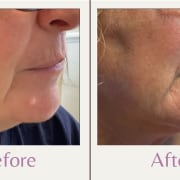
before and after mole removal on chin

Who Should Remove My Mole: Dermatologist vs Plastic Surgeon?

If I’m worried about a mole, who should I see – Plastic Surgeon or Dermatologist?

If your main goal is to have a mole removed safely and with the best possible scar, it often makes sense to start with a plastic surgeon. Plastic surgeons are surgical specialists: they are trained in precise excision, layered closure, scar placement, and reconstruction particularly in cosmetically sensitive areas like the face, neck, and chest.

A dermatologist is most useful when you want overall skin care advice (for example acne, eczema, rosacea, sun damage, anti-ageing, skincare routines), or when you have many moles and want a full-body skin check, mole mapping, and long-term surveillance.

Important: if a mole is new, changing, bleeding, crusting, painful, itchy, irregular, or looks different from your others, do not delay medical assessment. That may mean speaking to your GP urgently for referral, or seeing a clinician who will examine the lesion properly and ensure any removed tissue is sent for laboratory testing.

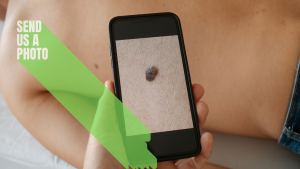
We are one of the few clinics in the country who will offer an expert assessment by a plastic surgeon by sending us a photo of your mole and if it requires removal, we aim to offer treatment within 7 days, in one of our ‘See & Treat’ Clinics.

Quick decision guide

  • See a plastic surgeon first if you want removal (especially on the face/neck), you care about scar quality, or you suspect the lesion will need a careful closure.
  • See a dermatologist if you want general skin care advice, you have multiple moles and want a full skin check or monitoring plan, or you need broader management of skin conditions.
  • Choose a medical pathway urgently if the mole looks suspicious. Whichever specialist removes it should preserve the tissue and send it for histology where appropriate.

Why starting with a plastic surgeon often makes sense

When people ask who should remove my mole? they are usually asking about the removal itself: technique, comfort, and scarring. This is where plastic surgeons tend to have a clear advantage because their day-to-day work is surgical. They routinely:

  • Plan incisions along natural skin lines to reduce scar visibility
  • Use layered closure to support better healing
  • Manage high-tension areas where scars can widen
  • Perform reconstruction (flaps/grafts) when a lesion is large or in a tricky position
  • Advise on aftercare that supports optimal scar maturation

This is especially relevant for cosmetic mole removal and for lesions on the nose, eyelids, lips, cheeks, ears, jawline, neck, decolletage, and hands, where small differences in technique can change the final appearance.

before and after mole removal on chin

What about safety if the mole might be abnormal?

Safety depends on proper assessment and when needed laboratory testing of the removed tissue. You can still start with a plastic surgeon, but you should choose one who will:

  • Examine the lesion clinically
  • Explain whether the features are reassuring or concerning
  • Remove the lesion using an approach appropriate for diagnostic accuracy
  • Send the specimen for histopathology when there is any uncertainty
  • Tell you what happens next if results show atypia or cancer

A new mole or a change in an existing mole can be a sign of melanoma and a specialist may remove the mole and surrounding skin so it can be checked in a lab. If you are worried, do not wait for an appointment; seek prompt medical assessment.

Dermatologist mole removal: best when you want wider skin oversight

Dermatologists specialise in skin disease and are the right choice when your question is bigger than one mole. Dermatologist-led care is particularly helpful when you:

  • Have multiple moles and want a comprehensive skin check and ongoing monitoring
  • Want mole mapping, photography, and follow-up intervals tailored to your risk
  • Have other skin concerns (rashes, pigmentation problems, acne, rosacea, eczema)
  • Need advice on sun protection, skin ageing, and skincare routines

Dermatologists also remove lesions, and many provide excellent outcomes. However, if your priority is the surgical result and scar placement, particularly in highly visible areas, you may still prefer to start with a plastic surgeon or involve one for closure and reconstruction.

Plastic surgeon vs dermatologist for cosmetic mole removal

If the mole has been assessed as benign (or is clinically reassuring) and your focus is appearance, a plastic surgeon is often the most direct route. When comparing clinics, ask these practical questions:

  • What removal method is recommended for my mole and why – find out about the most effective methods here?
  • Where will the scar sit, and how might it look at 3, 6, and 12 months – scar placement can make the difference between an obvious scar and a hidden one?
  • Will the tissue be sent for histology if there is any doubt?
  • What is the plan if the pathology result is abnormal?
  • What aftercare supports best scar healing (taping, silicone, sun avoidance)?

A well-planned excision can improve the chances of a subtle scar, but no clinician can promise no scar . Scar quality depends on location, tension, genetics, aftercare, and sun exposure during healing.

Skin lesion removal: why the label matters

Not every bump or pigmented spot is a mole. Skin lesion removal may involve cysts, skin tags, seborrhoeic keratoses, lipomas, precancerous changes, or skin cancers. If you are not sure what it is, choose a clinician who will assess it properly and explain whether it should be observed, biopsied, or removed and whether histology is advisable.

Clear recommendation

If you are deciding between a plastic surgeon and a dermatologist, a practical approach is:

  • Plastic surgeon first when you want the best surgical removal and scar outcome especially for the face or other visible areas.
  • Dermatologist when you want general skin care advice, a full-body check, or you have multiple moles to monitor over time.

If the mole is changing or worrying, seek prompt medical assessment and make sure any removal includes an appropriate plan for testing and follow-up.

We offer a service where you can send us a photo on WhatsApp and we we will give you an opinion as well as a quote for how much it would cost to remove.

take a photo of your mole

Find Top Mole Check Clinics Near Me

Revolutionising Mole Check Clinics

Finding a reliable clinic for mole checks is crucial for maintaining skin health. Getting your moles looked at quickly can help detect skin cancer early. Early detection is key to successful treatment. If you’re searching for mole check clinics near me, this guide will help you compare options and feel confident about your choice.
Many people wonder how to find the best clinic nearby. With so many options, it can be overwhelming. But don’t worry, I might have the answer.
I will walk you through the process. I will cover what to look for in a clinic. You’ll learn how to find reputable skin health clinics and understand skin cancer screening basics.
I will also discuss the importance of dermatology mole checks. Understanding what to expect can ease any concerns. By the end, you’ll feel confident in choosing the right clinic.

Why Mole Checks Are Important

Mole checks are vital for your skin’s health. These check-ups help in identifying early signs of skin abnormalities. Regular examinations can often prevent serious conditions through timely skin cancer screening.

Moles can change shape or colour over time. Such changes might indicate potential skin issues. Early detection can lead to successful treatment.

During a mole inspection, dermatologists and plastic surgeons look for specific signs. Here’s what we typically check:

  • Size and shape of the mole
  • Changes in colour
  • Any asymmetry or irregular borders

Atypical moles might develop into melanoma. Melanoma is a serious form of skin cancer. Spotting it early can save lives.

This practice empowers you to take charge of your skin health. Having easy access to regular mole checks provides peace of mind. It also builds a proactive approach to skin care.

What to Expect During a Traditional Mole Check

Mole checks are traditionally performed by a medical expert, usually a dermatologist or a plastic surgeon and will involve a face to face consultation.  The dermatologist will ask about your medical history first. This helps them understand any risk factors you might have.

Next, a thorough skin inspection follows. They’ll use specialized tools, like a dermatoscope, to get a closer look. This instrument magnifies the mole for a detailed examination during a dermatology mole check appointment.

Expect to lie down on an examination table. This allows the dermatologist easy access to all skin areas. The check is painless, though sometimes a biopsy might be needed.

Here’s what usually occurs during the mole check:

  • Review of your medical history
  • Use of a dermatoscope for close inspection
  • Possible biopsy for suspicious moles

The entire process usually takes less than an hour. Results, if a biopsy is performed, may take a few days. The dermatologist will guide you on the next steps based on findings.

How About An Instant Mole Check?

Traditional mole checks are ideal if you have multiple moles or if you do not have a particular mole that you are worried about and are looking for reassurance and monitoring.

However, if you have a specific mole that has changed or you do not like the look of, we offer an instant mole check without having to come to the clinic and without having to pay for a consultation.

You can send a photo of your mole to our STAIANO Clinic WhatsApp number and one of us will have a look at it and give you an opinion.

It is always helpful to have some background information such as:

  • how long have you had the mole?
  • has your mole changed recently?
  • do you have any symptoms such as pain, bleeding or itching from your mole?
  • have you ever had any suspicious moles removed in the past?
  • do you have any family history of skin cancer?

It is also helpful to send a close up photo and a zoomed out view so we can get an idea of scale and the location of the mole on your body.

If you require a biopsy, we will give you a quote for removal and if you wanted to go ahead, there would be no need to come for another consultation.  We offer a ‘See & Treat’ service where you can have a consultation with one of our Plastic Surgeons and then go ahead and have your mole removed on the same day.

Not only does this mean that you will get an answer straight away without having to wait for a clinic appointment, but it also means that when you do come and see the doctor, you will have the information you need to proceed with removal on the same day if you wanted to.

We aim to offer you a ‘See & Treat’ appointment within 7 days of your enquiry, so can offer an unprecedented level of support for complete peace of mind.

instant mole check clinic

Which Clinic For A Good Mole Check?

Choosing the right clinic for mole checks is crucial.   If you want a general check up of your moles and potential surveillance on a regular basis moving forward, look for a fully qualified dermatologist. They are specialists in skin health and have the necessary expertise to give you an overview.  Clinics with advanced technology can offer more accurate diagnostics. Mole mapping and digital dermatoscopy are examples of such technologies used during a dermatology mole check.

If you think you may need a surgical procedure to remove your mole, then a plastic surgeon will have the surgical training to tackle your mole, no matter how big it is especially when in cosmetically sensitive areas like the face.

Should I get a dermatologist or a plastic surgeon to perform my mole check?

Plastic surgeons have formal surgical training and are best suited to plan your mole excision to leave the least visible scarring and also with a view to preparing for further surgery if your mole turns out to be cancerous and may need further treatment.

Dermatologist have no formal surgical training and are best suited to skin health checks and can help with other skin issues you may have.

When searching for a good mole check clinic, you should ensure that hygiene and safety protocols are strictly followed. This ensures a safe and clean environment for all procedures. Ensuring that the clinic is accredited adds an extra layer of trust.

Moreover, a clinic should provide personalised care. This means listening to the patient’s concerns and tailoring services accordingly.

Consider the following when assessing clinics:

  • Fully trained doctors to the level of an NHS Consultant – this means Consultant Dermatologists or Plastic Surgeons who are on the GMC Specialist Register for Plastic Surgery
  • Strict hygiene and safety standards
  • Accreditation and certifications, such as CQC and FRCS(Plast)
  • Personalised care approach – look for a team that will prioritise your needs and listen to you.

Additionally, a welcoming atmosphere is beneficial. A friendly staff and comfortable environment can ease any anxiety. Knowing that you are in capable hands brings peace of mind.

How to Search for Mole Check Clinics Near Me

Finding a reliable clinic nearby can seem daunting. Start by searching online using keywords like “mole check clinics near me”, “mole inspection near me” or “dermatology near me.” These terms can help identify local options.

Online reviews offer valuable insights. Patients often share their experiences, providing a glimpse into the clinic’s services. Sites like Google Reviews are good starting points.

Word-of-mouth is another effective method. Ask friends, family, or colleagues if they can recommend a clinic. Personal experiences can often guide you to trustworthy skin health clinics.

Consider consulting your GP. They can refer you to reputable dermatologists or plastic surgeon for mole checks. This connection can simplify your search process and assure reliability.

Evaluate potential clinics by:

  • Reading patient reviews online
  • Asking for personal recommendations
  • Consulting your doctor for referrals

Accessibility is also crucial. Consider the clinic’s location and its operating hours. Ensure it fits conveniently into your schedule for ease of visits.

Understanding the process can help to avoid disappointment and wasted journeys.  Many clinic will take a photograph as a first port of call and so your first appointment may not be with a doctor, but it will involve a screening process with a photograph that then gets reviewed by the doctor.

At The STAIANO Clinic, we have simplified the process by allowing you to send us a photograph directly which we will review and get back to you without the need to attend the clinic.

This means that we can offer a ‘See & Treat’ service where the first appointment you have with us could be a combined consultation and procedure to expedite the process and to save on unnecessary trips to the clinic where you might have to take time off work or adjust your schedule.

Questions to Ask Before Booking a Mole Check

Before booking a mole check, gather as much information as possible about the clinic. Clear communication with the clinic can help set expectations and address any concerns.

Start by enquiring about the qualifications of the doctors. Confirm they are fully trained with the necessary expertise.

Consider enquiring about the clinic’s approach to follow-up care. Understanding their process for delivering results and recommendations is important for effective skin health management.

Some clinics will charge for consultations as well as the procedure and there may also be a charge for follow up appointments which may be necessary to discuss the histological results and assess your progress.

Here are some essential questions to ask:

  • Are the doctors fully trained specialists?
  • What is included in the price? Some will offer an all-inclusive price while others will charge extra for consultations, histological analysis or follow up visits.
  • How will results be communicated to me?
  • What follow-up care does the clinic offer? What happens if I need any revision procedures if I have a mole removed and there is some left behind, for instance.

At the STAIANO Clinic, we offer an all-inclusive price for mole removal, to avoid any anxiety if you were to have your mole removed.  The price we quote will include all consultations both before and after your procedure as well as histological analysis and cover for any revision surgery if the mole is not completely removed or if there are any issues with the scarring.

Understanding Skin Cancer Screening and Early Detection

Skin cancer screening is vital for catching signs of cancer early when treatment is more successful. Regular screenings can save lives by identifying cancer in its initial stages.

Once you have identified a concern with a particular mole, it is important to get an opinion as soon as possible for two reasons:

  1. the sooner a suspicious mole is removed, the sooner you can have peace of mind that the process has started towards a definitive diagnosis.
  2. the prognosis for malignant melanoma is much better for skin cancers that are removed before they have had a chance to grow and potentially spread to other parts of the body.

Early detection is key in preventing the progression to more severe conditions. Many people do not realise the importance of regular skin checks. However, a timely diagnosis can make a significant difference.

While there is no substitute for an in-person consultation with a trained dermatologist or plastic surgeon, the first step is a visual inspection of your mole and this can be done remotely, so there is no need to delay to get an opinion by sending us a photo in the first instance.

You will always be welcome to come to the clinic for an in-person assessment with one of our plastic surgeons and if you are considering having your mole removed, you can come for a ‘See & Treat’ appointment, which we aim to offer within 7 days, with no need for a GP referral, so you could potentially have your mole removed within days of your first contact.

Tips for Choosing the Right Mole Check Clinic

Choosing the right doctor for a mole check is crucial. Your choice can significantly affect your skin care experience and outcomes.

Whether it is a dermatologist or a plastic surgeon, make sure that the doctor that you see is fully trained.  This means that they are a Consultant Dermatologist or on the specialist register for Plastic Surgery – you can check this on the GMC website.

The clinic’s reputation can offer insights into the quality of care. You can check online reviews and ratings to gauge patient satisfaction. Recommendations from friends and family can also be valuable.

Consider the following points when selecting a dermatologist or plastic surgeon:

  • Level of training and credentials.
  • Years of experience.
  • Positive reviews and patient feedback.
  • Accessibility and convenience of clinic location.

Lastly, it is helpful to assess their communication style. A doctor who listens and explains procedures in layman’s terms can enhance your comfort and understanding.

What Happens After Your Mole Check?

After your mole check, we will discuss the findings with you. We will explain any areas of concern identified during the examination.

If there are suspicions or concerns, we will be able to offer an in-person appointment with on of our plastic surgeons where we will be able to make a full assessment.

Prior to your in-person consultation, we will be able to give you an all-inclusive quote to have your mole biopsied, should you wish to go ahead with this.  Not only that, we also offer urgent clinic appointments where we will be able to remove your mole within 7 days of you getting in touch with us.

You will receive advice on how to monitor your moles at home. It’s crucial to watch for any changes in size, shape, or colour.

We can also offer follow-up appointments for ongoing assessments. These check-ins ensure any potential issues are caught early.

Once you have been to the clinic, you will always be welcome back for follow up consultations if you have any changes or concerns with your moles.  We will inform your GP of all of your visits, but there is no need to visit your GP prior to contacting us.

Conclusion: Taking Charge of Your Skin Health

Regular mole checks can be your first line of defence against skin cancer. By staying proactive, you ensure early detection and treatment, which could be lifesaving.

Choosing the right clinic is key to receiving quality care. Ensure that the clinic you choose meets your needs and provides comprehensive skin check services.

Your skin health is in your hands. By being vigilant and informed, you can maintain healthy skin and peace of mind. Prioritise your health by making mole checks part of your routine and using trusted results from dermatology near me searches when evaluating skin health clinics.

Q&A

Question: How do I begin finding reputable mole check clinics near me? Short answer: Start with an online search using terms like “mole check clinics near me,” “mole inspection near me,” or “dermatology near me.” Then review patient feedback on platforms like Google Reviews, ask friends and family for recommendations, and request a referral from your GP. As you narrow options, consider practical factors like location and operating hours to ensure the clinic fits your schedule.

Question: What is the difference between a dermatologist and a plastic surgeon for a mole check? Short answer: Both types of doctors are trained to identify potential skin cancers.  Plastic surgeons have a background in performing reconstructive surgery and will be able to plan your mole removal, especially for larger moles or moles in sensitive areas such as around the face.  Dermatologists have a background in treating all types of skin conditions and complaints and will be able to perform a more comprehensive overview of your general skin health.

Question: What key qualities should I look for when comparing clinics? Short answer: Prioritise clinics that have Consultant-level dermatologists or plastic surgeons on the GMC specialist register.  Look for strict hygiene and safety protocols, and recognised accreditation such as FRCS(Plast) and CQC registered facilities. Also look for personalised care, comprehensive skin health services, and a welcoming environment—these qualities support accurate assessments and a comfortable experience.

Question: How long should I wait for my mole check appointment? Short answer: The main reason to check your mole is to exclude malignant melanoma which is a serious skin cancer.  The quicker that you get your mole checked out, the better.  As a rule, ideally the wait should be measured in days rather than weeks.  We can offer appointments on the same day for suspected melanomas.

Question: How long will the mole check appointment take? Short answer: A standard mole check appointment will take 30-60 minutes.  If you have sent us a photo already and are coming for a ‘See & Treat’ appointment, you should be prepared to be with us for about 2 hours.

Question: Is there parking at the clinic for my mole check appointment? Short answer: Yes. We have free parking on the road outside the clinic (Frederick Road) for an hour and we have spaces on our driveway if your stay is likely to be longer than an hour.

Question: What questions should I ask before booking an appointment? Short answer: Ask whether the dermatologists is at Consultant level and whether the plastic surgeons are on the specialist register with the GMC.  How and when results will be communicated, and what follow-up care is provided. You can also enquire about clinic accreditation and any practical details like scheduling and accessibility to make sure the clinic aligns with your needs.

Question: How often should I get mole checks, and what should I do between visits? Short answer: An annual mole check is commonly advised, but work with your dermatologist to personalise the frequency based on your risk factors. Between visits, monitor your moles for changes in size, shape, colour, asymmetry, or borders, and contact the clinic if you notice anything new or evolving. Follow your dermatologist’s guidance on ongoing screening and preventive skin health practices.

Visit our Mole Removal page for further information and to make a booking.

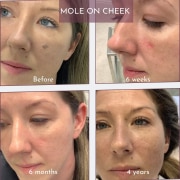
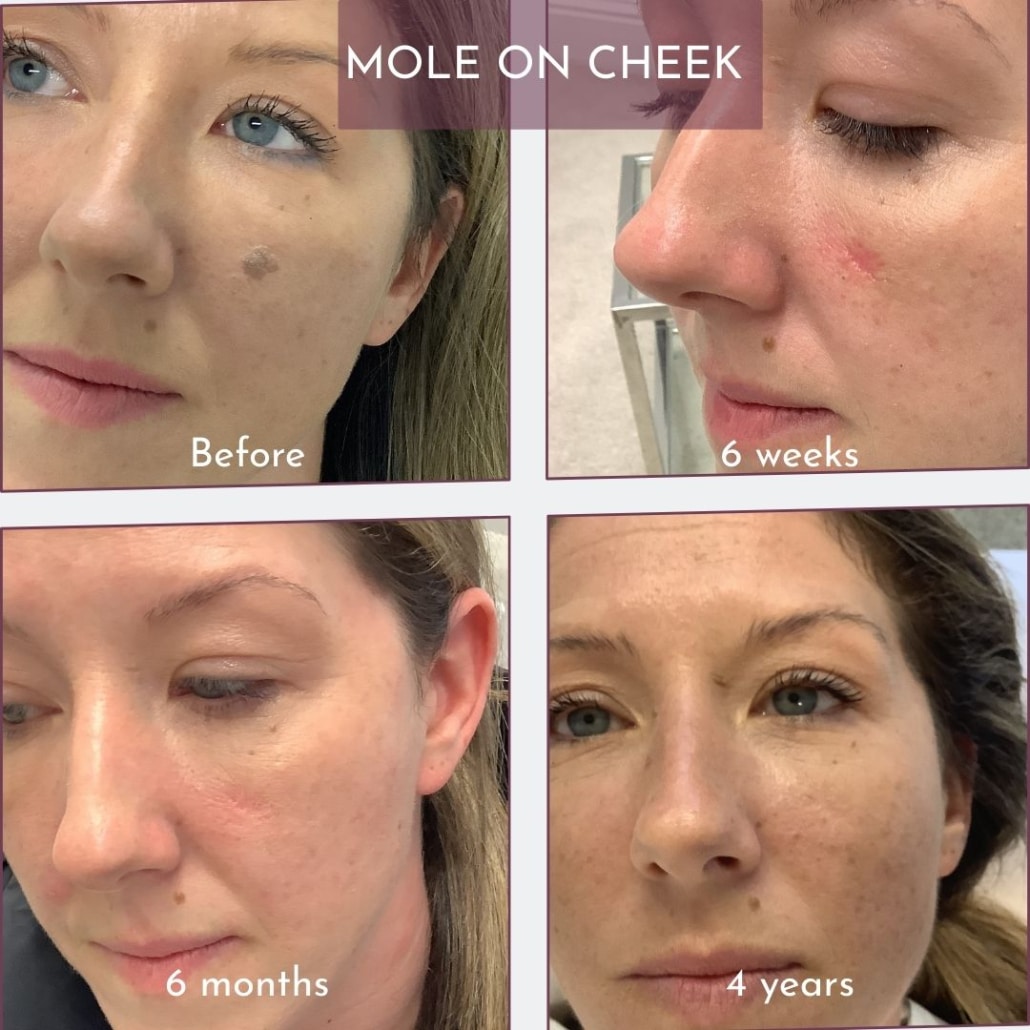
Mole on cheek - before and after up to 4 years

Effective Methods for Safe Mole Removal

Effective Methods for Safe Mole Removal

We all have spots on our skin, but treating a mole like a stray hair often leads to regret. While the internet is full of “quick fix” at-home kits, these DIY methods frequently result in deep, permanent scarring or serious infection. Without sterile tools and expertise, you risk turning a minor annoyance into a lasting blemish.

More importantly, professional removal offers the one thing a mirror check cannot: certainty. We often act as a “skin detective,” ensuring that what looks like a simple beauty mark isn’t actually something more serious. By performing a biopsy—a standard safety check where cells are analysed under a microscope—we can confirm your skin is healthy, giving you peace of mind along with a smoother complexion.

Master the ABCDE Method to Spot Warning Signs

While most moles remain harmless clusters of pigment, knowing the difference between a beauty mark and a warning sign is crucial. We recommend using the “ABCDE” method during monthly self-exams to identify atypical moles that don’t follow normal growth rules.

  • Asymmetry: One half of the spot does not match the other.
  • Border: Edges appear jagged, blurred, or uneven rather than smooth.
  • Colour: The mole contains multiple shades of tan, brown, black, or red.
  • Diameter: The spot is larger than a pencil eraser (about 6mm).
  • Evolving: The mole changes in size, shape, or colour over time.

Among these ABCDE melanoma warning signs, evolution is often the most critical; a mole that changes texture or starts itching requires professional attention regardless of how it looked previously. If you spot these red flags, you should get your mole looked at to ensure peace of mind. The first port of call is to visit your GP, or you can send us a photo of your mole and one of our plastic surgeons can give you an opinion.  Once a we confirm a removal is necessary, the next step is determining the best method for your specific skin type and the mole’s depth.

Side-by-side photo comparison of a regular, round mole versus an atypical mole with jagged borders and multiple colors.

Laser vs. Surgical Excision: Choosing the Right Technique for Your Skin

When planning a removal, the primary decision factor is whether the spot requires lab testing. While laser vs surgical excision is a common debate for patients seeking cosmetic results, lasers essentially vaporise the pigment cells. This makes it impossible to send a sample to a lab for cancer screening, so lasers are generally reserved for small, flat, clearly benign spots. If we suspect even a slight irregularity based on your ABCDE check, we will insist on a surgical method to ensure the tissue can be examined under a microscope.

For confirmed non-cancerous bumps that catch on clothing or jewellery, we typically prefer a shave excision. Think of this as levelling the surface of a table; we use a sharp blade to slice the mole flush with the surrounding skin. This method usually requires no stitches and is excellent for raised moles. However, for flat or deep moles, a full surgical excision is necessary. This involves cutting out the entire mole, including the “roots” beneath the skin surface, and closing the opening with stitches to ensure the it doesn’t grow back.

The three main techniques differ regarding best use cases and recovery:

  • Laser Removal: Best for small, flat cosmetic spots. No sample for testing. Minimal downtime but risk of pigment returning.
  • Shave Excision: Best for raised, benign moles. Heals like a deep graze over 1–2 weeks. Shave excision recovery time is generally fast with minimal scarring.
  • Surgical Excision: Best for flat, deep, or suspicious moles. Requires stitches. Recovery takes 1–2 weeks with a linear scar that fades over time.

Understanding the trade-off between depth and healing time helps manage your expectations for the final cosmetic result. Once you and your doctor have settled on the right method, your focus shifts to what physically happens in the chair, specifically regarding numbing and pain management.

What to Expect During the Procedure: Pain Management and Biopsies

The actual appointment for a mole removal is surprisingly brief, often lasting less than twenty minutes from start to finish. Your comfort is the immediate priority, so the we will begin by injecting local anaesthesia for minor skin procedures directly around the site. While the initial poke and a brief stinging sensation are normal, the area will become numb within seconds, ensuring you feel pressure rather than pain while we work. This localised numbing allows you to remain awake and drive yourself home immediately afterward, turning what feels like a medical surgery into a manageable errand.

Once the tissue is removed, it undergoes a crucial safety check called histopathology. Patients often worry if a skin lesion biopsy is painful, but since the biopsy is simply the removed tissue being sent to a lab, the physical part is already over. Regardless of the specific types of biopsy for skin lesions performed, a pathologist examines the cells under a microscope to confirm they are benign, typically returning results within seven to fourteen days. With the spot gone and the lab work processing, your focus can shift entirely to the healing process and preventing unnecessary marks.

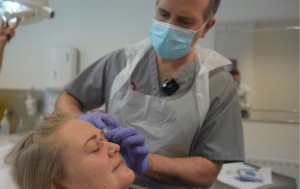
JJ operating on pt in minor op theatre

Managing Post-Procedure Care for Minimal Scarring

While old wisdom suggested letting a wound “breathe” to form a hard scab, dermatologists now agree that managing post-procedural wound care relies on keeping the area moist. Applying a thin layer of petroleum jelly and keeping the spot covered prevents a dry, crusty scab from forming. This allows new skin cells to migrate across the wound faster and significantly reduces the visibility of the final mark.

While minor tenderness is normal once the anaesthesia wears off, knowing when to call us is a critical safety step. You should watch closely for the specific signs of infected skin procedure site, which include spreading redness that feels hot to the touch, throbbing pain that worsens after the first day, or yellowish discharge. Catching these symptoms early ensures that a simple infection doesn’t deepen the wound or complicate the aesthetic outcome.

Most routine removal sites heal sufficiently within one to two weeks, leaving behind a pinkish area that fades gradually. Minimising scars after skin surgery requires patience, as it takes weeks and months for the scar tissue to organise and the redness and firmness to fade. With the physical recovery underway, the final practical consideration involves the financial aspect of the treatment.

Mole on cheek - before and after up to 4 years

Budgeting for Your Skin Health: Costs and Insurance Coverage

Understanding the mole removal cost hinges on medical necessity. The NHS or insurance companies typically cover removal if a spot is suspicious, bleeding, or physically irritated, classifying it as a health requirement. However, removing a benign spot strictly for appearance is generally an out-of-pocket expense, where the cost of professional procedures ranges from £300 to £2,000 depending on the method used and number of moles removed.

To prevent surprise bills, make sure you know what is included when comparing prices:

  • are all of the consultations included, especially if you have concerns and need extra appointments?
  • is histological analysis of your mole included in the price?
  • how long does the aftercare last and are all dressings included?
  • what if you have a problem or need further surgery, is this included?

At The STAIANO Clinic we offer a fixed price package where we will give you a quote that offers complete peace of mind as we will let you know how much it will cost upfront so that you can move smoothly into your final action plan without worrying about unexpected invoices.

Your 3-Step Action Plan for Clearer, Safer Skin

You no longer need to analyse that spot in the mirror with uncertainty. Knowing what to expect transforms the idea of mole removal from a source of anxiety into a routine health decision. You now have the vocabulary to advocate for your comfort and the foresight to manage your recovery, putting you back in control of your skin’s appearance and safety.

Turn this new confidence into a lasting habit by making SPF a non-negotiable part of your morning routine. True skin health isn’t just about addressing a specific concern; it’s about the peace of mind that comes from proactively protecting the skin you live in every day.

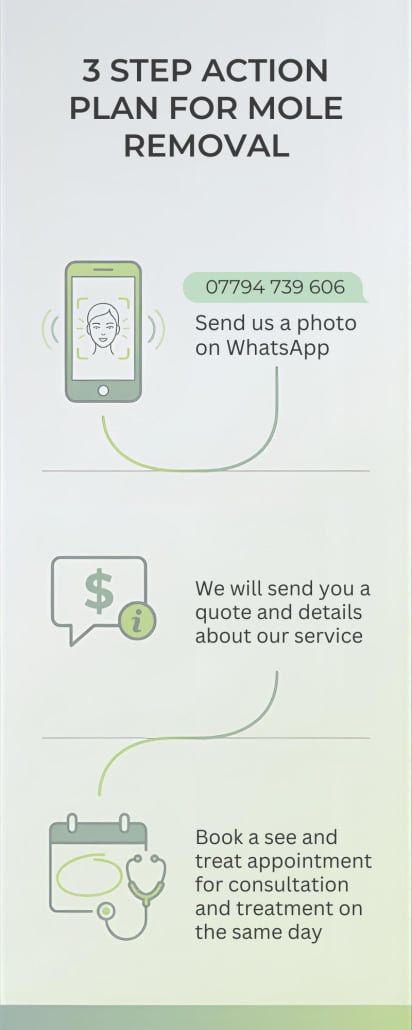
If you have a mole you are concerned about, follow our 3-step action plan for mole removal.

3 step action plan for safe mole removal


You can visit our Mole Removal page with more information and to book your appointment.

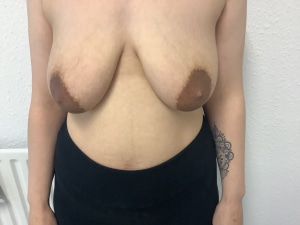
before areola reduction

Understanding Areola Reduction: Benefits and Procedure

Areola reduction is a cosmetic procedure that can enhance breast aesthetics. It focuses on decreasing the size of the areola. Many people seek this surgery for personal or aesthetic reasons.

The procedure can be performed alone or with other breast surgeries. It is often chosen by those who feel their areolae are too large. This can be due to personal preference or a desire for proportionate breasts.

Areola reduction involves removing a section of the outer areola. The remaining tissue is then sutured to achieve a smaller diameter. This results in a more balanced appearance.

Recovery is usually quick, taking about one to two weeks. Most patients return to normal activities shortly after. Scarring is left around the outskirt of the areola and fades over time.

The procedure is generally safe with low risk of complications. It can improve self-esteem and body image. Many find it empowering and confidence-boosting.

Areola reduction is suitable for both men and women. It can be part of gender-affirming surgery. The decision should be made after thorough research and consultation.

Before and after photos can help potential patients understand the outcomes. Discussing goals with a qualified plastic surgeon is crucial. This ensures realistic expectations and satisfaction with the results.

What Is Areola Reduction?

Areola reduction is a surgical procedure aimed at altering the size and appearance of the areola. The areola is the pigmented area around the nipple. Sometimes, individuals feel their areolae are too large or out of proportion with their breast size.

This procedure can be done on its own or paired with other surgeries like breast augmentation or reduction. It offers a way to achieve a more balanced and aesthetically pleasing breast appearance. The surgery helps in enhancing one’s body image.

During the procedure, a section of the outer areola is removed to reduce its size. This involves making an incision around the areola and then suturing the edges. A purse-string suture is used to close down the diameter of the areola and this can either be a permanent or dissolvable suture and there are pros and cons of each.  We tend to use a permanent suture at The STAIANO Clinic, but you can ask your surgeon to discuss the benefits of each.  The result is a smaller areola with minimal scarring.

Areola reduction is often performed under local anaesthesia, making it less invasive and we can offer it in our ‘See & Treat’ Clinic on a walk in, walk out basis. The recovery period is usually short and uncomplicated. Patients are advised to follow post-operative care instructions to ensure optimal healing.

Key aspects of areola reduction include:

  • Reducing areola size for better proportion
  • Minimal scarring that fades over time
  • Quick recovery with minimal downtime
BeforeAfter

The procedure offers lasting results, with many patients feeling more confident and satisfied with their body image. Whether for aesthetic reasons or personal comfort, areola reduction is a viable option for many.

Who Is a Good Candidate for Areola Reduction?

Areola reduction surgery is suitable for individuals who are self-conscious about the size of their areolae. Both men and women can benefit from this procedure, especially those who feel their areolae are disproportionate to their breast size.

The ideal candidate should be in good overall health and a non-smoker. It is important that they have realistic expectations about the outcomes of the surgery. Discussing goals with a qualified plastic surgeon can help set appropriate expectations.

Patients seeking this surgery often desire a more balanced or symmetrical breast appearance. Some may experience discomfort due to rubbing against clothes, prompting their decision. Others might be motivated by aesthetic desires or psychological benefits.

Consider areola reduction if you:

  • Want proportionate areolas
  • Experience physical discomfort
  • Seek improved self-confidence
  • Desire changes due to aging or hormonal shifts

Understanding personal motivations and discussing them with a plastic surgeon is essential. This ensures satisfaction with the results and clarity about the achievable outcomes.

Areola Reduction vs. Nipple Reduction: Key Differences

Areola reduction and nipple reduction are distinct but often confused procedures. Both are aimed at altering the appearance of the breast, but they target different areas.

Areola reduction focuses on decreasing the size of the pigmented skin surrounding the nipple. In contrast, nipple reduction addresses the projection or size of the nipple itself. Understanding these differences is crucial for anyone considering breast surgery.

Each procedure can be done independently or together, depending on the desired outcome. Discuss your specific goals with a plastic surgeon. Here are the key differences:

  • Area Treated: Areola (areola reduction) vs. Nipple (nipple reduction)
  • Primary Goal: Decrease areola size vs. Adjust nipple size/projection
  • Common Candidates: Dissatisfaction with areola vs. Nipple aesthetics

By consulting with a qualified plastic surgeon, individuals can determine which procedure best suits their needs.

Reasons to Consider Areola Reduction

Many individuals choose areola reduction for various personal reasons. These reasons often stem from aesthetic preferences and self-esteem concerns.

One common reason is the feeling that the areolas are disproportionately large. This perception can affect how individuals view their overall breast appearance.  Sometimes the areolae are stretched when breasts become larger during weight gain or pregnancy but do not return to their original size when the weight is lost.

Areola asymmetry may also drive some to seek this procedure. Reducing and balancing the areola size can create a more symmetrical look.

Consider the following reasons for areola reduction:

  • Desire for smaller, more proportional areolas
  • Correction of areola asymmetry or shape
  • Personal discomfort with the current appearance
  • Part of a post-pregnancy body restoration

Ultimately, the decision is highly personal. Those who feel self-conscious due to their areola size might find areola reduction beneficial. Consulting with a plastic surgeon can help clarify whether this procedure aligns with one’s body goals.

The Areola Reduction Procedure: Step-by-Step

Understanding what happens during areola reduction can ease concerns. The procedure is usually straightforward and quick, often taking around 2 hours.

Before surgery begins, the surgeon will mark the area to guide incisions. This ensures symmetrical and precise results.

Next, anaesthesia is administered to keep the procedure pain-free. Local anaesthesia is common, though some cases may require general anaesthesia.

The core of the procedure involves removing a circular piece of the outer areola. This effectively reduces the overall diameter.

After removal, the remaining tissue is sutured neatly using a deep purse string suture to take the tension off. The surgeon may then use dissolvable stitches in the skin for easier recovery.

Here’s a step-by-step overview:

  • Consultation to discuss goals and expectations
  • Anaesthesia to ensure patient comfort
  • Marking and measuring the areolas
  • Removal of excess areolar tissue
  • Closing with stitches for a natural look

The entire process aims for a smaller, more balanced areola. Post-surgery, patients can expect improvements in appearance and possibly confidence. Here at The STAIANO Clinic, we are in the position to offer the whole process in a single visit to align with your busy lifestyle and avoid the need for repeated trips to the clinic.  We are pioneering our ‘See & Treat’ service that allows you to come and have a consultation with one of our plastic surgeons and have your areola reduction on the same day.  You can book your appointment online or call us for more details at 0121-454 3680.

Areola Reduction Before and After: What to Expect

Areola reduction can be a transformative procedure for those who feel self-conscious about their areola size. Before undertaking the surgery, individuals can consult before and after photos. These images offer a glimpse into the potential changes and help set realistic expectations.

During the initial consultation, patients will discuss their desired outcomes with their surgeon. Understanding the achievable results is crucial to satisfaction after the surgery.

Post-surgery, patients often experience some swelling and bruising. The areola also appears puckered to start with which is normal and typically fades within a few weeks, revealing the surgery’s final results.

As the healing process unfolds, changes in the areola size become more apparent. Patients can expect their new areola size to harmonize with the natural breast contours.

Here’s an outline of what to expect before and after:

  • Initial consultation and goal setting
  • Review of before and after photo examples
  • Swelling and bruising post-surgery
  • Gradual revealing of final results
  • Assessment at follow-up appointments

Overall, many patients find enhanced self-esteem and satisfaction with their appearance after surgery, achieving a balanced and natural look.

Recovery and Aftercare

Recovery from areola reduction surgery is typically straightforward and manageable. Most patients can resume daily activities in one to two weeks. However, following post-operative instructions is crucial for optimal healing.

During the initial recovery period, avoiding strenuous activities is essential. Patients should refrain from heavy lifting and intense exercise to promote healing and minimise swelling.

Regular follow-up appointments will be scheduled to monitor healing progress. These visits offer an opportunity to address any concerns and ensure everything is healing as expected.  You will be looked after by our clinic nurse and your consultant plastic surgeon, so you will have complete peace of mind and access to the surgical team.

Key aftercare steps include:

  • Avoiding strenuous activities
  • Keeping the incision area clean
  • Attending follow-up appointments
  • Observing any changes and reporting them

Adhering to these recovery and aftercare steps can significantly impact the overall success of the surgery. Following your surgeon’s recommendations diligently is key for achieving the best results and ensuring a smooth recovery process.

Risks and Potential Complications

While areola reduction surgery is generally safe, potential risks exist. As with any surgical procedure, there’s a chance of bleeding and infection. Choosing a qualified plastic surgeon can help minimise these risks.

Patients may experience changes in nipple sensation after the procedure. This can include numbness or sensitivity. These changes are usually temporary, but some may persist long-term.

Other potential complications include:

  • Scarring – this is initially puckered and then settles
  • Uneven areola size or shape
  • Slow wound healing
  • Allergic reactions to anaesthesia or material

Discussing these risks with your surgeon is critical. Understanding possible complications helps in making an informed decision. By following pre- and post-operative instructions, you can reduce the likelihood of complications and ensure a smoother recovery process.

Areola Reduction with Other Breast Surgeries

Areola reduction can be conveniently paired with other breast surgeries. It is often combined with procedures like breast augmentation or breast reduction. This can enhance the overall aesthetic outcome.

Combining surgeries allows for comprehensive changes in one operation. This reduces the need for multiple recovery periods. It can also potentially save on costs and time.

Some common combinations include:

  • Breast augmentation with areola reduction
  • Areola reduction during breast lift
  • Areola reduction with breast reduction

Discussing all of your aesthetic goals with your surgeon is vital. They’ll provide guidance on whether combining procedures is suitable for you. By aligning your surgery plans, you can achieve a more balanced and desired breast appearance.

Breast augmentation with areola reduction

BBA and areola reduction beforeBBA and areola reduction after
BeforeAfter

Breast lift with areola reduction

Areola reduction with breast lift beforeAreola reduction with breast lift after
BeforeAfter

Cost of Areola Reduction and Insurance Considerations

The cost of areola reduction varies widely. Factors include the surgeon’s expertise, location, and whether it’s combined with other procedures. On average, prices range from £2,000 to £5,000.

Insurance generally does not cover areola reduction. This is because it is considered a cosmetic procedure. However, some exceptions exist if it’s part of a reconstructive surgery plan.

Patients should explore all financial options.  You can request a price for areola reduction at The STAIANO Clinic here.

When comparing prices, it is important to be aware of what is included in the cost of areola reduction, in particular the training and experience of the surgeon and your aftercare.  At The STAIANO Clinic, we are all fully trained plastic surgeons and all our prices are fixed cost packages and include our comprehensive aftercare package which means you can come back to the clinic as often as you need for as long as you need.  We never discharge our patients and you are always welcome back if you ever have any questions or concerns.

Choosing a Qualified Plastic Surgeon

Selecting the right surgeon is vital for a successful areola reduction. Research their credentials and look for board certification or holding the specialist fellowship in plastic surgery.  You can tell this by the letters FRCS(Plast) after the surgeon’s name. Experience is key in achieving optimal results.

During consultations, ask questions about their specific experience with areola reduction. Request before and after photos of previous patients. Consider the following when choosing a surgeon:

  • Board certification or holding a specialist fellowship – FRCS(Plast)
  • Years of experience in cosmetic breast surgeries
  • Patient reviews and testimonials

A thorough evaluation can help ensure that your surgeon is skilled and meets your expectations. Trust and communication between you and your surgeon are essential.

For more detailed advice on choosing a surgeon for your cosmetic surgery, I have written a book ‘Never Accept A Lift From Strangers’.

Frequently Asked Questions About Areola Reduction

Many people have questions before deciding on areola reduction. Understanding the procedure can ease concerns and help with decision-making. Here are answers to some common enquiries.

How long does the surgery take? The procedure is typically completed in around 2 hours. However, this can vary based on individual needs.

Will there be significant scarring? Scarring is usually minimal and fades over time. It generally blends with the natural areola colour.

What is the recovery period like? Most patients return to normal activities within one to two weeks. Following post-operative guidelines is crucial for healing.

Consider this list when gathering more information:

  • Expected outcomes and limitations
  • Post-procedure care instructions
  • Long-term effects and maintenance

Is areola reduction suitable for men? Yes, men can benefit from the surgery to achieve a more proportionate appearance. It’s available for anyone with concerns about areola size.

Does insurance cover the cost? As a cosmetic procedure, it’s often not covered by insurance. You should enquire about financing options with your surgeon.

Conclusion: Is Areola Reduction Right for You?

Deciding on areola reduction is a personal choice. It can significantly boost confidence for those unhappy with their areola size.

Consult a qualified plastic surgeon to discuss your goals and expectations. This helps ensure that the procedure aligns with your aesthetic desires. Remember, the decision should reflect your individual needs and not be influenced by external pressures. Careful consideration and professional advice are essential for a satisfying outcome.